What vibe coders shipped in 2026 — and what to steal from them
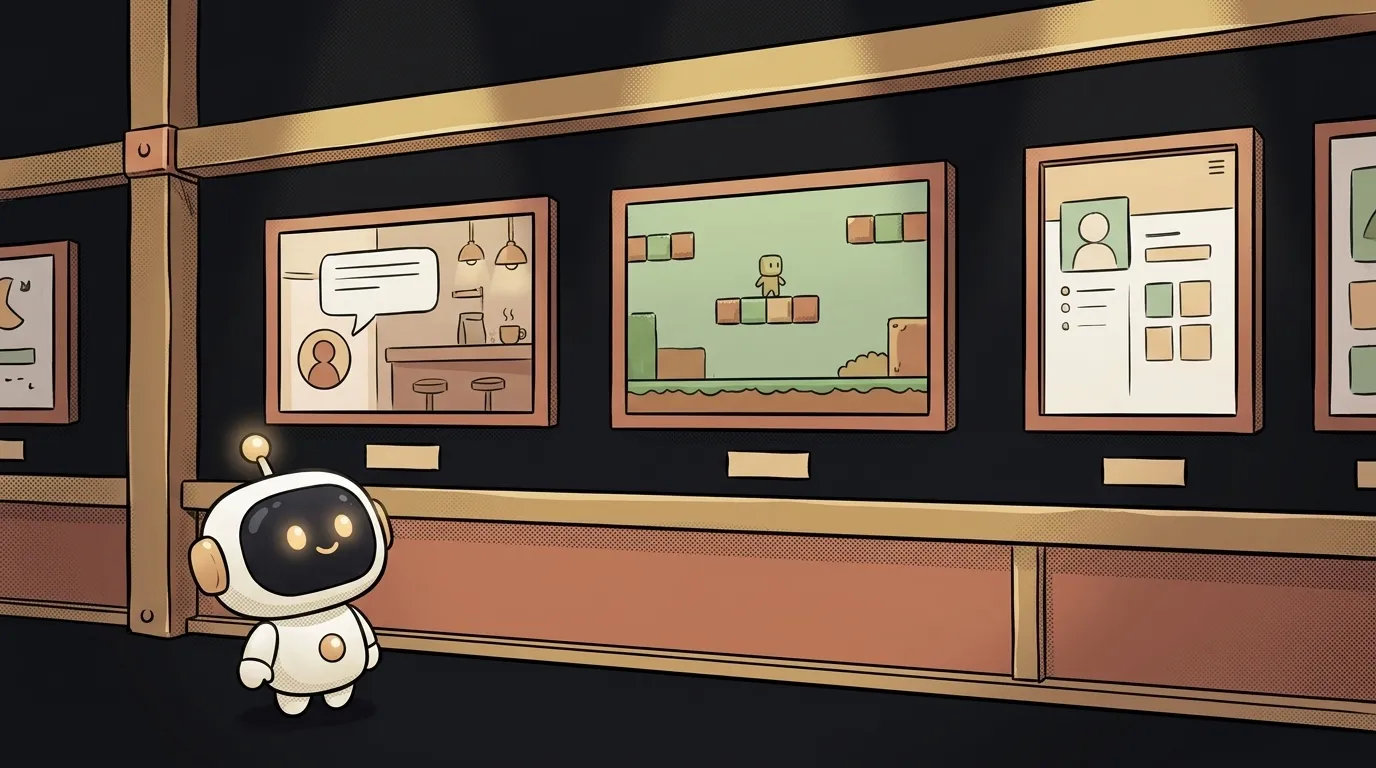
Here's the thing: in 2026 people aren't building "yet another to-do list" with AI — they're building stuff that used to take months and a whole team. A game. A messenger. An app in the store, with zero lines of code typed by hand.
And the best part — you can see how they did it. Let's walk through three stories. For each, I've noted what to take for yourself.
A game built in a couple of hours
Pieter Levels gave an AI editor one simple line — "make a 3D flying game in the browser" — and a couple of hours later he had a working prototype. That's fly.pieter.com: a simple flight sim you play right on the page.
Then he shipped updates publicly every day. In 17 days the game hit $1 million in annual revenue — off small add-ons like an F-16 plane for $30. Even Elon Musk reposted it.
What to steal: start with something absurdly small. Not "the game to end all games" — just "one little plane flies." Small things get finished, and only finished things live.
A messenger that works with no internet
Jack Dorsey (the guy who founded Twitter) built Bitchat over a weekend — a messenger that sends messages with no towers and no Wi-Fi. Phones connect to each other directly over Bluetooth and relay encrypted messages down the chain.
No servers, no accounts, no phone number. And one person built it in two days — with the AI assistant Goose, which wrote the code and fixed the errors itself.
What to steal: AI dropped the barrier on "serious" things. "Encrypted messenger" used to mean "years and a team." Now one person makes a prototype over a weekend. No hype, though: it's still a prototype, not a finished product — but starting is now possible.
An app in the store — with zero code
Here's a story closer to you. One beginner shipped an Android app to Google Play without writing a single line themselves — they described what they wanted in words, and the AI built it. And they got their first paying subscriber.
Not millions. One subscriber. But that's the exact point where "I tried it" turns into "it works and someone needs it."
What to steal: you don't have to be Dorsey or Levels. Your first real user is already a win. Everything else starts there.
What all three share isn't genius. It's that they built something small and showed it to people.
What to do with all this
Spot the pattern? Nobody waited for the "perfect idea" or studied syntax for a year. They all took a narrow thing, built it with AI, and shipped.
Your move is the same. Pick one small idea (here are 10 for an evening), describe it to the agent with a clear prompt, and take your first project to the finish. Not to a million. To "it works."
Short story-lessons, an agent simulator and daily practice — in our mobile app. Free.
Read next
Why an API returns 401 — and how it differs from 403: 3 causes
What is SSH — how to log into someone else's computer without a password in the open
What is hashing — why a website doesn't know your password
What is a race condition — the bug that shows up only sometimes

A web page that watches your camera live — 30 frames a second, offline, no server