Vibe coding
in plain words
Breakdowns, guides and fresh news on building apps with words — from the team behind the KODiQ learning app.
Why your download link opens the file instead of downloading it — 3 causes
The download attribute not working and your PDF opens in a tab? Three causes — a different domain, fetching without saving, and in-app browsers — and how to fix each.
What is the Shadow DOM — and why your CSS can't reach the widget
The Shadow DOM in plain words: why page styles don't apply inside a widget while fonts and colors leak in, and why querySelector can't find a button you can see.
What is optimistic locking — and where did the new price go
Optimistic locking in plain words: how two editors silently overwrite each other, and how a version column in your database catches the conflict before it lands.
What is a state machine — and why your spinner spins next to an error
A state machine in plain words: why three flags — isLoading, isError and data — give you eight states instead of four, and how a single status fixes it.
useState vs useRef — what's the difference, and why the counter is stuck at zero
useState vs useRef in React: which one triggers a re-render, when you see the new value, and where to keep a timer id. A simple rule for which to pick.
How to make font size responsive — and why font-size in vw breaks zoom
How to make responsive font size in CSS with clamp(): a two-point formula, ready-made values, and why font-size in pure vw refuses to grow when users zoom in.
Why fetch returns stale data — 3 caching causes and how to fix them
fetch returns stale data even though the database has new data? We cover 3 caching causes: Next.js built the page at build time, the browser cache, and a CDN.
What is backpressure — and why your script ate all the memory
What backpressure is, in plain words: the receiver's “slow down” signal to a data source. Why your script eats memory without it, and how to fix it in Node.
What is a percentile (p50, p95, p99) — and why average response time lies
What a percentile is, in plain words: p50, p95 and p99 in speed metrics. Why average response time fools you, and how to calculate a percentile yourself.
What is a cache stampede — and how a cache can take down your database
What a cache stampede is: a hot key expires and hundreds of requests hit the database at once. Why it happens and three ways to prevent it in your app.
PUT vs PATCH — what's the difference, and why the name vanished after an avatar change
PUT vs PATCH in a REST API: full replacement vs partial update, idempotency, null in the body, and the fetch method: 'patch' trap. Which one to pick and when.
How to calculate the number of days between two dates in JavaScript — and why you get one day too few
How to calculate days between two dates in JavaScript without an off-by-one: time of day, time zones, input type=date and Temporal. A ready function plus tests.
Why changing one item changes all of them — three causes and fixes
Changed one item and they all changed? Three reasons every array item changes at once: fill, an object reused in a loop, a shared default — and fixes.

What is integer overflow — and why your counter suddenly went negative
What integer overflow is, in plain words: a number hits its ceiling and wraps into the negatives. Where 2,147,483,647 breaks real apps.

What is a sparse array — and why map won't fill Array(3)
What a sparse array is, in plain words: holes instead of elements. Why Array(3).map does nothing, and why the array's length lies to you.

What is a semaphore in programming — and why batching requests is slower
What a semaphore is, in plain words: a counter that lets at most N tasks use a resource at once. How to limit parallel requests with it and avoid 429s.

input vs change event — and why your search only fires after clicking away
input vs change in JavaScript: when each event fires, which one to use for search, sliders and checkboxes — and why React's onChange works differently.

How to capitalize the first letter — without turning iPhone into Iphone
How to capitalize the first letter of a string in JavaScript and CSS: step by step, with empty strings, leading quotes, Turkish i and names like McDonald.

Fly down your own route in pixel art — with the buildings standing where they really stand
Video generators invent a road. A new open skill takes yours: the route, the buildings from their real footprints on the map, the real hills and horizon. It hands you one .html you fly along with the scroll wheel. The free tier swaps the art for code-drawn stand-ins.

Cut a jet engine in half — and it works out what just happened to it
AI has long drawn pretty diagrams of machines. What's new is an open skill where the agent builds a working model of a real one: you drag the throttle and 340 kN comes out of an equation, not a table. One .html file, buildable over a weekend.

A $7 board — and AI taps around your iPhone on its own. No Mac, no jailbreak
Letting an agent drive an iPhone used to take a Mac, Xcode and a developer account. A new open project gets there with a tiny ESP32 board that pretends to be a mouse, while the model watches the screen over AirPlay. A weekend build.

Why you get NaN in JavaScript — 3 causes and how to find where it came from
Why JavaScript gives you NaN instead of a number: an empty field, text instead of a number, zero divided by zero. How to find the source of NaN and fix it fast.

What is a string in programming — and why "5" and 5 aren't the same
What a string is, in plain words: text in quotes. Why "2" + "2" gives "22", an emoji counts as two characters, and everything from a form arrives as a string.

What is return and a return value — and why console.log returns nothing
What return does in a function, in plain words: the answer a function hands back. Why console.log shows a number but your variable holds undefined.

What is a boolean — and why the string "false" is actually true
What a boolean is, in plain words: true or false. Why "false" in quotes counts as true, an empty array does too, and zero counts as false.
for loop or map — which to use, and why await inside map doesn't wait
for loop or map in JavaScript: what's the difference and which to pick. A comparison on five criteria, where forEach fits, and the await-inside-map trap.
How to convert a string to a number in JavaScript — without tripping on a comma
How to turn a string into a number in JavaScript: Number, parseInt or parseFloat. Step by step — with empty fields, spaces in "1 200" and a decimal comma.

Why my loop never stops — and the tab freezes solid
An infinite loop: the tab froze, the fan is screaming, the server gets thousands of requests. Three real causes — from React useEffect to while — how to check and fix.

What is scope in programming — and why a variable is "not defined" when it's right there
What scope is in programming, in plain words: where in code a variable exists and where it doesn't. Why is not defined happens and how to read curly braces.

What is null — and why its inventor called it a billion-dollar mistake
What null means in programming, in plain words: "deliberately empty." How null differs from undefined, where Cannot read properties of null comes from, and how to avoid it.

What is an object in programming — and why two identical objects aren't equal
What an object in programming is, in plain words: a card with labeled fields. How it works, where it shows up in AI-written code, and why {a:1} isn't {a:1}.

let vs const — which to use, and why AI writes const almost everywhere
let vs const in JavaScript: what the difference is and which to pick. A criteria breakdown, a one-second rule, and why const doesn't mean "can't change."

How to rename a variable across your whole project — without breaking things that just look similar
How to safely rename a variable or function across a whole project: why Find and Replace breaks code, and how to do it in 6 steps with F2 and a final check.
47 vacation clips — and an agent cuts them into a video on the beat
AI video usually means “generate something new”. Meanwhile your own clips just sit in the camera roll. A free engine just shipped that lets an agent watch your footage, listen to the track and cut to it — and hand back a project you can fix with one sentence.

Why my array is empty — and why there's no error
The array is empty, the screen shows nothing, the console is silent. Three real causes of an empty array — data not there yet, a filter that cut everything, a list nested deeper — and how to check each.

What is an array — and why it counts from zero
What is an array in plain words: a list that keeps its order. Why counting starts at zero, where the most common beginner bug comes from, and why an empty array matters.

What is a loop — and why it can run zero times
What is a loop in programming, in plain words: repeat one action for every item in a list. Why you almost never know the number of repeats in advance.

What is a callback — and why extra parentheses break your button
What is a callback in plain words: a function you hand over instead of calling. Why it works that way, where you've already written one, and which parentheses break everything.

How to find code in a big project — search for what's on screen
How to find the right file in a big project fast: don't scroll the folder tree, search for the label you can see. Five steps from a button in the app to a line of code.
Array or object — which one to pick for your data
Array vs object: how they differ and which to pick for your data. A one-sentence rule, a breakdown by criteria, and why searching an array is a thousand times slower.

Why your AI agent edits the wrong file — three causes and how to check each
The agent says «done» and nothing changed in your app. Three real causes: wrong folder, a twin file with the same name, and editing generated code.

What is an Agent Skill — and why it costs almost nothing
An Agent Skill is a folder with one SKILL.md file. The agent only remembers a one-line description and reads the full instructions when a task matches.

What is a subagent — and why it saves context, not time
A subagent is a separate agent with a clean memory. It reads forty files and hands you back five lines: all the search noise stays with it, not with you.

What is a git worktree — and why keep a second folder of the same project
A git worktree is a second working folder on the same project history. Two branches open at once, no switching and no stashing half-finished work.

Build a “send as-is” button — a model that hands you the email, not advice about it
Ask an AI to write the awkward email and you get three options, a preamble and a note on which to pick. Yesterday someone open-sourced weights that just hand over the text. That's a “copy — send” button.

How to write an Agent Skill (SKILL.md) — in one evening, no code
Step by step: create the folder, write SKILL.md, get the agent to pick it up by itself. Plus the fix for the one mistake that keeps skills from firing.
Agent Skills or MCP — which to choose and how they really differ
MCP gives an agent access to a live system; a skill gives it the procedure. We compare context cost, when you need a server, and when a folder is enough.

Why my tests pass locally but fail in CI — 3 real causes
Green locally, red in CI. The three real causes of tests failing in CI — and why, in that argument, CI is usually right and your machine is the liar.

What is state — and why a button doesn't "turn" grey
State is everything your app remembers between two clicks. What state is in plain words, and why interfaces break wherever one truth is stored twice.

What is a regression — and why a fixed bug comes back
A regression is an old bug that came back. What a regression is in plain words, why someone else's edit usually brings it, and how to catch it for good.

What is a dependency — and why one library pulls in two hundred
A dependency is someone else's code running inside your project. What a dependency is in plain words, why there are hundreds, and when to just write it yourself.

Refactor or rewrite — and why the agent always votes for the rewrite
Agents almost always suggest rewriting — because rewriting is cheaper for them than understanding. Five criteria for when to refactor and when to start over.

How to review AI-generated code — and why you start with the diff
Models rarely write syntactically wrong code — they write plausibly wrong code. Six steps for reviewing AI-generated code that catch it in ten minutes.

Why my MCP server won't connect — 4 causes, most common first
You added the MCP server but there are no tools, or it sits on 'Failed to connect'. Here are four causes ordered by frequency — and how to check each in a minute.

What is AGENTS.md — the file your AI agent reads before you ask
AGENTS.md is a plain Markdown file in your project root. AI coding agents read it on their own before they start. Here's what belongs in it — and what stays in the README.

What is a variable — and why a copy of a list changes together with the original
A variable isn't a box holding a value — it's a tag attached to one. That's the bug every beginner hits: you edit the copy of a list and break the original.
What is a diff — and why AI shows you minuses and pluses instead of the finished file
A diff isn't a report of what changed — it's a recipe for turning the old version into the new one. Learn to read minuses, pluses and those @@ marks in five minutes.

How to connect an MCP server — one command, no JSON editing
Connecting an MCP server to your agent takes one terminal command. Step by step: hosted and local servers, how to verify the connection, where the config lives.
Claude Code or Codex — and why price is the worst way to choose
Claude Code and Codex have near-identical tiers: $20, $100, $200. So price can't decide it. We compare them criterion by criterion and give a straight answer.

Why the iPhone zooms in when you tap an input field
An input field zooms the page on iPhone because its font size is under 16px. How to check it, how to fix it, and why the maximum-scale advice only hurts.

What is line-height — and why 1.5 and 150% give different results
What line-height is in plain words: how the browser builds a line box, why 1.5 and 150% inherit differently, and what value to use for body text.

What is a variable font — one file instead of eight
What a variable font is: how variation axes replace a dozen files with one, why font-weight 437 exists, and when this actually makes your site faster.

What are CSS variables — and why they live inside the browser
What CSS variables are in plain words: how var() works, why they inherit unlike Sass variables, and the three gotchas that trip up almost everyone.

How to truncate text with an ellipsis in CSS — step by step
How to truncate text with CSS: one property isn't enough, you need three. Single-line, multi-line clamping, and the flexbox trap that breaks both.

em or rem — what's the difference and which to use
em vs rem in CSS: what each unit measures against, where em compounds and breaks, and why both ignore your html font-size inside media queries.

Why my page scrolls sideways on mobile — and how to find the culprit in a minute
Horizontal scrolling on mobile: three real causes and a snippet that names the guilty element instantly. Plus why overflow-x hidden is a bad fix.

What is z-index — and why 9999 doesn't help
What z-index actually is: why a modal with z-index 9999 still slips under the header, what a stacking context is, and how to fix it without bigger numbers.

What is the CSS box model — and why your block is wider than you set
The CSS box model in plain words: why width 350px renders as 370px, what box-sizing border-box changes, and why four 25% columns don't fit on one line.

What is a container query — the media query that doesn't look at the screen
CSS container queries in plain words: why @media fails a component in a narrow sidebar, how @container works, and the two traps tutorials skip.

How to center a div — 4 ways and when to use each
How to center a block horizontally and vertically: margin auto, flex, grid and the new align-content in a plain block. With code and a rule for picking one.
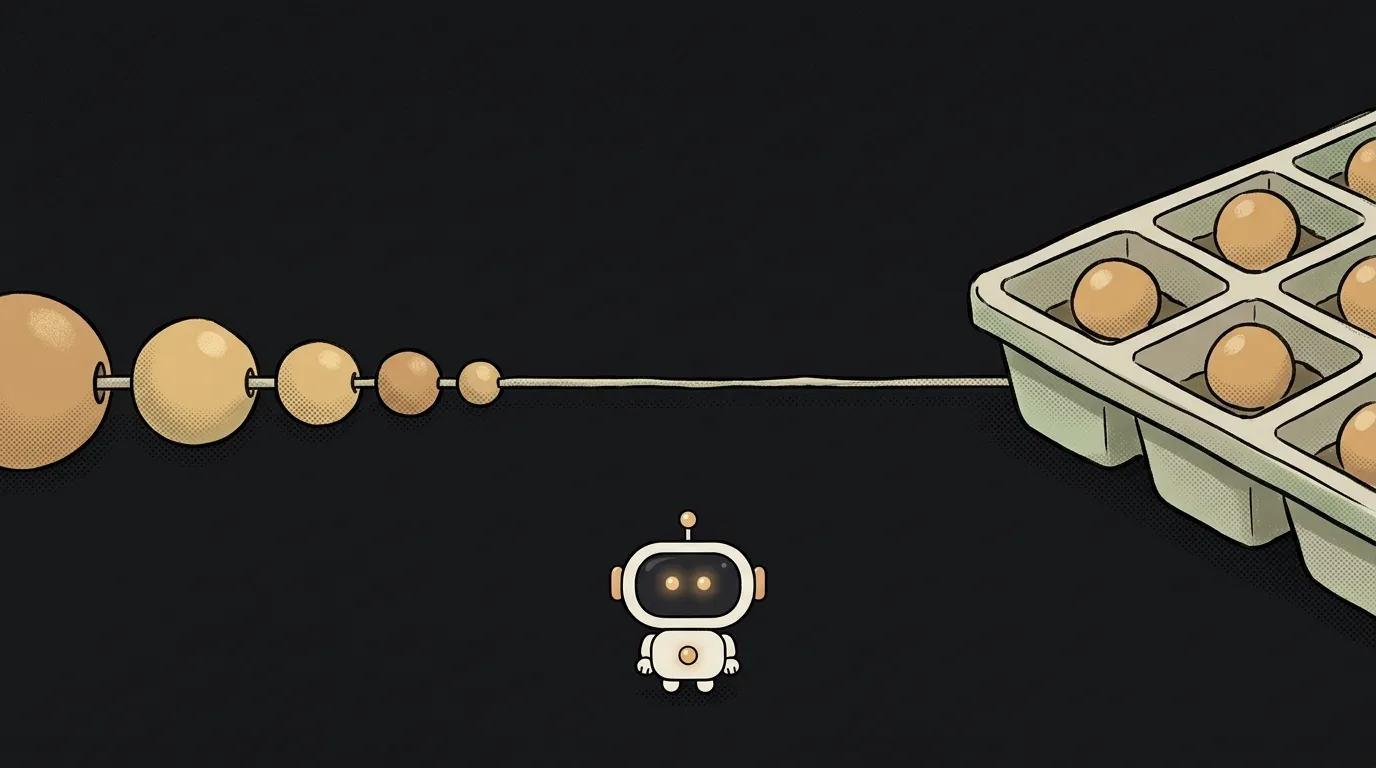
Flexbox or Grid — which to choose (and the sign you chose wrong)
Flexbox vs CSS Grid: the real difference, the criteria to choose on, and the one sign that tells you you picked the wrong layout. With examples and a verdict.

Why 100vh is taller than the screen on mobile — 3 causes and how to fix them
Your 100vh block spills past the phone screen and the button hides under the address bar? Three causes explained: browser bars, the keyboard, the gesture bar.

What is the safe area — and how one word in a meta tag hides your button under the notch
The safe area is the part of the screen no notch, rounded corner or gesture bar covers. How env() handles it in CSS and what viewport-fit turns off.

What is prefers-reduced-motion — and why less motion doesn't mean no animation
prefers-reduced-motion is the Reduce Motion system setting your site reads with one line of CSS. Which motion makes people sick and what you can keep.

What is forced colors mode — when Windows repaints your website
Forced colors is the high contrast mode where Windows swaps your site's colors for its own. What breaks, how to test it in a minute, and the CSS fixes.

object-fit: cover vs contain — which one stops images from squashing or getting cropped
object-fit: cover vs contain compared on cropping, empty bars, card grids and photos of people. Plus scale-down for logos and object-position.

How to add a share button to your site — the phone's own share sheet, no social widgets
How to build a share button with the Web Share API: the phone's native share sheet, a fallback for desktop, and three mistakes that quietly break it.

Why your focus outline disappeared — 4 causes and how to bring it back
No focus outline when you press Tab? Four causes: outline: none in your CSS, a clipping parent, a sticky header and color — how to check and fix each.

What is tab order — and why CSS can't rearrange it
Tab order is the queue the Tab key follows through links and fields. Where it comes from, why CSS order breaks it, and which tabindex values are safe.

What is ARIA — and why pages that use it have more errors
What ARIA is in plain words: labels for screen readers that change only how an element sounds, not how it behaves. And why bad ARIA hurts more than none.

What is a mega menu — and why it shouldn't open instantly
A mega menu is a large dropdown panel with a site's sections. When it beats a regular dropdown, why a half-second pause matters, and Amazon's triangle trick.

How to add a “Copy” button — and why it stays silent on http
How to add a copy button to your site: navigator.clipboard in five steps, a “Copied” confirmation for screen readers, and three reasons copying fails.

display: none vs visibility: hidden — the difference, and what screen readers hear
display: none vs visibility: hidden compared on layout space, clicks, Tab, screen readers and animation. Plus a way to hide an element from eyes only.

Why position: sticky isn't working — 3 causes and how to find yours in a minute
Your position: sticky header scrolls away with the page? Three common causes — a missing top, overflow on a parent, no room to move — and how to check each.

What is infinite scroll — and why you can never reach the site footer
Infinite scroll loads more content as you scroll. Here's how it works, where it breaks — the footer, the Back button, Google — and when to use it.

What is a skip link — the hidden link that saves 40 Tab presses
A skip link is a hidden “Skip to main content” link that appears when you press Tab. Who needs it, how to build one in five minutes and how to test it.

What is a command palette — a search that finds actions, not pages
A command palette is a window you open with a shortcut: type what you want to do and hit Enter. How it works and whether your app actually needs one.

Link or button — which to use so Tab, new tabs and Google all work
Link vs. button compared on keyboard, opening in a new tab, Google Search and screen readers. A one-question rule — and what's wrong with a div with onclick.

How to make a custom 404 page — without getting a “soft 404” from Google
How to make a custom 404 page on Netlify, GitHub Pages, nginx, Next.js and in a React SPA — and check that the server answers 404, not 200.

Why does my page show 404 after refresh — when links inside the site work fine
A React or Vite site loads, clicking around works, but F5 on an inner page gives 404. Three causes and ready-made settings for Netlify, Vercel and nginx.

What is client-side routing in an SPA — and what the browser stops doing for you
Client-side routing changes the page address without asking the server. How it works under the hood, and the four things the browser no longer does for you.

What is a hamburger menu — and what hiding your navigation actually costs
A hamburger menu is the three-line icon that hides a site's navigation. What the NN/g study found: on desktop, hidden menus get used about half as often.

What are breadcrumbs on a website — and why they're not your click history
Website breadcrumbs are the “Home > Section > Page” trail. Who they actually help, how to build them right, and what Google changed about them in 2025.

Tabs or an accordion — which to choose, and why Ctrl+F only finds one of them
Tabs vs. accordion compared on screen size, find-in-page, keyboard and code size. A straight verdict on when to use each — and when to hide nothing at all.

How to keep filters in the URL — so a link opens the same view and Back works
How to store filters, sort order and the active tab in the page address: six steps with URLSearchParams, pushState vs. replaceState, and ready-to-use code.

Why my form clears everything I typed — 3 causes and the fix
The form empties itself after an error and people retype it all. Three causes: a blank server re-render, a remounted component, and a Back that never restored.

What is autofill — and why the browser doesn't recognize your fields
Autofill doesn't read your name or id — it reads the autocomplete attribute. Here's the word list browsers look for, and why you can't just switch it off.

What is an input mask — and why it usually gets in the way
An input mask types the brackets and dashes for you. Here's why it validates nothing, where pasting breaks it, and what to use instead in your forms.

What is a required field — and why the asterisk advice contradicts itself
A required field is the required attribute plus a marker for humans. Why NN/g and GOV.UK give opposite advice — and how to pick the rule for your own form.

How to build a multi-step form — so people actually finish it
A step-by-step walkthrough: how to split a long form into screens, where to keep the answers, how not to lose them on Back, and why you need a review screen.

Dropdown or radio buttons — which to use in a form
Dropdown vs radio buttons compared on the criteria a beginner can actually see: taps, visible options, small screens — plus a straight rule for choosing.

Why my tooltip doesn't show on mobile — three causes and how to fix each
On desktop the tooltip appears on hover; on a phone it's missing or stuck. The three real causes — hover, the title attribute, clipping — and the fixes.

What is progressive disclosure — and why a hidden button makes an interface clearer
Progressive disclosure means deferring rare features to a second level. Here's why it speeds beginners up, the two conditions it needs, and where it breaks.

What is microcopy — and why one line next to a field kills a wave of errors
Microcopy is the small text in an interface: buttons, field labels, errors. Here's why one line beats a redesign, and the four places it matters most.

What is a dark pattern — and why interfaces now cost companies billions
A dark pattern is an interface that pushes you into a decision you didn't want. The types, the regulators' fines, and how not to ship one by accident.

Placeholder vs label — which to use in a form (and why grey text inside loses submissions)
A placeholder saves space but disappears as you type. We compare placeholder vs label on six criteria and give a straight answer on what to use.

How to rewrite UI text with AI — step by step, with a ready-made prompt
By default a model writes 'Oops! Something went wrong'. Six steps and a ready prompt to get buttons and error messages that actually help people.

A song where you change one chord — instead of spinning the generator again
Music AI has been a slot machine: change one word in your prompt, get a whole different song. On September 9 the open YuE2 landed. It writes the notes as plain text first, you edit them — and it re-sings exactly what you asked for.

Why users don't see my error message — 3 causes and how to check each
"I clicked and nothing happened" — yet the error is displayed. Three reasons your error message never reaches the user, and a one-minute check for each of them.

What is optimistic UI — and why the like registers before the server answers
What optimistic UI means in plain words: the app shows the result before the server confirms it. Why teams do it, and how to roll it back without losing the user.

What is an empty state — and why it's the first screen every user sees
What an empty state is and how to design one: the three kinds of emptiness, the mistake beginners make, and what to write instead of "No data".

What is a toast notification — and why some people will never see it
What a toast notification is: a small panel that pops up and disappears on its own. When it fits, how long to keep it, and who never gets to read it at all.

Toast or inline error — where to show it so people actually fix it
Toast vs inline error, compared on visibility, accessibility and message length. A straight answer on where form errors belong and when a toast is the right call.

How to replace "Are you sure?" with Undo — 5 steps and a working setup
How to add an undo action instead of a confirmation dialog: five steps with code — a delete flag, instant removal, the undo window, and what to do with timers.

The clip is already rolling — and you call out what happens next
Not «send a prompt, wait for an mp4». A session streams video for up to 15 minutes while your commands fly into it live — and the character stays the same. A weekend build with a ready starter prompt.

Why the model refuses my request — and how to rephrase without cheating
Why the model refuses your request: a trigger word fired, context was missing, or it wasn't the model at all. Three causes, and what to do about each.

What is an AI detector — and why it flags careful humans more often than machines
An AI detector doesn't see AI. It measures how predictable your text is — which is why it flagged 61% of essays by non-native writers. Here's how it works.

What is a false positive — and why a 99% accurate filter is wrong half the time
A false positive is a system accusing someone innocent. Let's do the math on why a filter that's 99% accurate produces half its flags in error.

What is a confidence score — and why "97% sure" doesn't mean "true"
A confidence score is how sure a model is of its words, not of their truth. Where the number comes from, and why fine-tuning made it lie.

Word blocklist vs AI moderation — what to filter user content with
Word blocklist vs AI moderation: compared on cost, evasion, languages and false positives — with a straight answer on what to use in your first app.

How to add content moderation to your app — five steps and zero cost
How to add content moderation to your app: a free endpoint, 13 categories, three outcomes instead of a ban, and checking the model's output too.

Why an API returns 401 — and how it differs from 403: 3 causes
A 401 error means 'I don't know who you are,' not 'you're not allowed.' Here's why an API returns 401, where to find the cause, and how to fix the 3 most common.

What is SSH — how to log into someone else's computer without a password in the open
SSH is a secure login into a remote computer. Here's what SSH is, why the safest login uses no password at all, and where you'll run into it.

What is hashing — why a website doesn't know your password
Hashing is a one-way fingerprint of data. Here's what a hash is, why a site stores not your password but its imprint, and how hashing differs from encryption.

What is a race condition — the bug that shows up only sometimes
A race condition is a bug that fires every other time and vanishes when you look. Here's what a race condition is, why code 'runs ahead,' and how to fix it.

A web page that watches your camera live — 30 frames a second, offline, no server
A live camera with recognition used to mean a server, a video stream, and lag. In July Google brought a fast GPU engine into the browser: your model runs on the video right there, and nothing leaves your device. A weekend build.

How to set up a cron job — so your script runs itself, on schedule
Step by step: how to set up a cron job, read its five-field syntax, and dodge the classic traps. Your script will run itself, without you.

Docker or a virtual machine — the difference, and what a beginner should pick
Docker and a virtual machine both promise 'runs the same everywhere,' but differently. We compare Docker vs VM on weight, speed and isolation — and what to choose.

Why images aren't loading on my site — 3 causes, starting with letter case
Images not loading on your site: a broken icon instead of a photo. We break down 3 causes — path and case, files missing from deploy, hotlinks — and fix each.
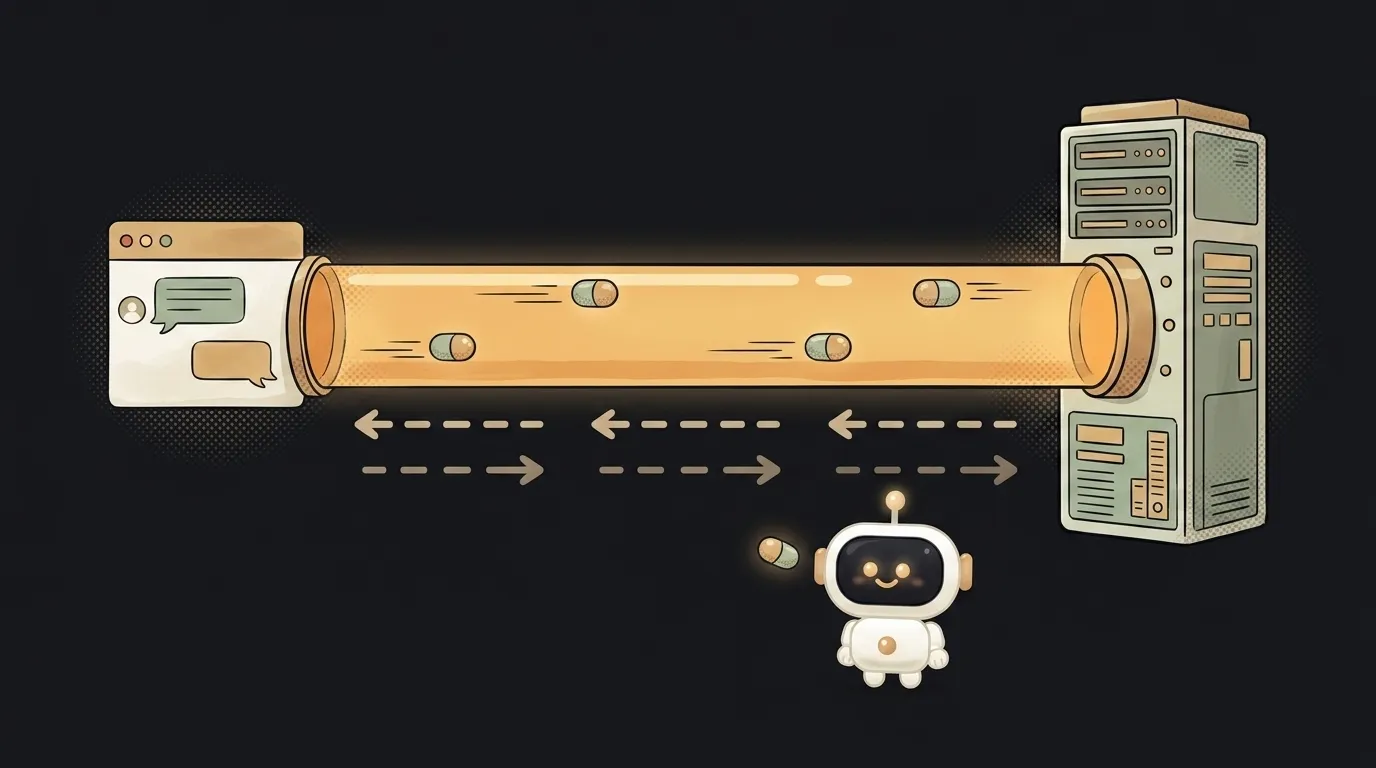
What is WebSocket — and why a chat updates itself without a page reload
WebSocket is an open pipe between the browser and the server: data flows both ways on its own. Here's how it works and when plain HTTP isn't enough.

What is technical debt — and why it piles up faster with AI
Technical debt isn't "bad code" — it's the price of "fast now". Here's how it grows interest, why AI speeds it up, and when it's time to pay it back.

What is hosting — someone else's computer that never gets switched off
Hosting is a computer where your site lives 24/7. Here's how it differs from your laptop and which kind of hosting to pick for your first project.

How to read an error message — the three-line method instead of panic
How to read an error message: find the type, the text and your own line in the stack trace. A three-line method that untangles the red wall in minutes.

ChatGPT subscription or the API — two different products, and here's which one you need
A ChatGPT subscription and the API are different things: a flat fee for chat vs paying per token. We compare price, limits and access — and pick for you.
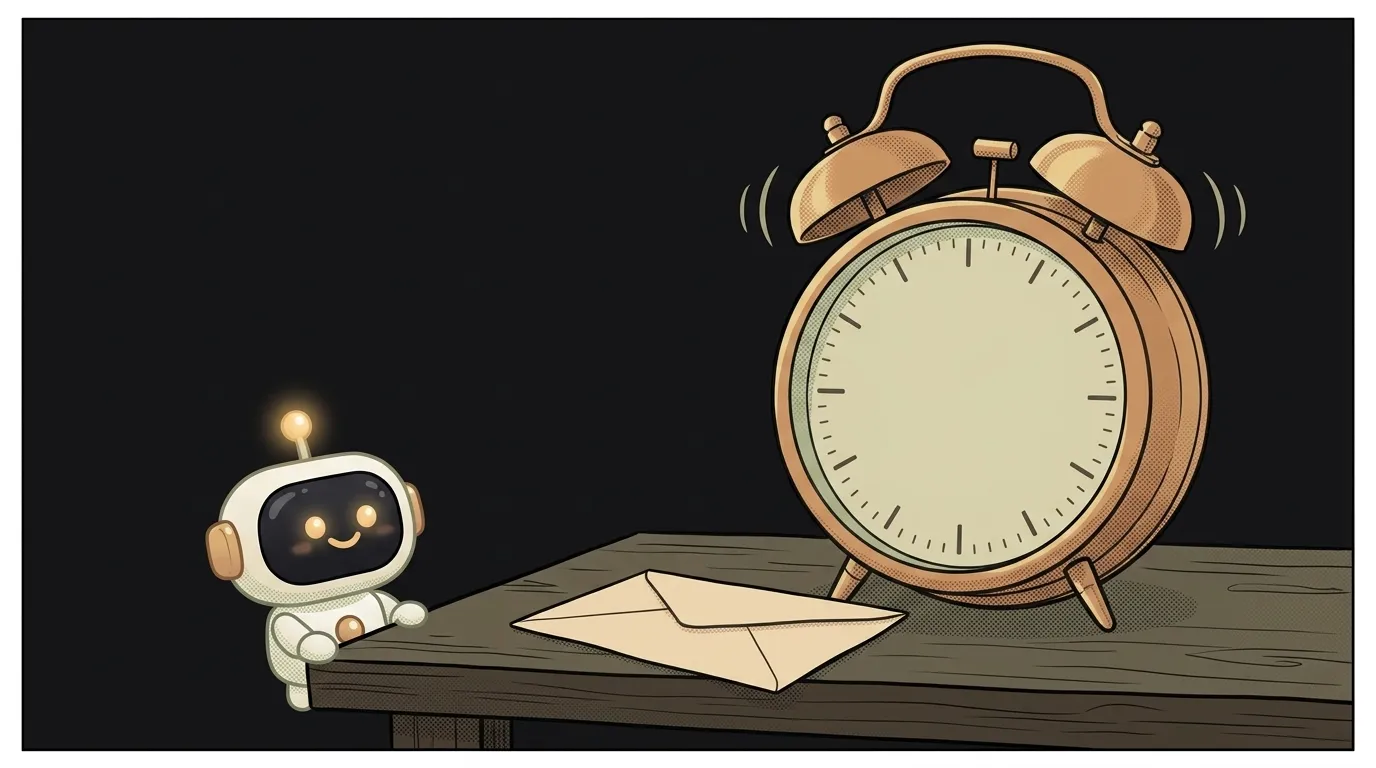
Why your cron job isn't running — and how to make cron confess
Cron is silent on success and on failure alike. The three real reasons a cron job doesn't run: a bare environment, relative paths, a sleeping machine.

What is YAML — the format where Norway turns into false
YAML is the config format where indentation is syntax. How to read YAML, why one space can break the file, and how to dodge the famous Norway problem.
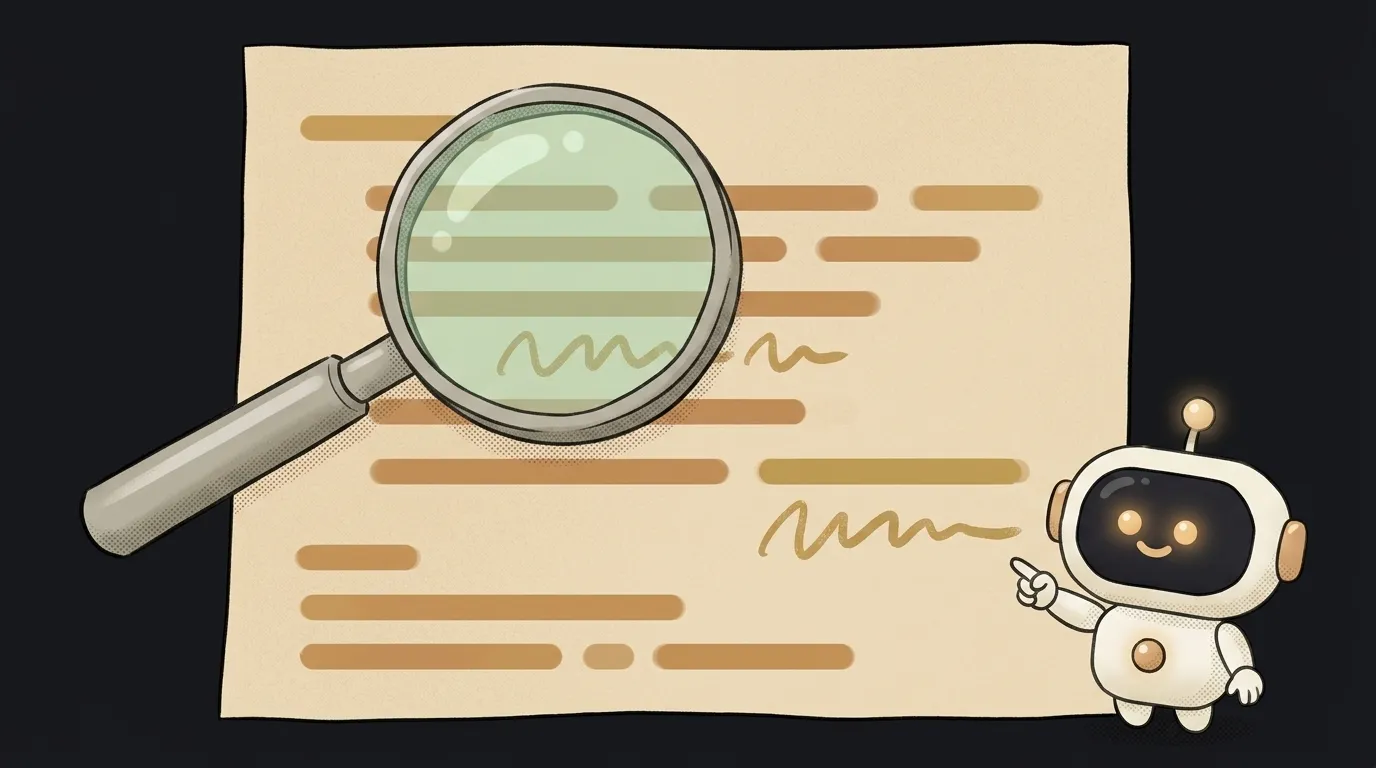
What is a linter — the robot that finds bugs without running your code
A linter reads your code as text and catches mistakes before you run it: typos, dead variables, suspicious spots. How it works and how to turn it on.
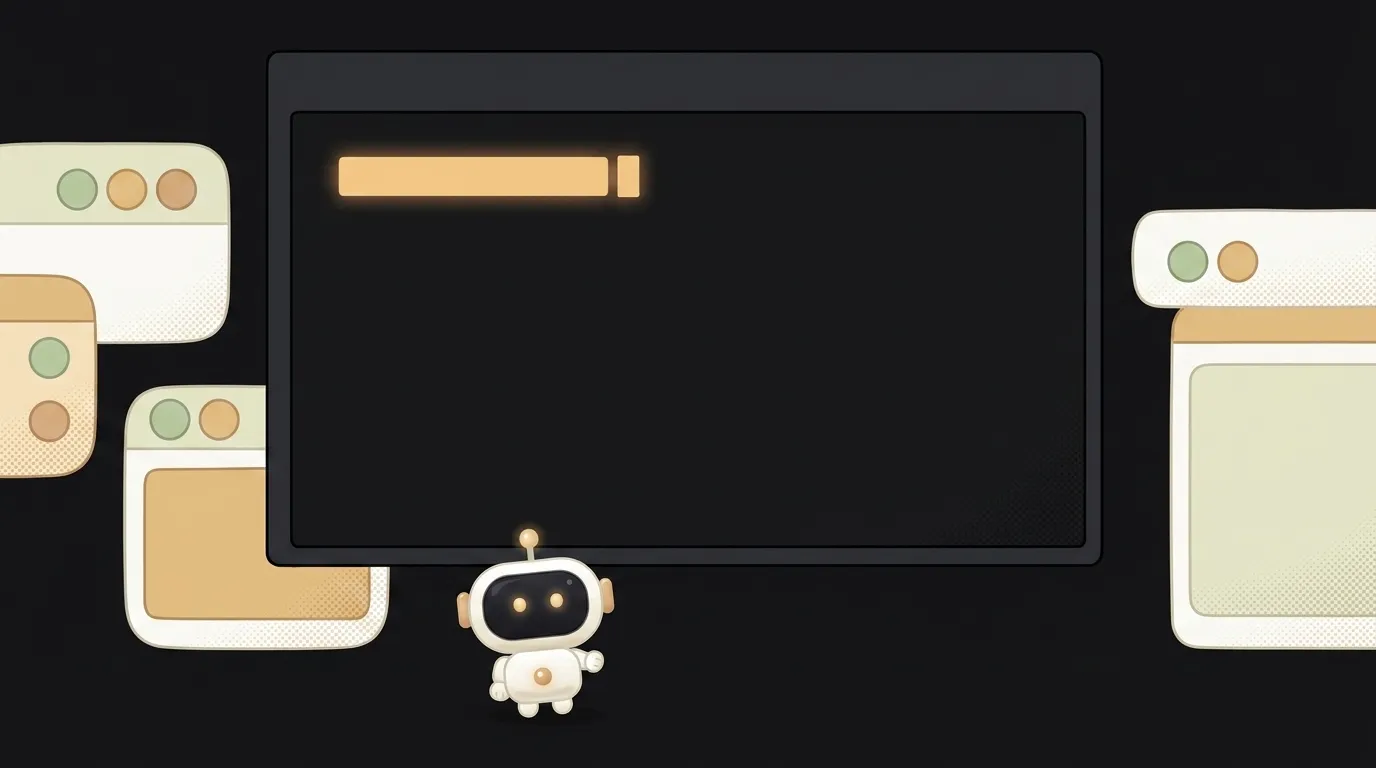
What is a CLI — why the top AI tools look like a black window
A CLI is a program with no windows or buttons, driven by text. Learn to read any command with one simple pattern — and why AI agents live in CLIs.

Describe a place in words — and hear it. AI now mixes sound as a scene, not clips
On July 20 ByteDance unveiled Seed Audio 1.0: footsteps, rain, hum and voices arrive in one request, already mixed into a single track. A weekend-sized ambience generator rides on it.

JSON vs YAML — how to choose when they're almost one format
JSON and YAML aren't rivals: YAML formally includes JSON. An honest comparison — comments, strictness, error styles — and one simple rule for choosing.

How to write a Git commit message — for future you and for AI
A commit message isn't a formality — it's a letter to future you and context for AI agents. The two-part format, a template, and good-vs-bad examples.

Why your bot stops when you close your laptop — and how to make it immortal
You close the laptop and the Telegram bot goes silent. Not a bug: a bot is a process on your machine, not a cloud. Three causes and three real fixes.

What is web scraping — and is it even allowed?
Web scraping is a program reading websites for you and saving the data into a table. How it works, where the limits are, and how AI changed the game.

What version 1.0.0 means — and why projects break on their own
A version like 1.0.0 isn't a counter — it's a promise about what breaks on update. Semver explained: the ^ in package.json and lock files.

What are logs — and why your console.log prints somewhere else
Logs are your program's diary: what happened and when. Where to read them on the frontend, backend and hosting — and how to feed them to AI properly.
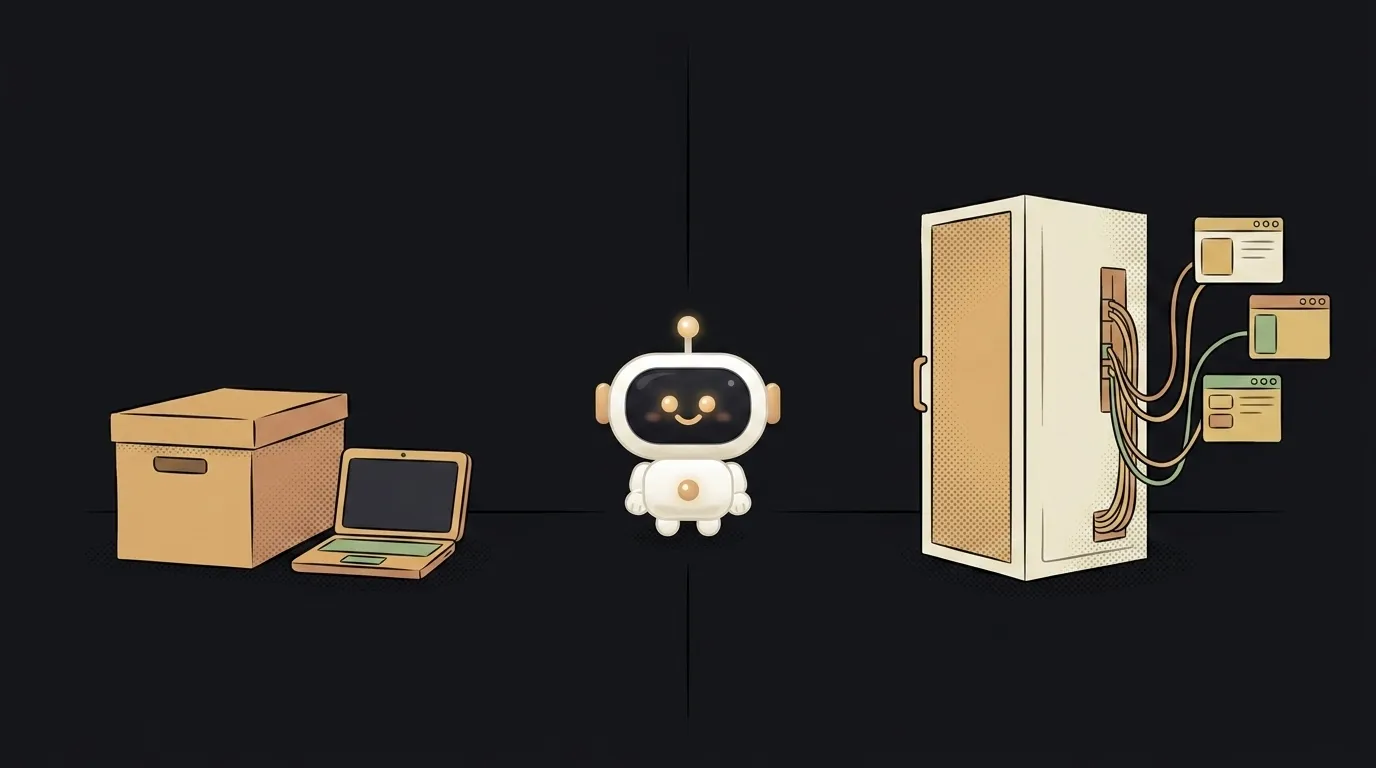
SQLite vs Postgres — which one for your first project
SQLite is a database in a single file next to your code; Postgres is a separate server. An honest comparison: setup, deploys, users — and what to pick.

Drag a folder — your site is live. No signup needed
On July 8 Cloudflare removed the beginner's biggest wall: the live link comes BEFORE the account. Build an invite page with AI and ship it in a minute.
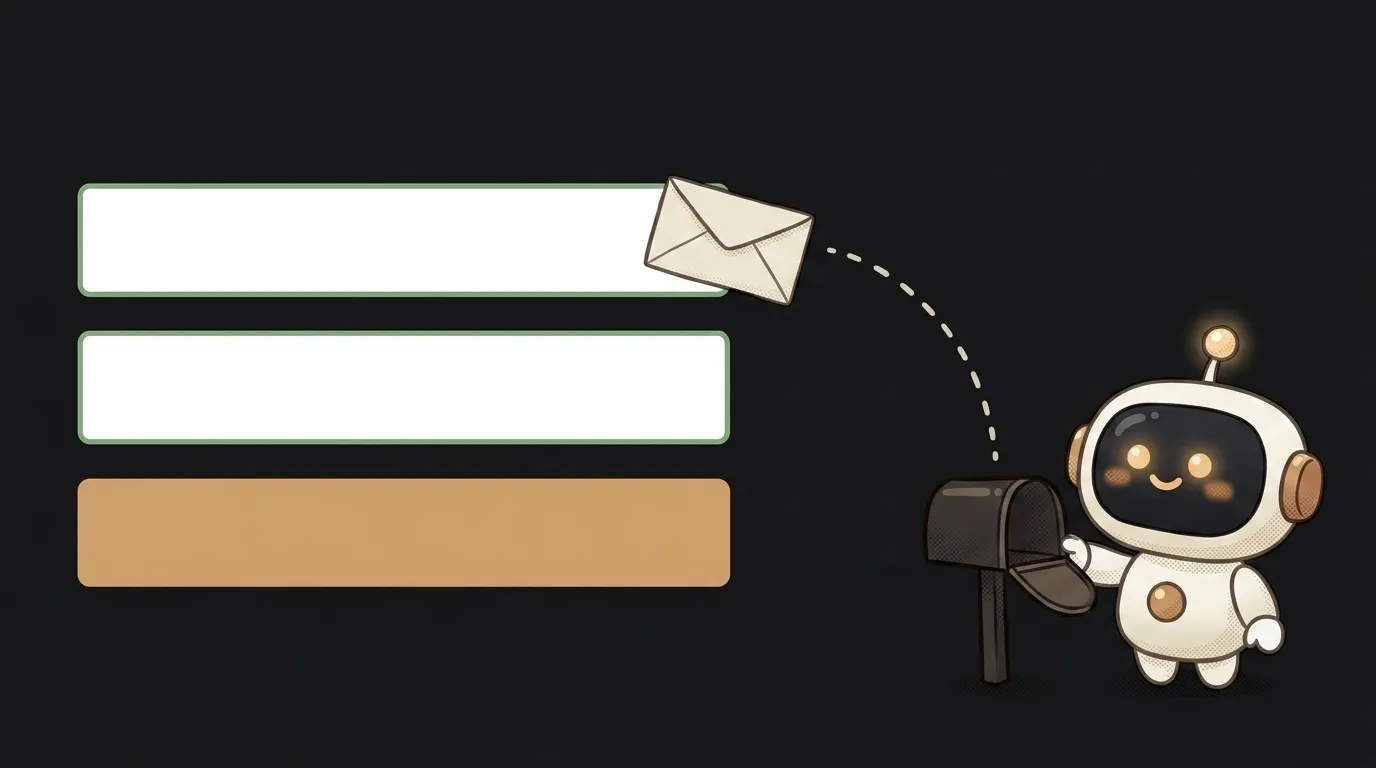
How to add a contact form to your site — so messages actually arrive
A step-by-step contact form for your site: the markup, sending without a page reload, where messages land — and a one-line spam trap.

What is refactoring — why change code that already works
What is refactoring in plain words: editing code so that nothing changes on the outside. Why touch working code at all, and how to ask AI to do it safely.

What is Markdown — the language you already write in
What is Markdown in plain words: every AI answer is written in it. Here are the six markup symbols that cover almost everything you'll ever need.

What is an IP address — and why 127.0.0.1 means "you"
What is an IP address in plain words: mail for computers, external vs internal addresses — and how to open your project on your phone using the terminal URL.

Terminal commands every beginner needs — 8 to stop fearing the black window
Terminal commands for beginners: 8 of them, enough to calmly follow AI instructions — enter a folder, start a project, stop the server, repeat a command.

One image — and your character talks back, live
A talking character used to mean animators, lip-sync, and a game engine. Now a drawing comes alive from a single image and holds a real conversation. Bring your hero to life over a weekend.
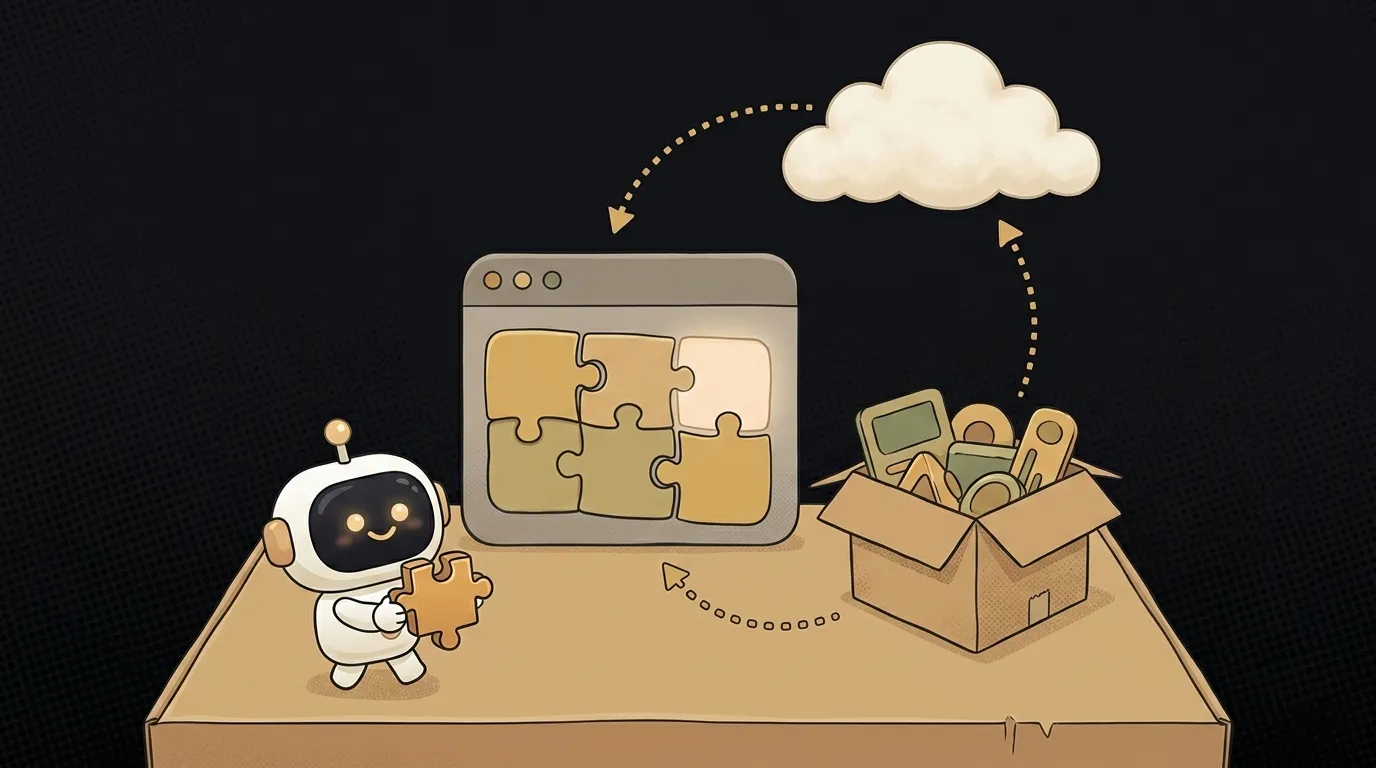
How to run a GitHub project locally — 5 steps from clone to localhost
How to run a GitHub project on your machine: git clone, installing dependencies, the .env file, and the first launch. Five steps — and someone else's code runs locally.

Authentication vs authorization — the difference, and why 401 isn't 403
Authentication answers "who are you", authorization — "what are you allowed to do". A table, examples, and which error means what: 401 vs 403.
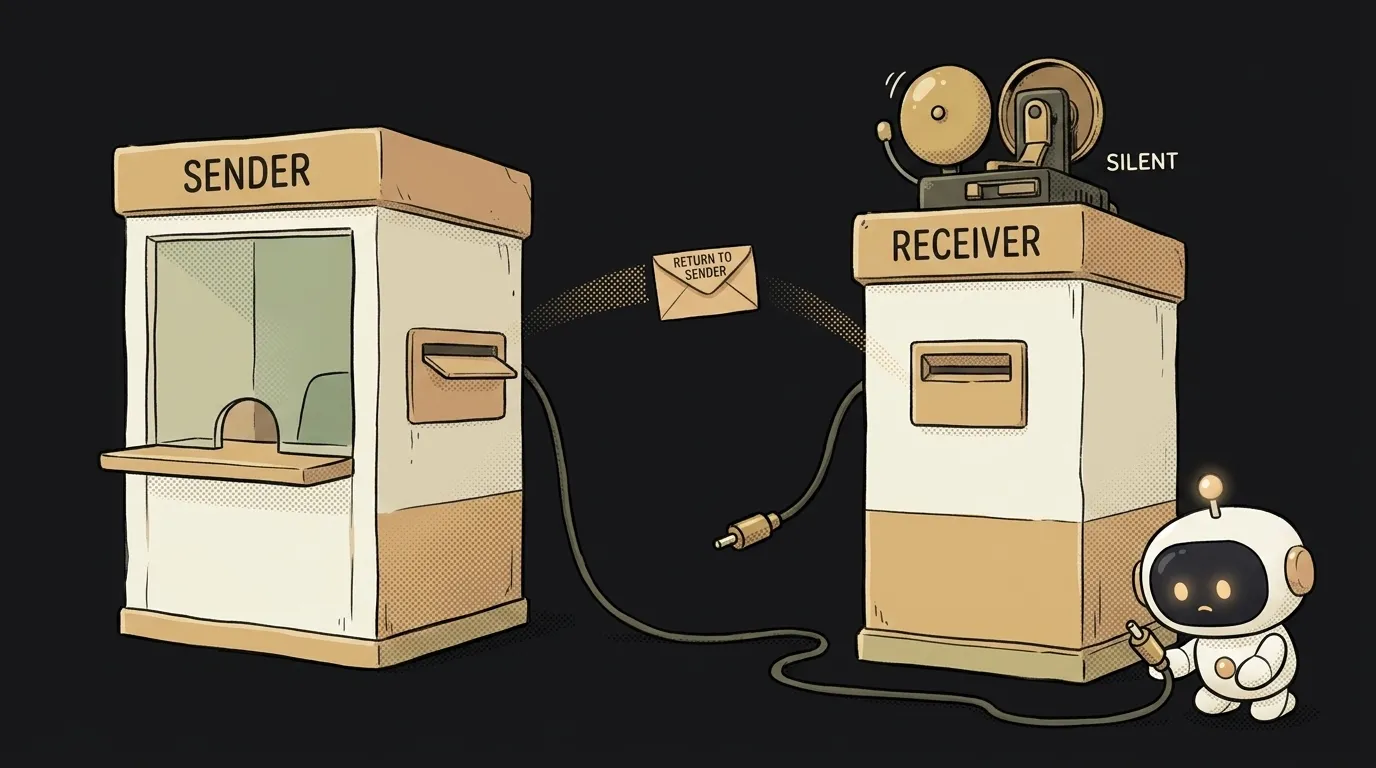
Why my webhook isn't firing — the three causes that catch everyone
Why your webhook isn't firing: it almost always fired. Three causes by frequency — localhost unreachable from outside, no 200 reply, a signature mismatch — and the fix.
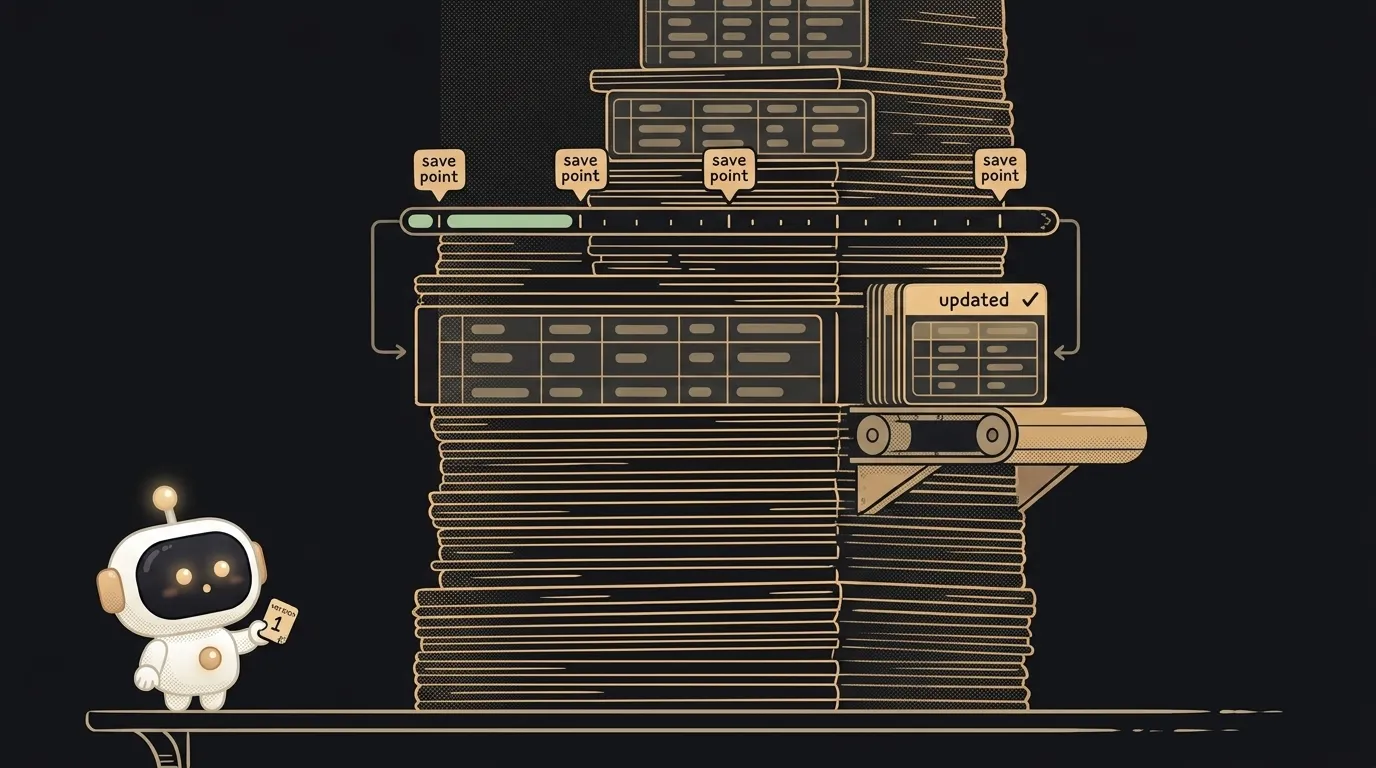
What is a database migration — it's git for your schema, not moving data
A database migration isn't moving data — it's a version of your table structure. What it is, how it works, and why you need one even solo.

What is a feature flag — and why code in production doesn't mean 'on'
What a feature flag is in plain words: a switch in production that separates 'code shipped' from 'feature visible.' Gradual rollout and a kill switch — with no new release.
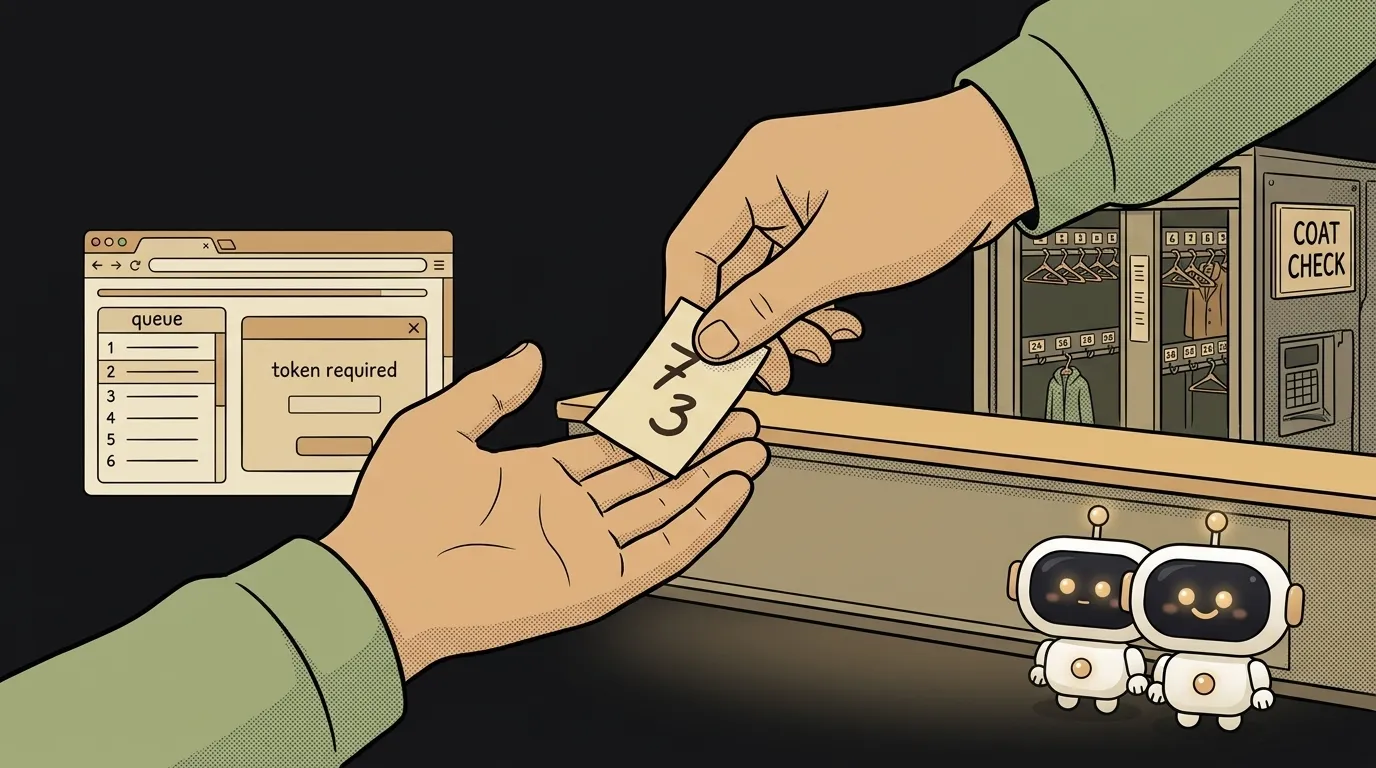
What is a cookie — and why the site remembers you logged in
What a cookie is in plain words: the server doesn't remember you, and a cookie is the coat-check ticket it recognizes you by. And why it isn't spying.
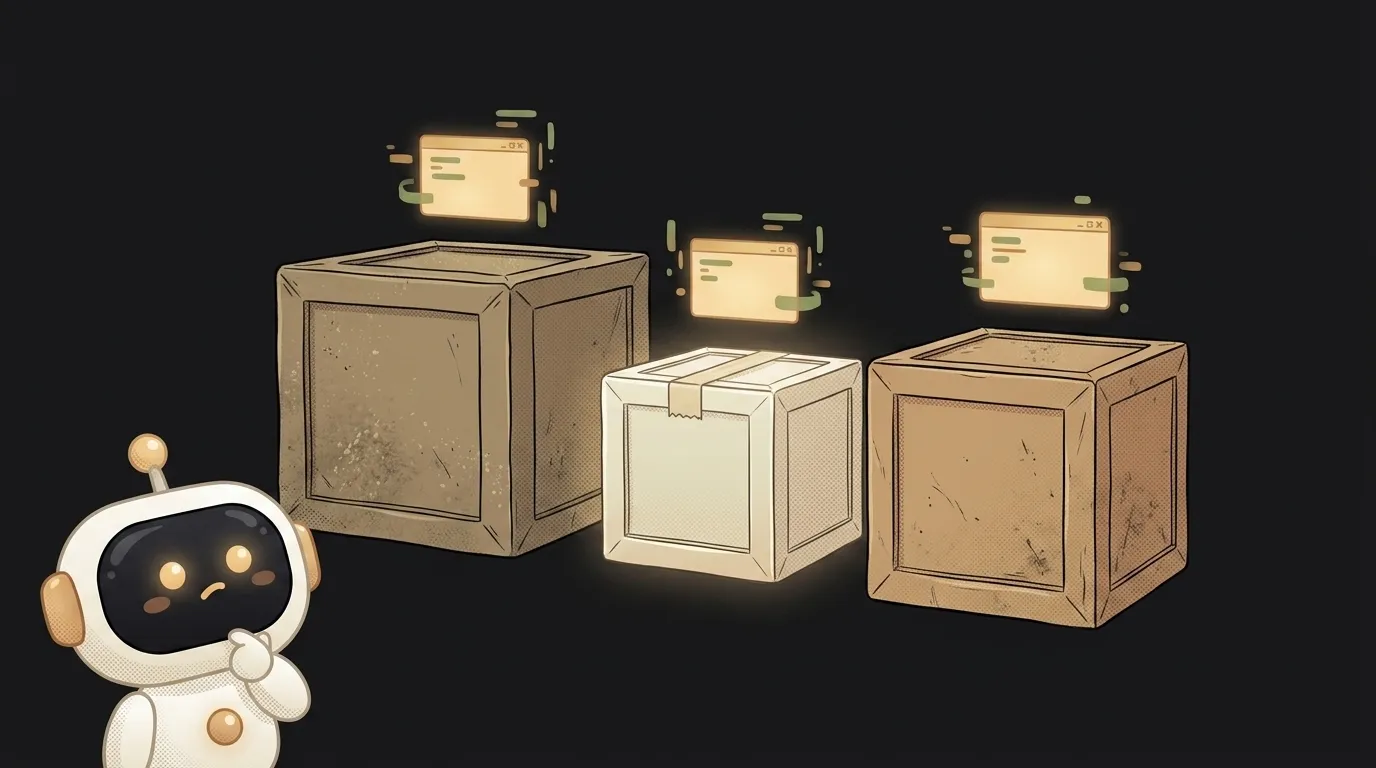
npm vs pnpm vs yarn — which package manager to pick as a beginner
npm, pnpm or yarn: all three install the same packages. We break down the difference in speed, disk space and strictness — and who should pick what.

How to add search to your app — from a simple filter to search by meaning
How to add search to your app: 4 levels from an in-memory filter to search by meaning. Start with one line of SQL — most projects never outgrow it.
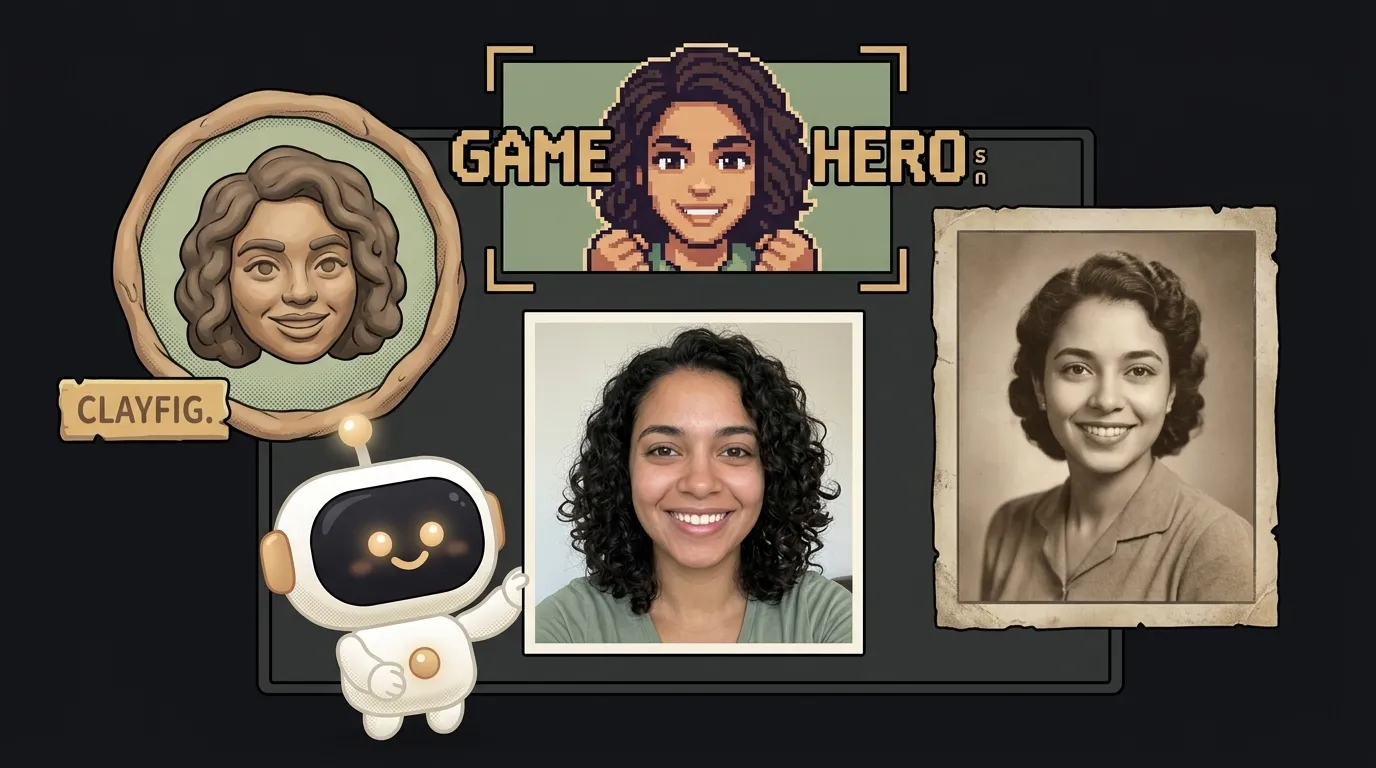
One selfie — and you're in any era, with the same face
AI used to draw someone who merely looked like you. Now it holds your actual face and drops you into the 90s or a cartoon. Build the generator for it this weekend.

Why is my AI bill so high — where your tokens actually leak
Your API bill jumped even though requests look the same. Here are the 3 main causes of a high AI bill — long context, an expensive model, loops — and how to fix each.

What is npm — why one command pulls in thousands of files
npm is a warehouse of ready-made JavaScript code plus the command that installs it. What npm is in plain words, what npm install does, and why it's both handy and risky.
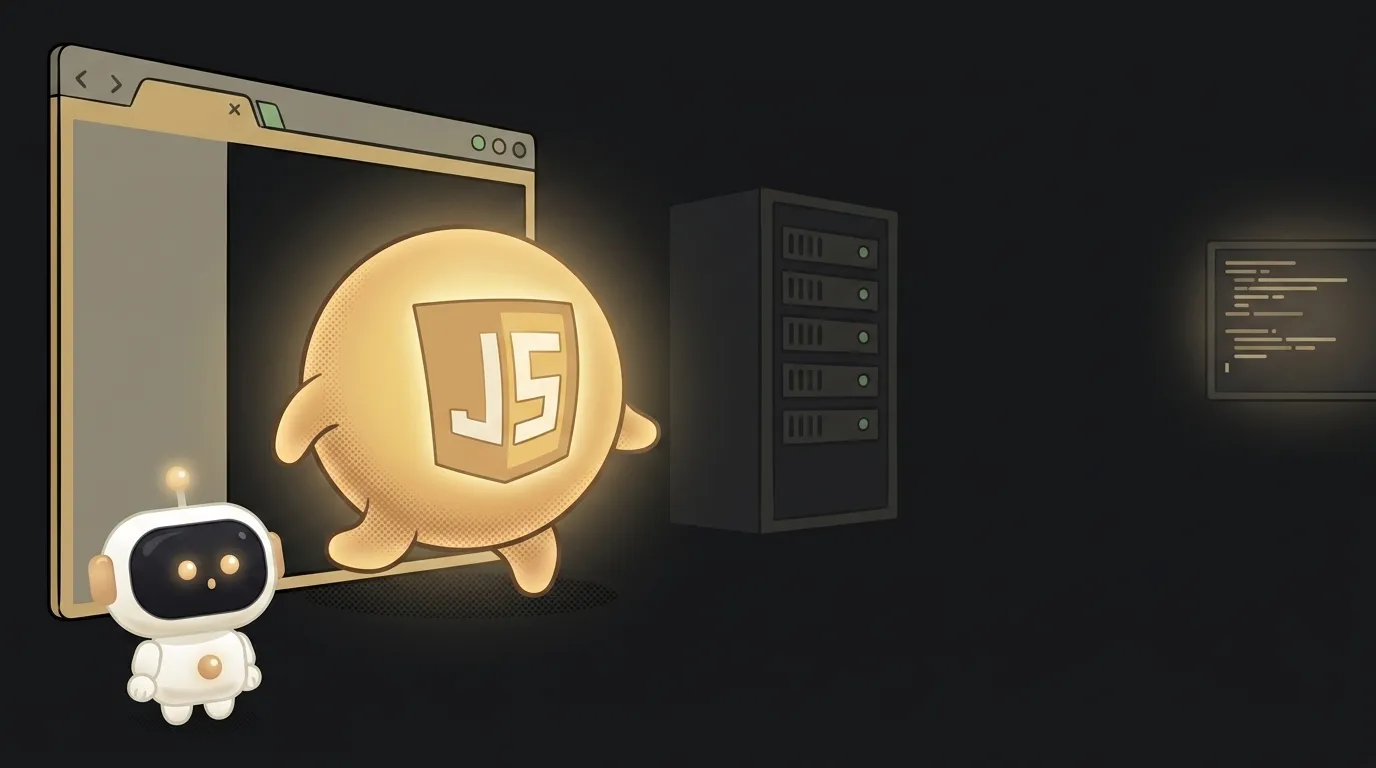
What is Node.js — how JavaScript escaped the browser
Node.js is how you run JavaScript outside the browser: on a server, in the terminal, anywhere. Here's what Node.js is in plain words, and why you'll need it.
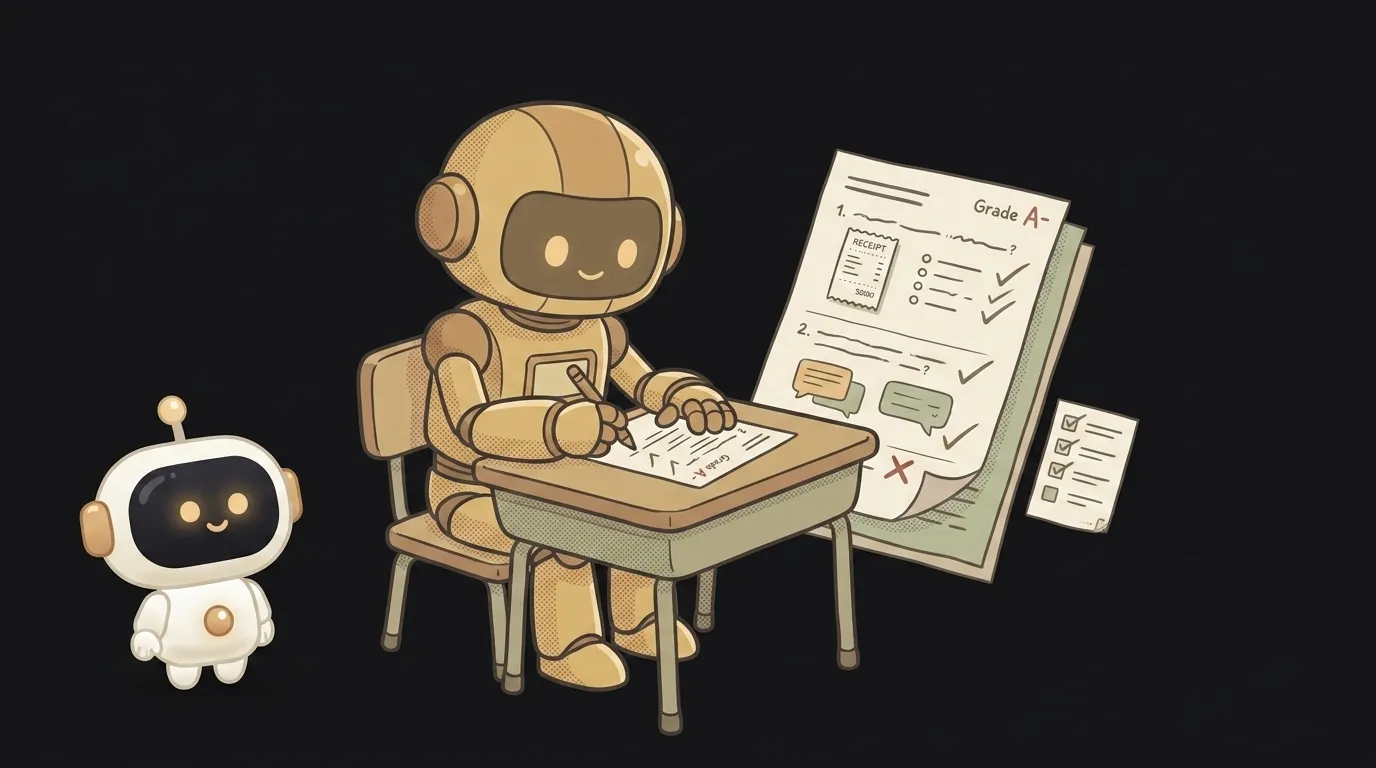
What is an eval — why topping a benchmark won't solve your task
An eval is a small exam you write for a model, tuned to your task. What an eval is in plain words, how it differs from a benchmark, and how to build your own in an evening.

That faded photo from the drawer — alive again, in one prompt
Scratches, a yellow haze, blurry faces. This used to take hours in Photoshop — now a model fixes an old photo in one pass. Build the little tool for it this weekend.

How to add rate limiting — a fuse against a 10,000-request bill
One buggy loop in AI-written code and an API gets hammered a thousand times a minute. Step by step: how to add rate limiting, from an in-memory counter to a ready library.

Git vs GitHub — why they're not the same thing at all
Git is a program on your laptop, GitHub is a website. Here's the difference between Git and GitHub in plain terms: what each one does and why you need both.

Why my JSON parse fails (Unexpected token) — 3 causes, none of them in the JSON
SyntaxError: Unexpected token — it's almost always just not JSON. Why JSON parsing fails: 3 real causes (the model wrapped it in ```json, the server sent HTML) and the fixes.

What is top-p — and why the newest models ripped that knob out
top-p cuts off the model's tail of unlikely words. What top-p means in plain words, how it differs from temperature, and why turning both knobs at once is a mistake.

What is LoRA — fine-tuning where 0.01% of the weights learn
LoRA freezes the model and trains two tiny matrices on top. What LoRA means in plain words: why it trains thousands of times fewer parameters, and why adapters matter.

What is CI/CD — and why a green checkmark promises nothing
CI/CD is a robot that runs your checks on every commit. What CI/CD is in plain words, why it matters when you code alone, and why that green checkmark lies.

Drop in your spreadsheet and fix the chart with words — the model stops recomputing everything
Every «now break it down by month» used to reopen the file from scratch. Now the model has a live Python notebook: variables survive between requests, the container lives 30 days, 1,550 hours a month are free.

«Just give me the answer already» — and the bot folds. Your rule was on the wrong shelf
Rules usually get stuffed into a user message — and the user cancels them with one line. On July 15 the API let the system role sit in the middle of a conversation: that's your voice as the operator, and it outranks. A weekend build.

OpenAI API vs OpenRouter — which one to plug into your project
OpenRouter takes its cut on top-ups, not on tokens. Comparing OpenAI API and OpenRouter on price, model choice and reliability — and who should pick which.

How to add image upload to your app — 5 steps and one trap
The classic beginner mistake is putting the image in the database. How to add image upload: 5 steps from input to URL, with checks, previews and size limits.

The picture redraws itself while you type
You used to wait for a picture: hit «generate», stare at a spinner. Now it chases your text live — add a word, the image changes instantly. A weekend build.

One sentence in, a full eight-page coloring book out — ready to print
A coloring book used to mean drawing every page by hand. Now you type «a space cat firefighter» and a minute later you have eight black-and-white pages to print. In an evening.

Port already in use — why it happens and how to fix it fast
The «port already in use» error almost always means an old process didn't close and is still holding the door. How to find what took the port and free it — step by step.

What is a tokenizer — why the model never sees letters, and Russian costs more
A tokenizer slices your text into chunks before the model ever sees it — and non-English text makes more chunks. What a tokenizer is, and why it drives cost.

What is a port — why the :3000 in localhost:3000 is a door, not an address
A port isn't an address — it's a «door» on your computer: the :3000 in localhost:3000 says which program to knock on. What a port is, and why there are thousands.

What is a Git commit — why it's a snapshot of the whole project, not a file save
A Git commit isn't «save this file» — it's a snapshot of your whole project with a note on why. What a commit is made of, and why it's so hard to lose.

The QR on an AI poster finally scans — instead of just pretending to be a code
AI used to draw a QR-ish pattern — point your camera and it leads nowhere. Now the model writes code and drops a working QR right into the art. With a ready prompt.
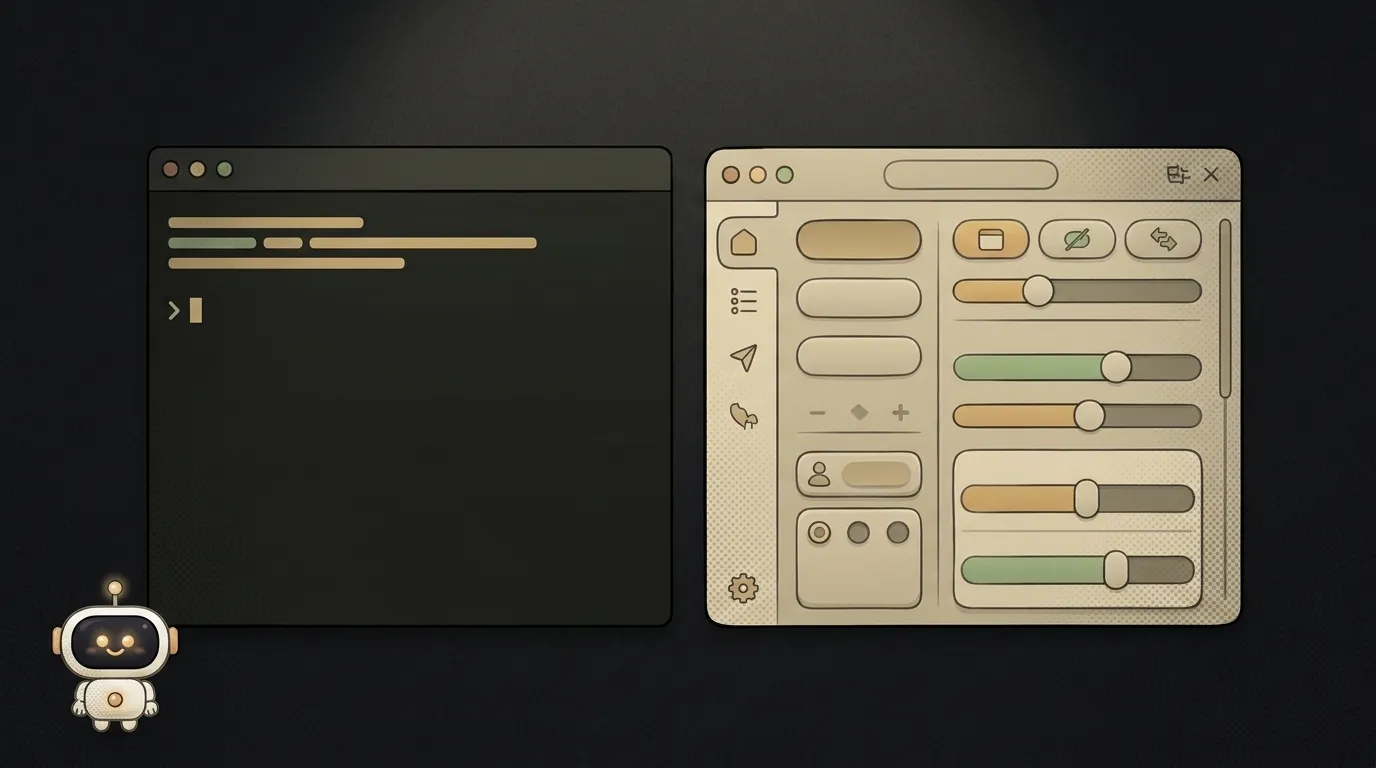
Ollama vs LM Studio — which to pick for running AI locally
Ollama is terminal-first and built for integration, LM Studio is a window with a mouse. Comparing Ollama and LM Studio on cost, interface and use case — and who each is for.

How to connect a frontend to a backend — step by step, with plain fetch
The frontend draws, the backend serves data, and a fetch request links them. Step by step: connect a frontend to a backend, show the data, and dodge the CORS error.

A bot that remembers you next week — instead of forgetting after /start
A normal bot forgets everything the moment you close the chat. Now memory is a separate service: the bot recalls your name and habits a week later. Free, with a ready prompt.

Why npm install fails — 4 causes and how to fix each
npm install fails mostly for 4 reasons: the Node version, a broken cache, a dependency conflict, or the network. Here's each one — how to check and how to fix, no full reinstall.

What is Docker — and why “works on my machine” stops being an excuse
Docker packs your app together with its whole environment into a container that runs the same on your laptop and on the server. Here's what Docker is and why you'd want it.
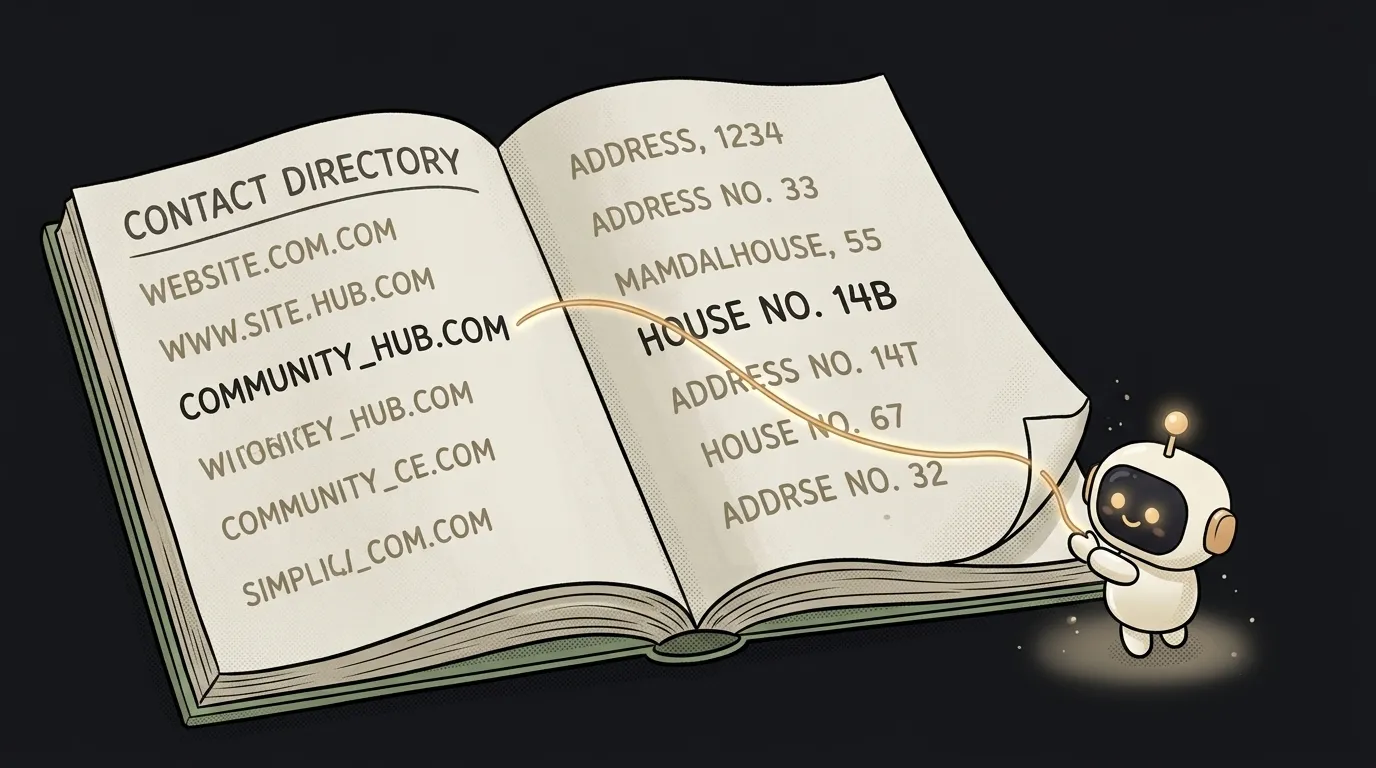
What is DNS — and why your domain didn't “kick in” right away
DNS is the phone book of the internet: it turns a site's name into a server's address. Here's what DNS is and why your site didn't open instantly after you connected the domain.

What is a stack trace — and how to find the line that broke everything
A stack trace is the map of calls that led to an error. Here's how to read a stack trace and find the line in your own code where it crashed in 10 seconds, even as a beginner.

AI images now come in layers — move the headline without redrawing everything
Before, nudging text on a poster meant regenerating the whole picture. Now it arrives as a stack of layers: drag one, the rest stay put. With a ready-made prompt.

How to write tests with AI — lock your code against dumb breakage in 15 minutes
Tests catch bugs before your users do. Here's how to write tests with AI step by step — from picking a function to a green checkmark, even if you're a beginner.

An agent that finishes the job while you sleep — close the laptop, it keeps working
Before, an agent lived only while the tab was open. Close the laptop on the train — it died halfway. Now you set background: true and walk away. With a ready-made prompt.

AI agent vs workflow — when the AI decides, and when to keep it on rails
An agent decides the next step itself; a workflow runs on fixed rails. Here's the difference between an AI agent and a workflow — and when to pick each so you don't over-build.
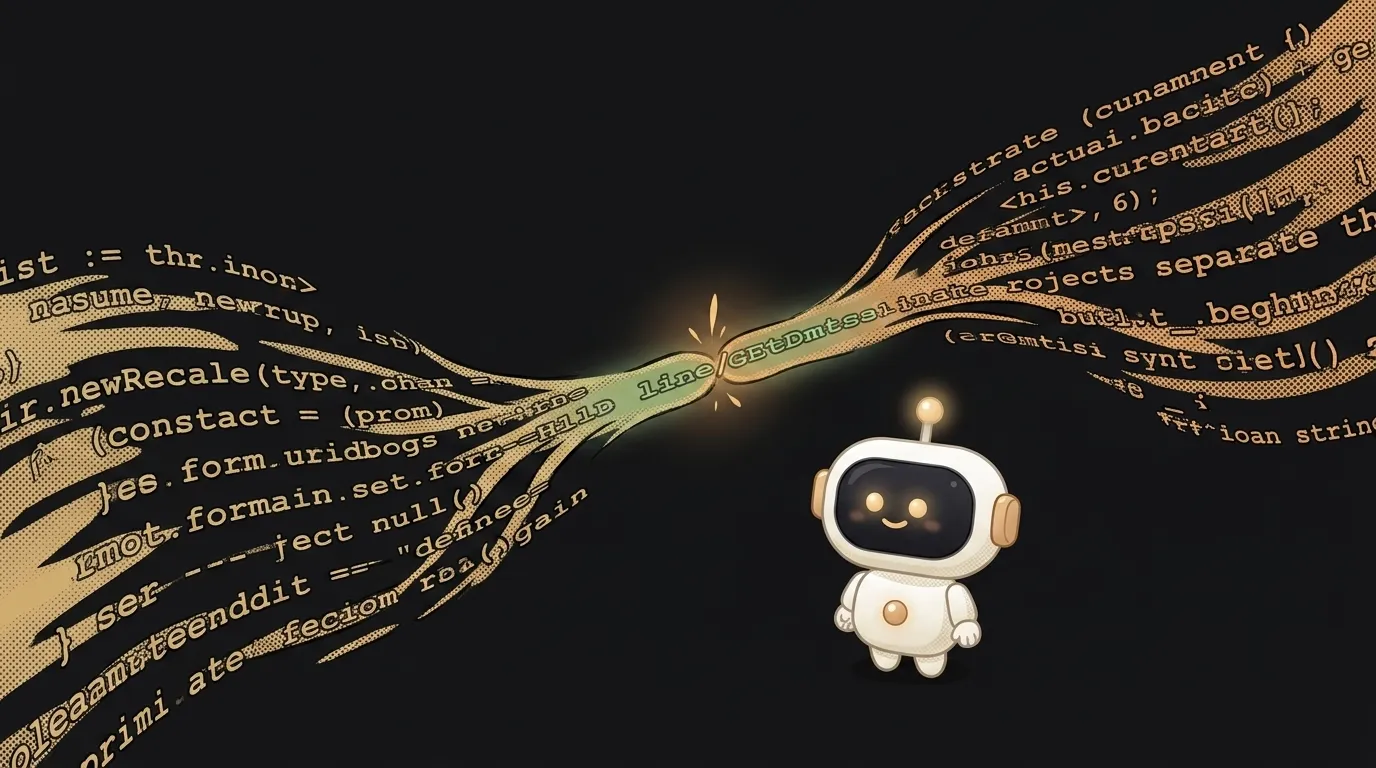
Why Git shows a merge conflict — and how to clear it
CONFLICT in your terminal isn't a breakage — it's a question from Git. Here's why a merge conflict happens, and how to resolve it step by step without breaking your code.

What is open source — and why it doesn't mean 'free'
Open source doesn't mean free, and it doesn't mean 'do whatever you want.' Here's what open source actually is — and why the license decides everything.

What is an MVP — and why it isn't a 'stripped-down app'
An MVP isn't half a product — it's the cheapest way to test whether anyone wants it. Here's what an MVP really is, and how to build one over a weekend.
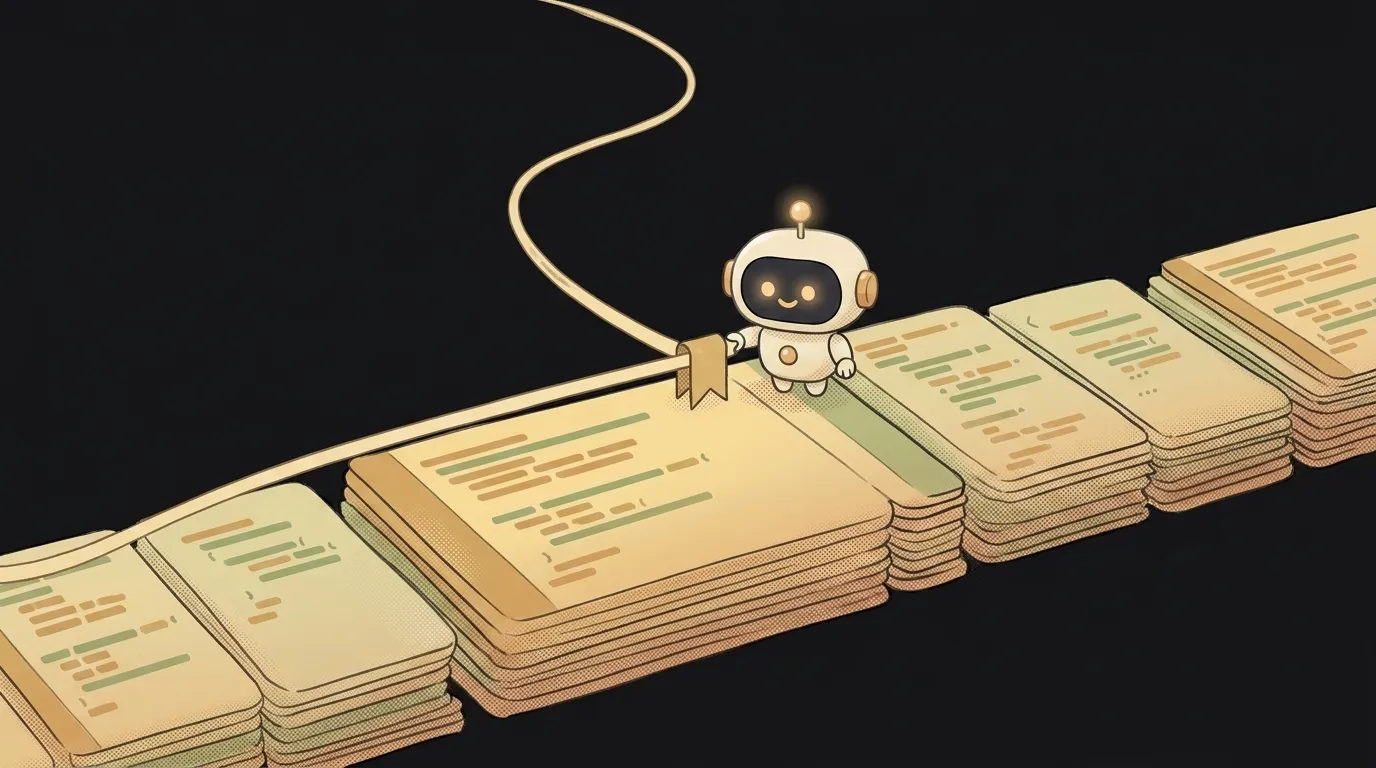
What is a Git branch — and why it isn't a copy of your files
A Git branch isn't a copy of your code folder — it's a lightweight bookmark to one commit. Here's what a branch is, why you need it, and why it's instant.

MVP or prototype — what's the difference and what to build first
People mix up MVP and prototype constantly, but they answer different questions. We compare MVP vs prototype by goal, audience, and lifespan — and say where to start.

A text adventure that thinks faster than you read
The whole game world is one stream from a model. Every turn used to stall on 'loading…'. Now the answer pours out in a blink — and the story comes alive. Starter prompt included.

How to undo a Git commit — 3 commands for 3 situations
Messed up a commit? Git almost never deletes anything for good. Here's how to undo a Git commit step by step — for both local and already-pushed commits.
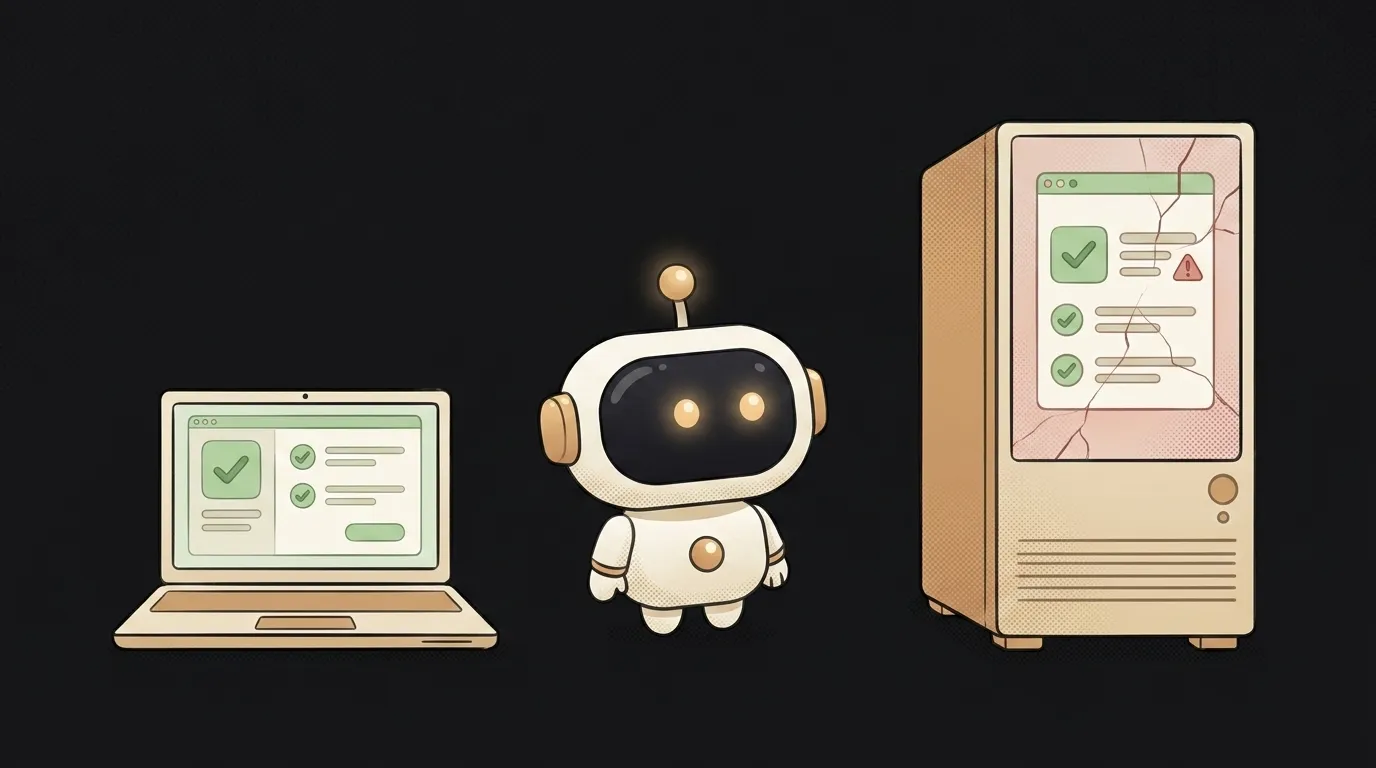
Why my app works locally but breaks in production — 3 causes and the fix
'Works on my machine' — but production shows a blank screen or a 500. Same code, different environment. Here are the 3 main causes and how to check and fix each.

What is prompt chaining — why a chain of simple prompts beats one giant one
Give a model one prompt with five tasks and it does half. Prompt chaining splits the work into steps — each doing exactly one thing. Here's how it works.
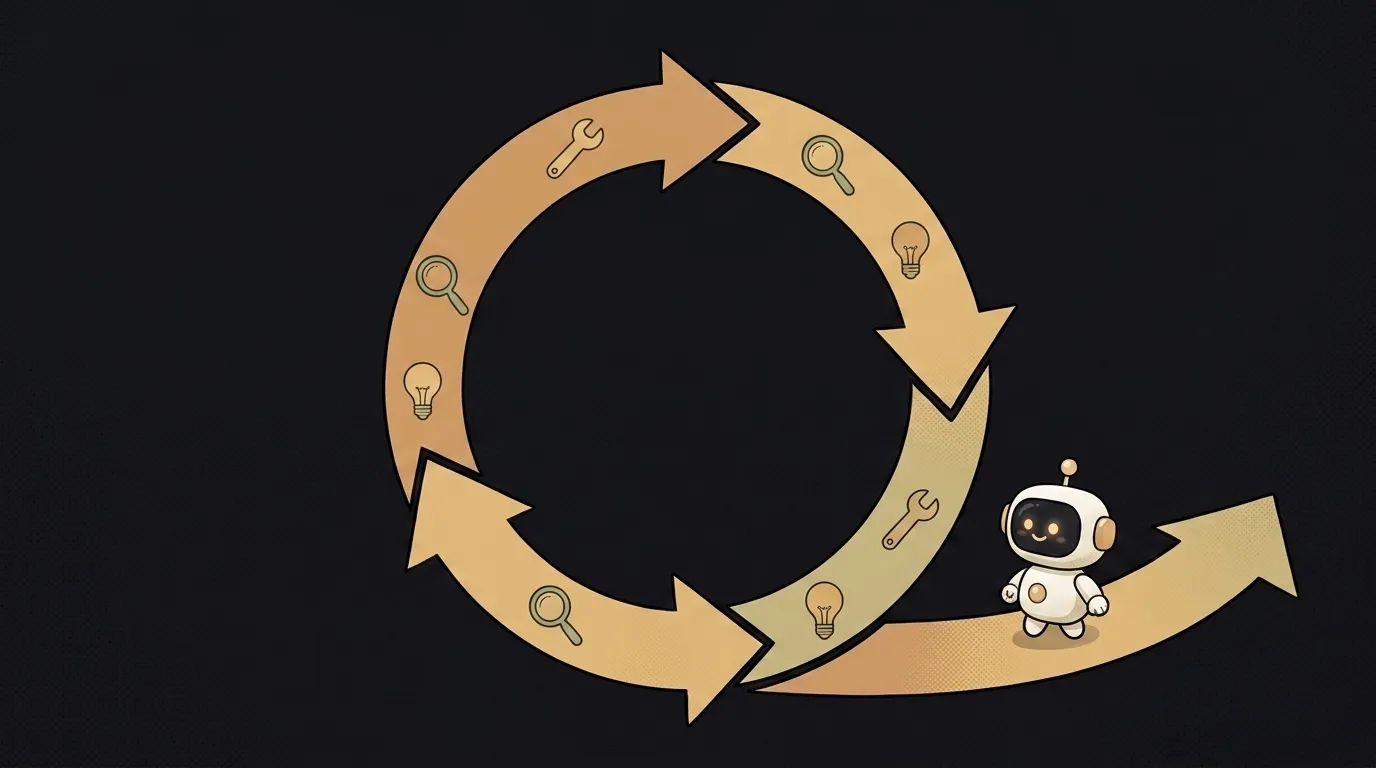
What is an agent loop — how an AI finishes a task on its own
An agent doesn't answer in one shot. It spins a loop — think, act, observe — until the task is done. Here's the agent loop, the heart of every AI agent.

What is a rollback — the undo button for a broken production
You shipped an update and the site went down. A rollback restores the last working version in seconds while you calmly find the cause. Here's what rollback is.

How to stream AI responses — so text types out letter by letter instead of hanging
Users wait 5 seconds at a blank screen for an AI reply and think it froze. Streaming paints text as it's generated. Here's how to do it, step by step with code.
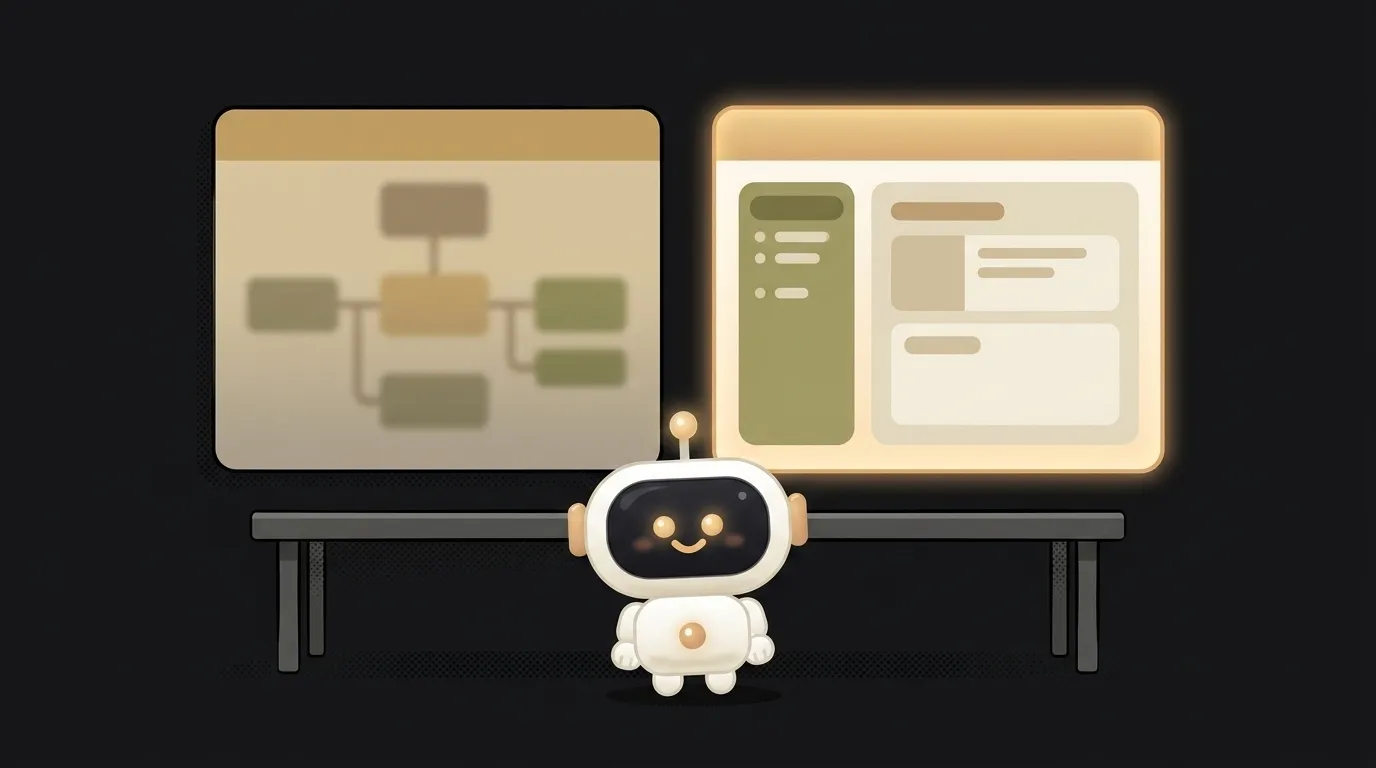
Gemini or Claude — which model to pick for code and beyond (2026)
Gemini or Claude? A practical comparison: code and agents, multimodal, price, long context — and a straight verdict on which to pick. No 'who's smarter' fight.
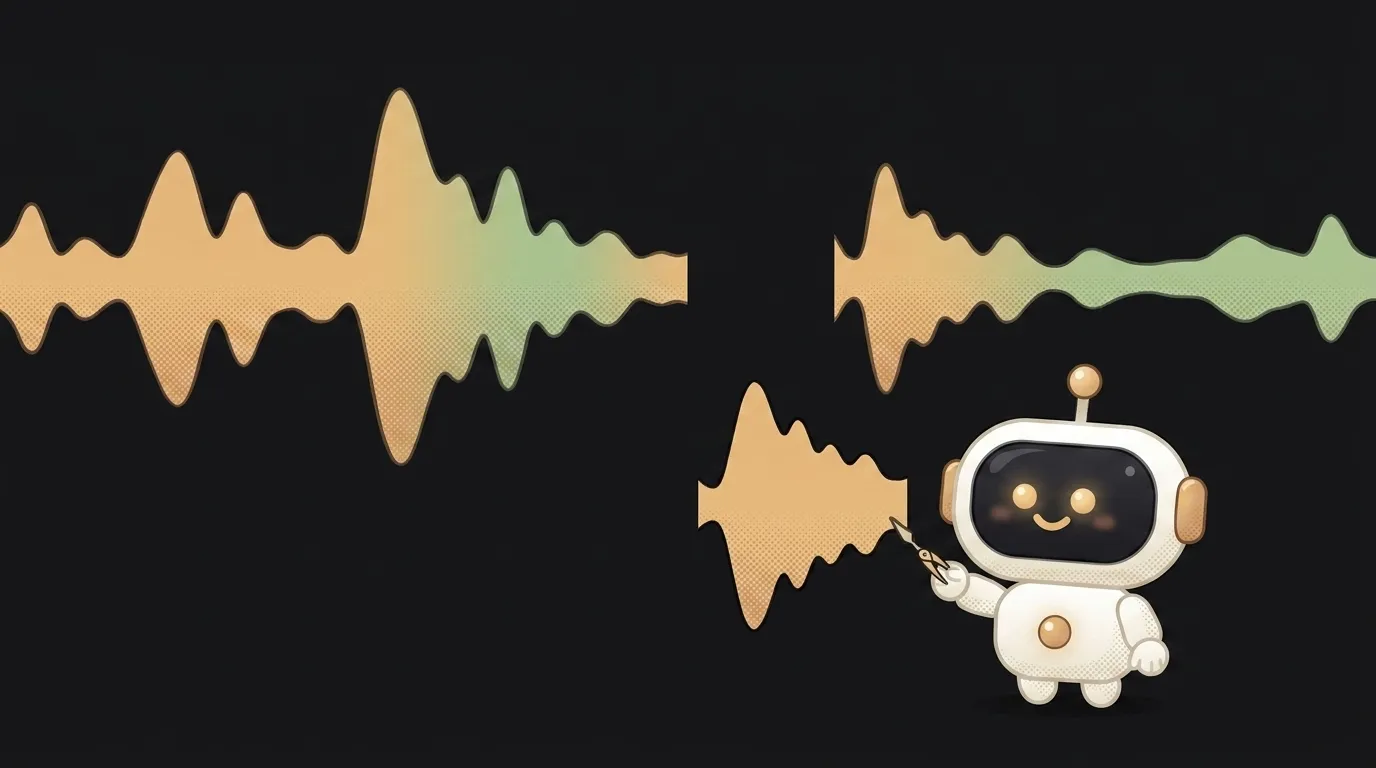
Flubbed one word in your voiceover? Fix just that word, no re-recording
Recorded a voiceover and one word came out wrong? It used to mean re-recording the whole take. Now you change one word and the model resynthesizes only that — in your own voice, seamlessly. Open-source, a weekend build.

Don't regenerate the clip — just say what to change in it
Fixing one detail in an AI clip used to mean rebuilding the whole thing — and it came back different. Now you say 'make it night' and only the sky changes. Everything else stays. A weekend build.

Why git push is rejected — 3 causes and how to fix each
"! [rejected] fetch first" isn't a break — it's git protecting someone's work. The 3 real causes of a rejected git push and how to fix each.

What is a sandbox — and why it's safe to let an AI agent run code
A sandbox is an isolated box where an agent's code can't reach your files. What a sandbox is and why without one it's scary to give AI access.

What is a model card — the AI's passport you read before, not after
A model card is a model's passport: license, training data, limits. What a model card is and why you can't drop a free model into a product blind.

What is a library — and why one import carries someone else's responsibility
A library is someone else's code you call by name. What a library is, how it differs from a framework, and why every import is worth checking.

How to add dark mode to your site — in 3 steps, no libraries
You don't redraw a site for dark mode: CSS variables and one media query do 80% of the work. A step-by-step guide to add dark mode from scratch.
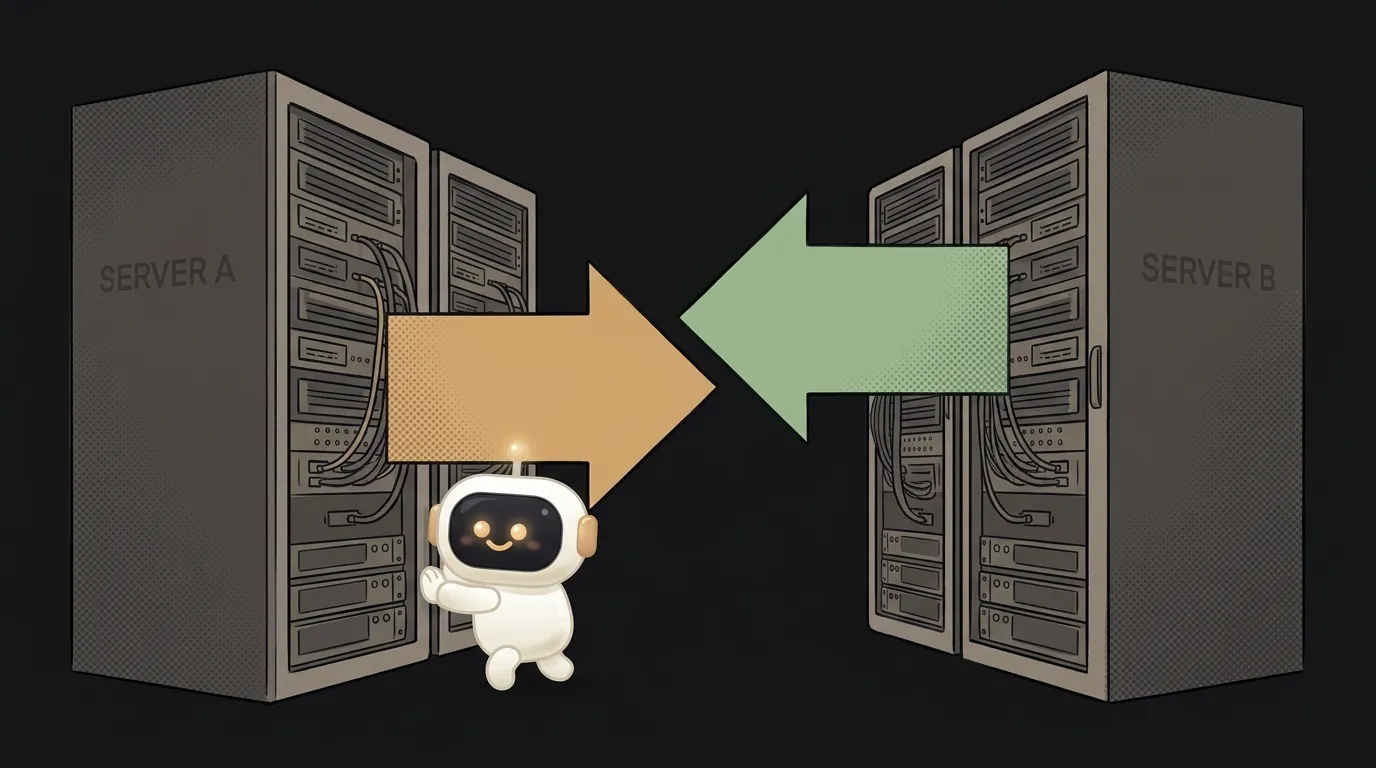
API or webhook — what's the difference and when to use which
Both let two programs talk, but the direction is opposite. The difference between an API and a webhook, and when to pick each one.

Why your AI responses are slow — 3 causes and how to speed them up
AI taking forever to answer? Usually it's not the internet — it's the model, streaming, or a bloated context. Here are 3 causes of slow AI responses and a fix for each.

What is AGI — and why nobody agrees whether it's here yet
AGI is an AI that can do everything a human can. Sounds simple, but there's no single definition. Here's what AGI actually means and why the finish line keeps moving.

What is an AI jailbreak — and how it differs from prompt injection
A jailbreak is talking a model into breaking its own rules. Don't confuse it with prompt injection. Here's what an AI jailbreak is and why it's so hard to close.

What is a foundation model — and why an LLM is just one kind of it
A foundation model is one big neural net trained on everything at once, then adapted to any task. Here's what a foundation model is and how the LLM fits in.

RAG or long context — paste your documents in or search through them
Context windows grew to a million tokens — so is RAG obsolete? Not so fast. We compare RAG and long context on cost, freshness, and reliability.

How to run an AI model locally on your laptop — in three commands
You can run a neural net on your own computer with no internet, no key, no bill — and your data never leaves. Here's how to run AI locally with Ollama.
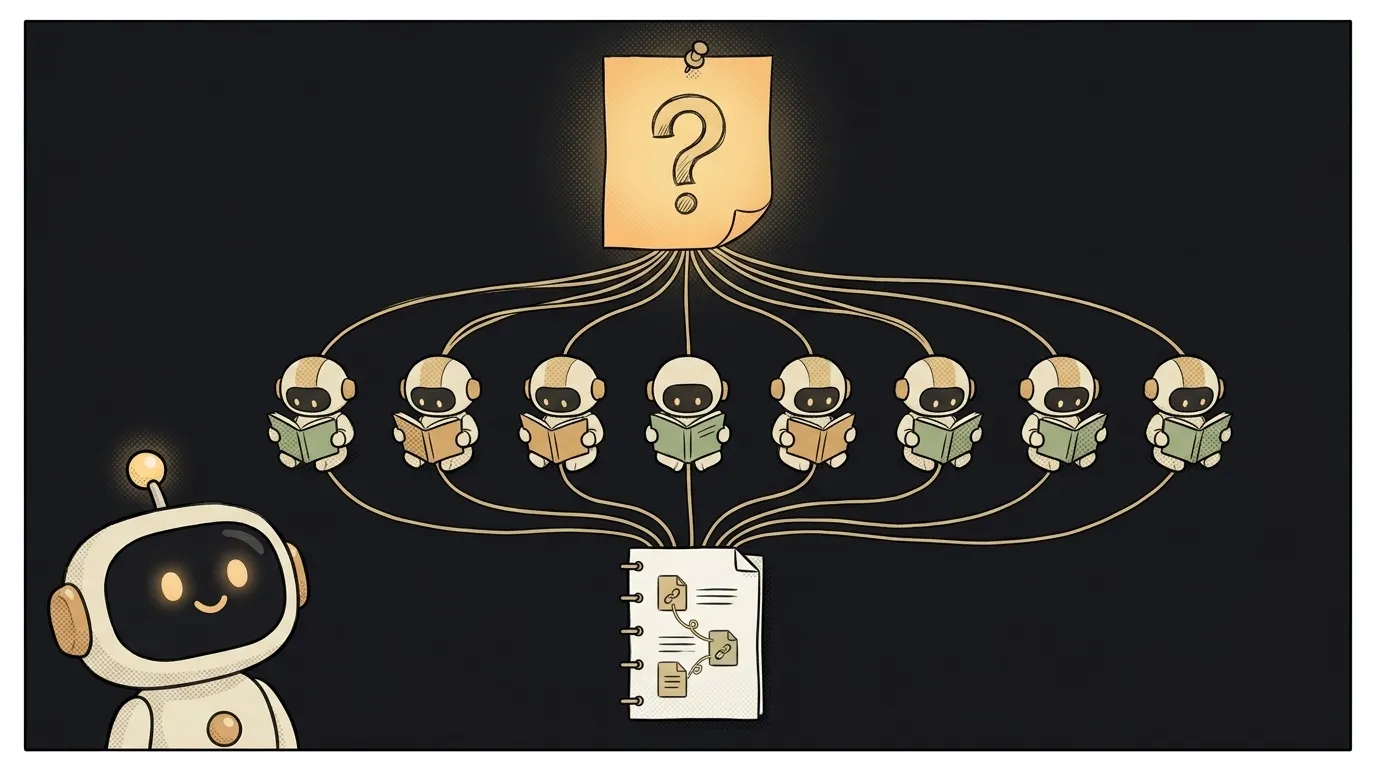
Ask one question — and a swarm of agents splits it up and stitches the answer back
A 'swarm of agents' used to be something you wired up by hand, and ten in parallel cost real money. On July 9 OpenAI baked it into the model and a cheap tier made it pennies. Build your own mini-research this weekend.

Not a keyword filter — a model reads every email and keeps the three that matter
Running a smart model over every one of 200 emails used to be too expensive — so people filtered by keywords. On July 9 a cheap tier landed at $1 per million tokens. Build your personal 'what matters' screen this weekend.

Why fetch returns undefined even though the data is there — 3 causes
'The data arrives, I see it in the Network tab, but the variable is undefined.' Here are the 3 causes of fetch returning undefined — how to check each and fix it.

What is middleware — the layer every request passes through
Middleware is the code between 'a request arrived' and 'you responded.' Here it is on a conveyor belt: where login, logs and CORS live — and why you need next().
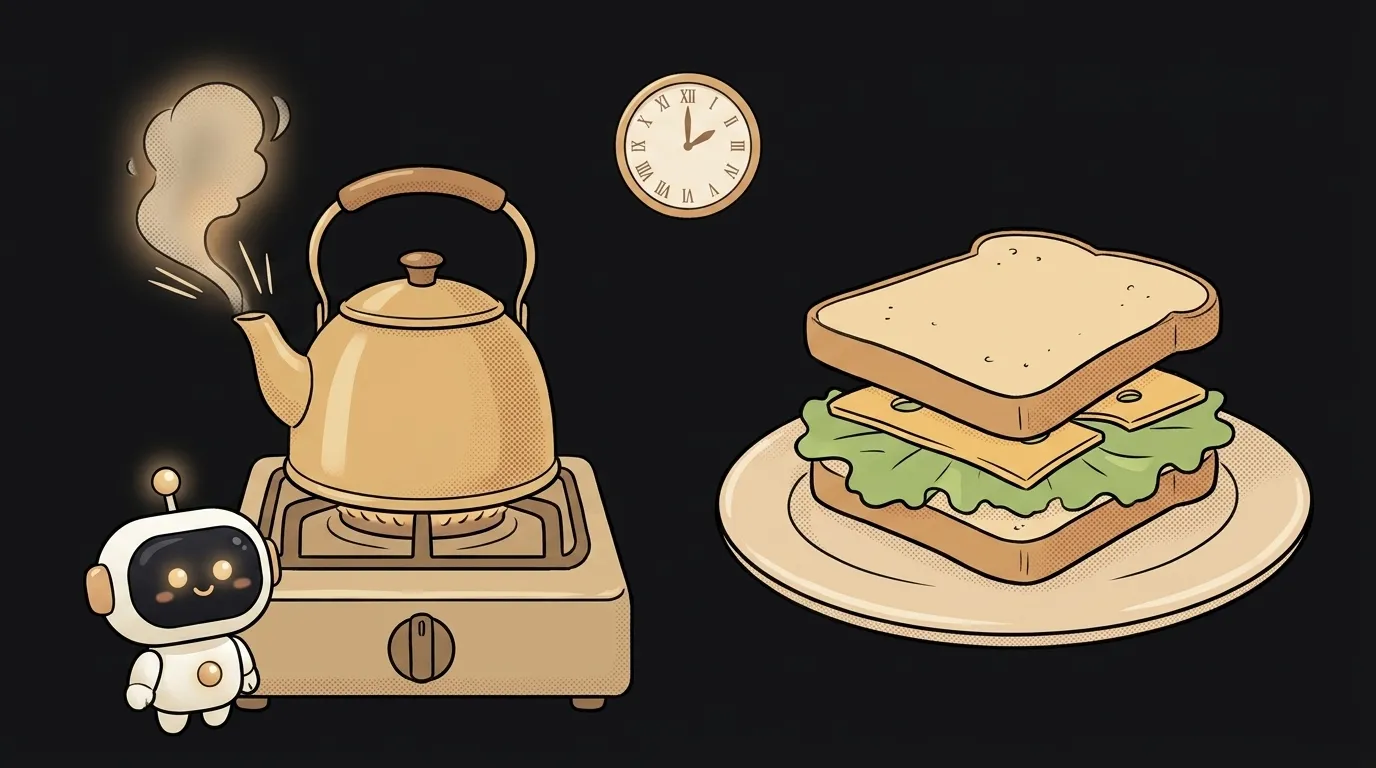
What is async — why your data shows up later, not right away
Async code doesn't wait: it moves on while the answer is still in transit. That's why your data is undefined even though it clearly arrives — and how await fixes it.
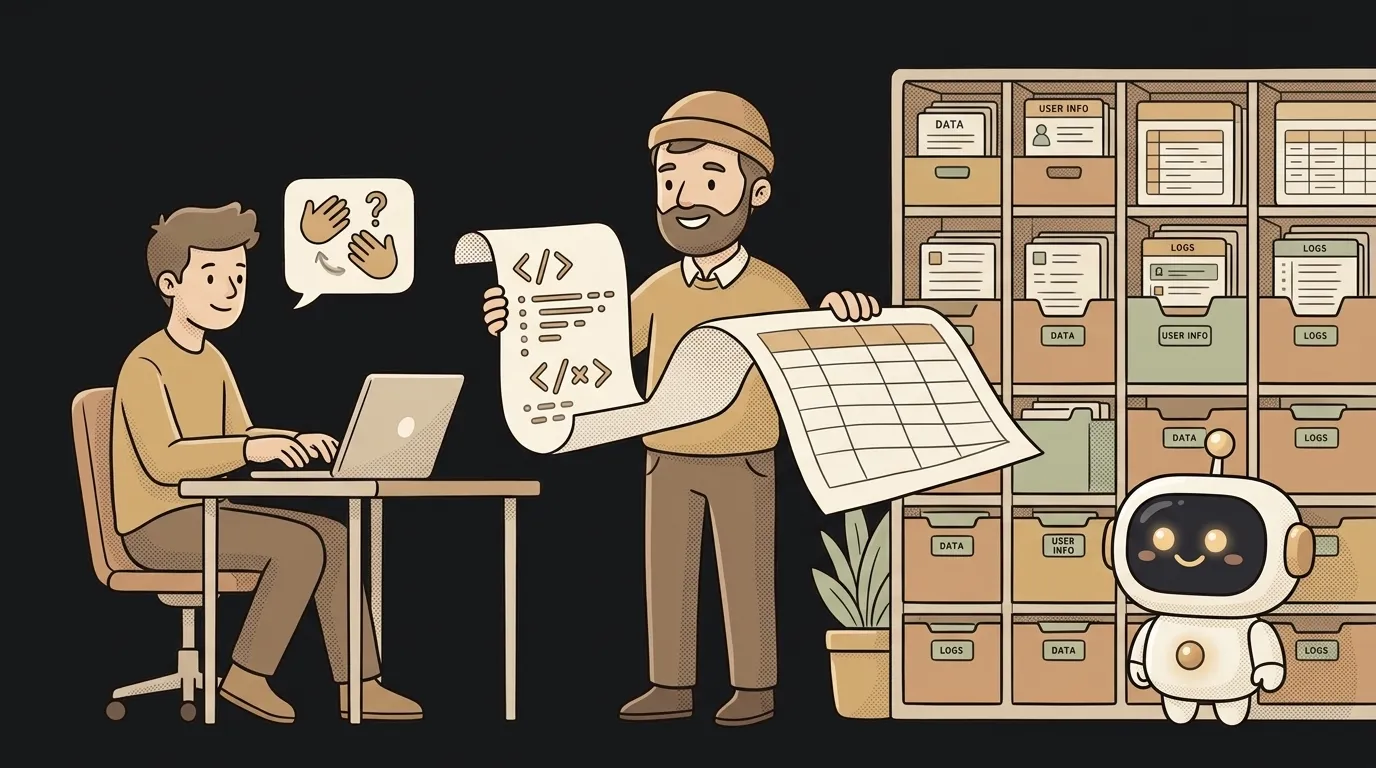
What is an ORM — working with a database without writing SQL
An ORM is a translator between your code and your database: you write user.save() instead of an SQL query. Here's what it's for — and where its big catch hides.
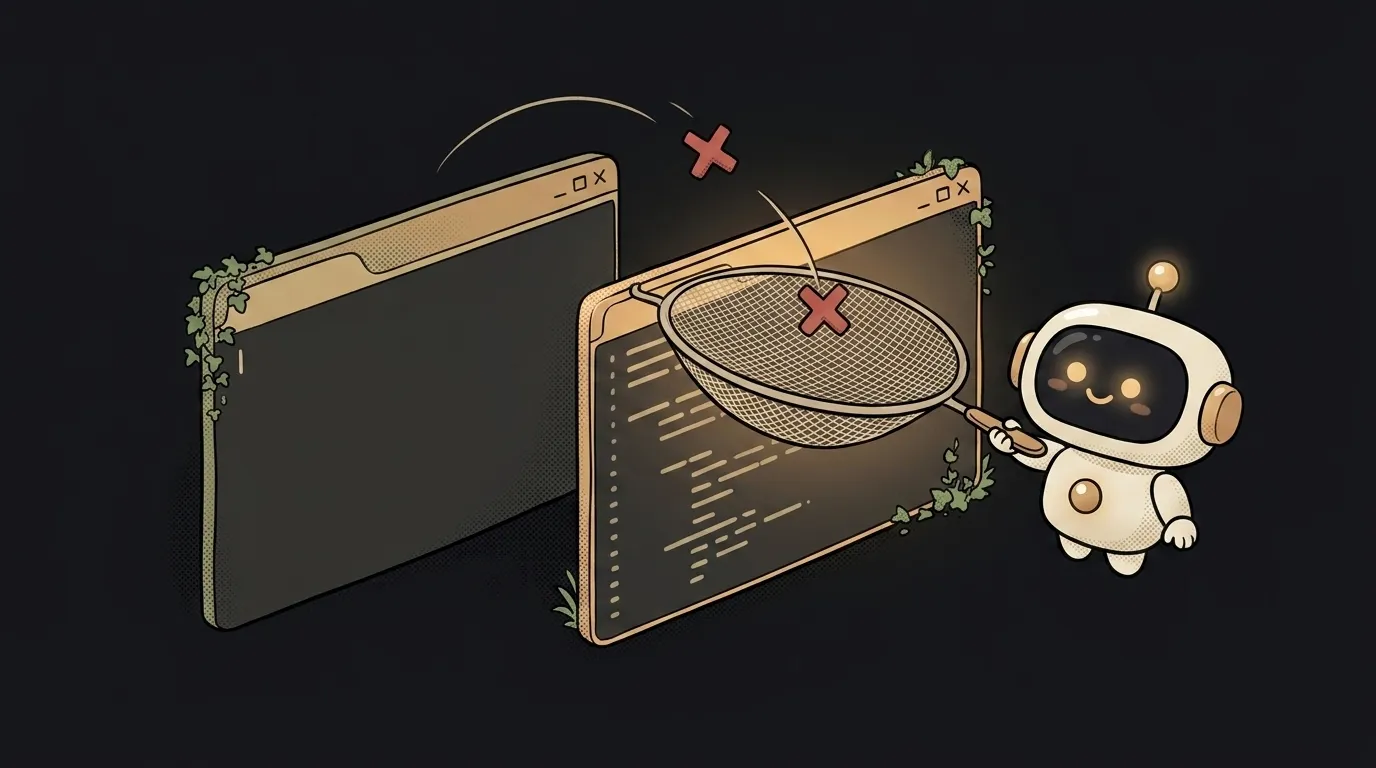
TypeScript or JavaScript — what a beginner should pick, and the real difference
TypeScript is JavaScript that catches your typo before you run it. We compare on entry cost, errors and working with AI — and say plainly what a beginner should take.

How to write a README — step by step, so a human and an AI both get it
Your README is read by both a new developer and an AI agent in your repository. Step by step: what to put in the file, in what order — and a skeleton to copy.

A voice helper that doesn't just talk — it sets the timer while your hands are in the dough
Voice used to only answer back — you still set the timer yourself. On July 6 OpenAI shipped speech-to-speech that calls your functions on the fly, so now the voice presses the buttons while your hands are busy. A weekend build.

Why my page is blank (white screen) — 3 causes and the first thing to open
You open the site — a white screen, nothing there. Why the page is blank: 3 common causes (console error, wrong path, empty root) and how to fix each.
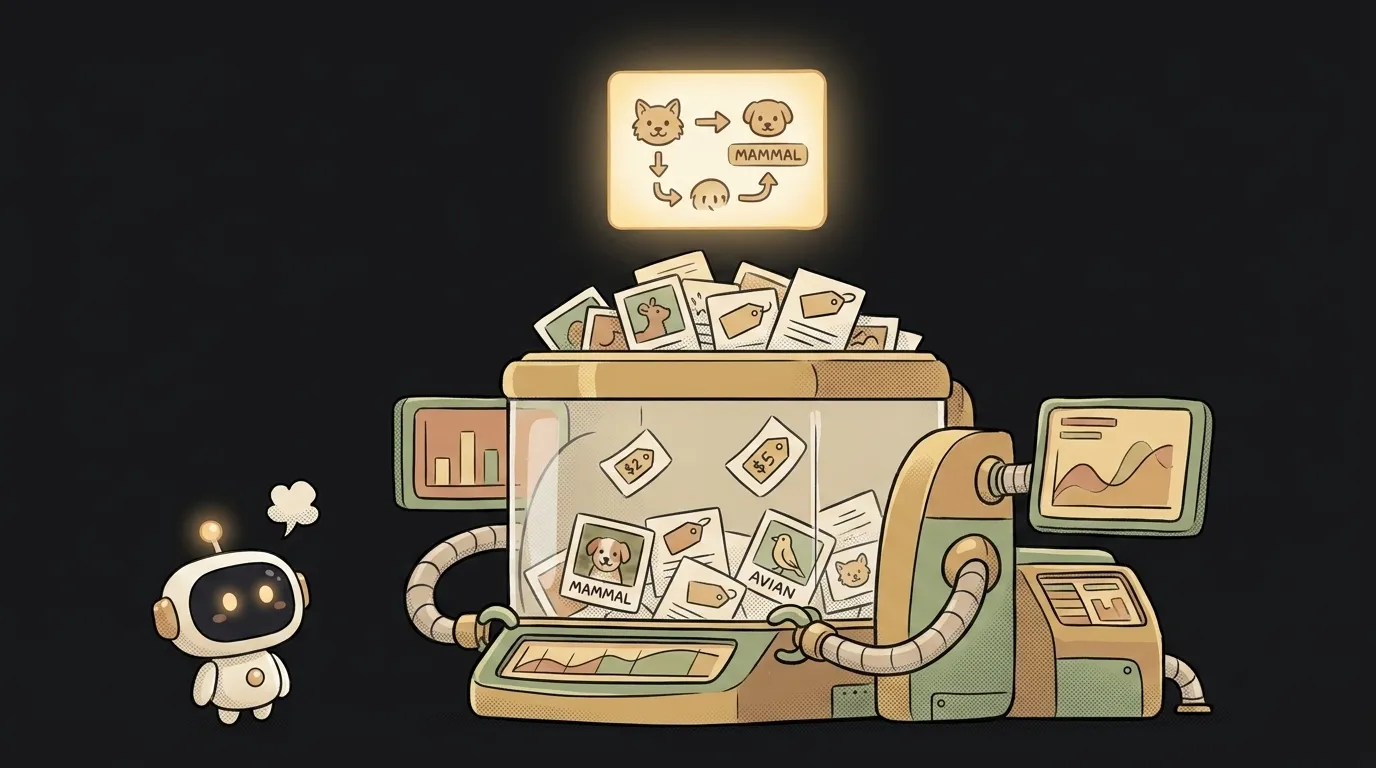
What is machine learning — and why nobody wrote the rule for “this is a cat”
Machine learning is when you don't program the rules — you teach with examples. Here's what machine learning actually is, in plain words, and where it lives.

What is a repository — and why it's not a GitHub folder, but a time machine
A repository is your project plus its whole history of changes. What a repo is, how it differs from GitHub, and why there's a hidden .git folder.
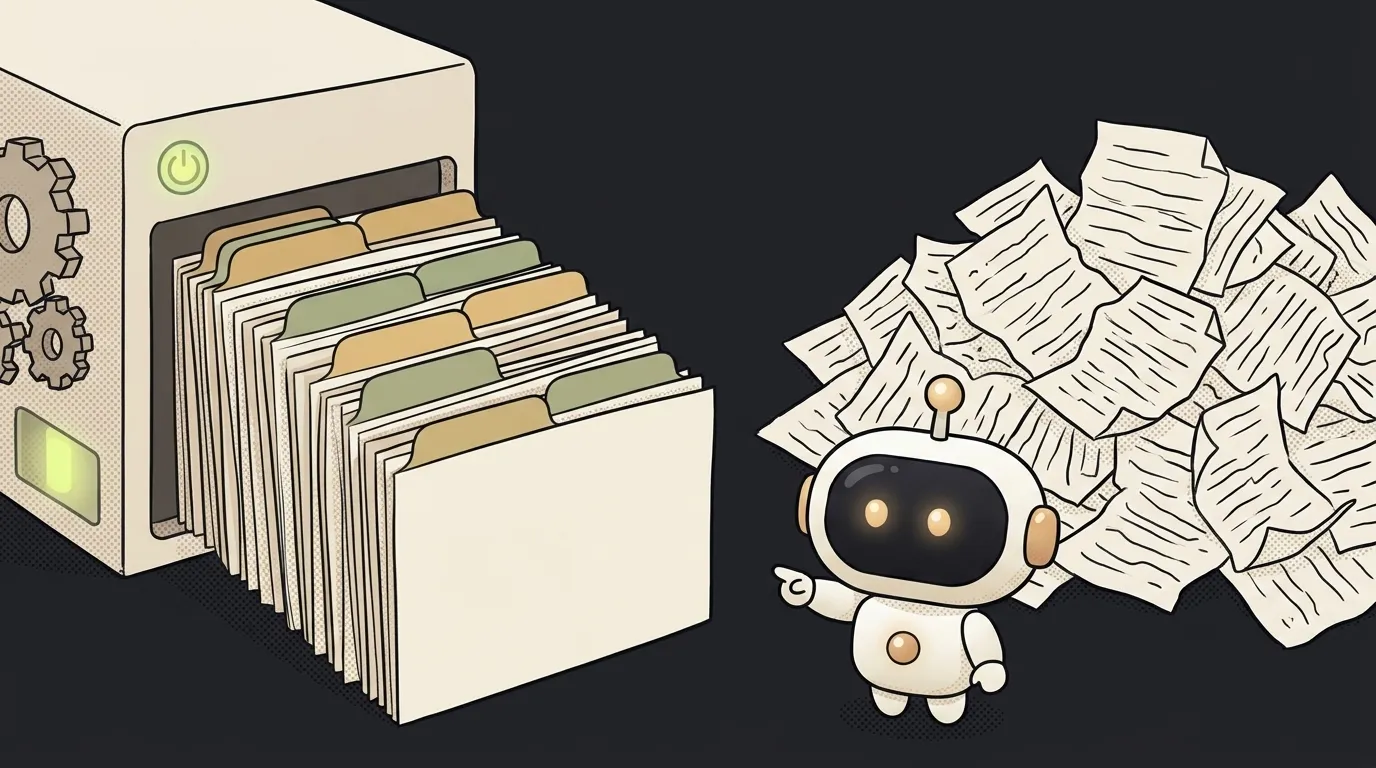
What is a dataset — and why dirty data breaks even a smart model
A dataset is the set of examples a model learns from. What a dataset is, why it's split into three parts, and why garbage in means garbage out.
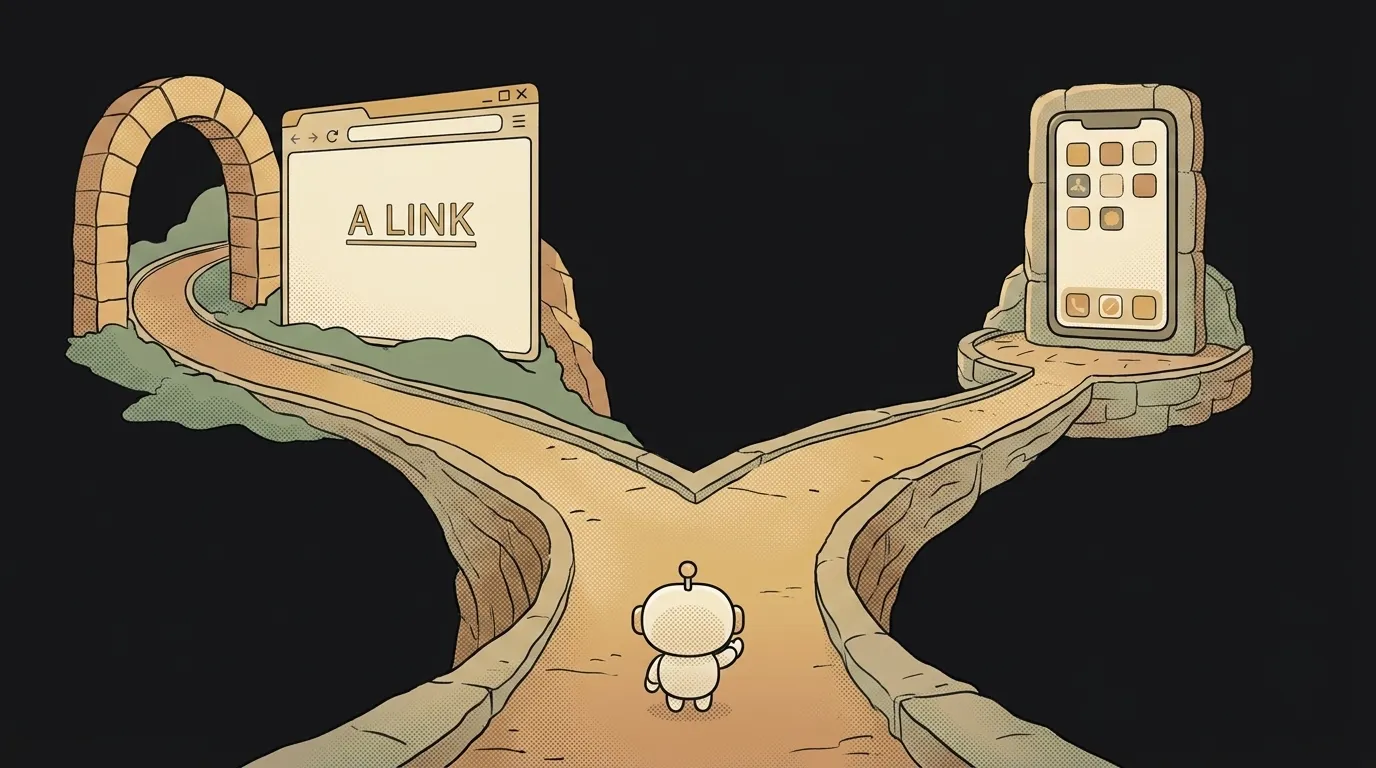
Web app or native app — which to build first, and why tech isn't the decider
Native app or web app — which to pick for your first project? We compare on cost, speed and reach and say plainly what a beginner should build.

How to make a landing page — from a blank page to a live link in one evening
A landing page has one job — one action. A step-by-step guide: how to make a landing page with AI, what belongs on it, and how to publish it for free.

Why AI cuts off its answer mid-sentence — 3 causes and the fix
AI stops mid-sentence? It's almost never a bug — it's a limit. Here are the 3 real causes of a cut-off, from max_tokens to a full context window, each with its fix.

What is semantic search — how to find things in other words
Semantic search finds by meaning, not exact words. Ask one thing, find the same thing phrased differently. Here's how it works and how to build your own.

What is latency — why AI feels slow even when the model is fast
Latency is how long you wait for an answer. With AI it splits into two parts, and one of them ruins the whole feeling of 'fast'. Let's find where the seconds go.

What is cron — how to run a task on a schedule while you sleep
Cron is an alarm clock for code: it runs a task on schedule by itself. Here's the five-star syntax and where to turn it on so automation works without you.

Upload a PDF — and people can call it and ask out loud
Drop in a document, get a phone number in a couple of minutes — call it and ask by voice about your own file, and it answers. A year ago this was a week of wiring.
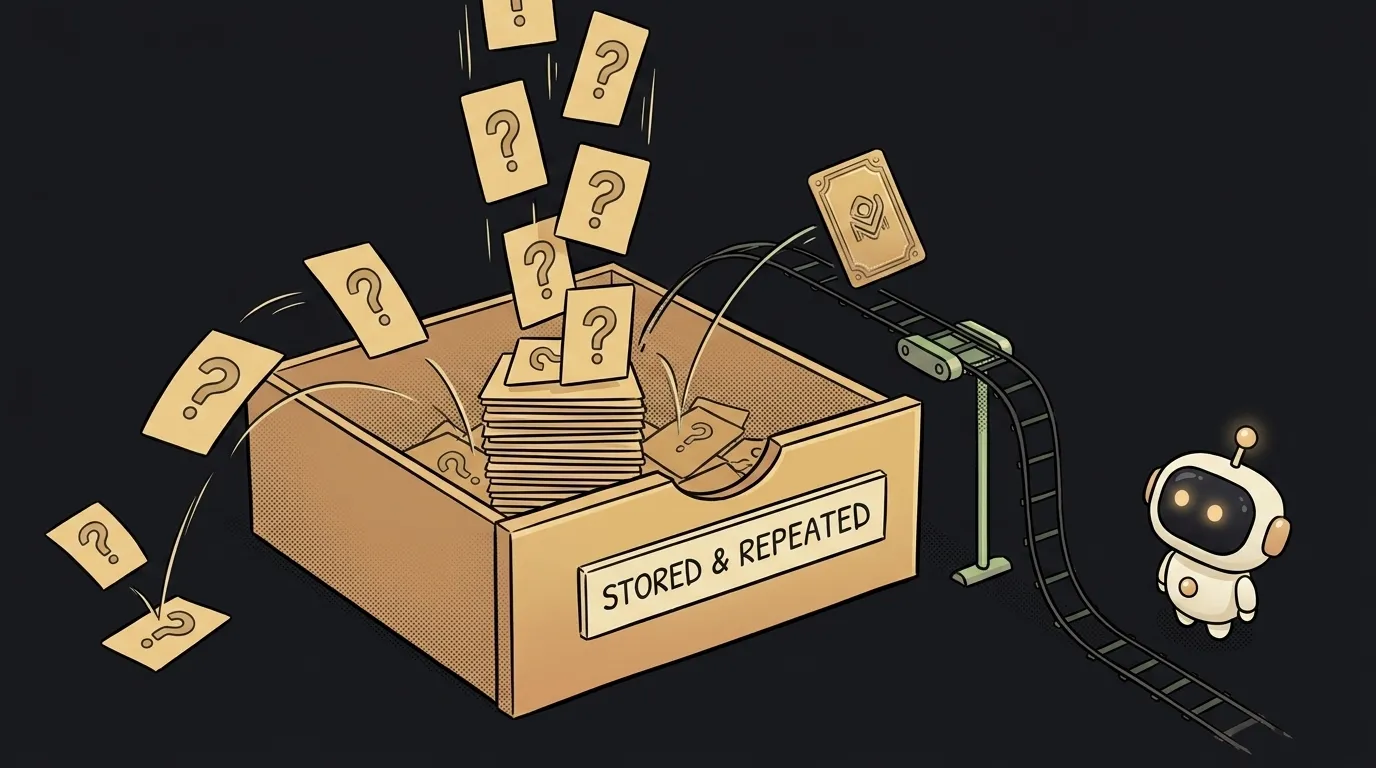
How to cache AI responses — so you don't pay twice for one question
The same request makes the AI answer again and charge you every time. A cache breaks that loop: same question, instant answer, free. Here it is step by step.

Describe a game in one sentence — and play it by link today
You write one sentence — what the game is — and an agent makes the art, code and sound and hands you a browser link. A year ago this wasn't this easy — now it's a weekend build.

API vs SDK — the difference and which to pick as a beginner
API and SDK aren't two options — they're a staircase and an elevator. An SDK wraps the same API. Here's the difference in a table and a straight verdict.
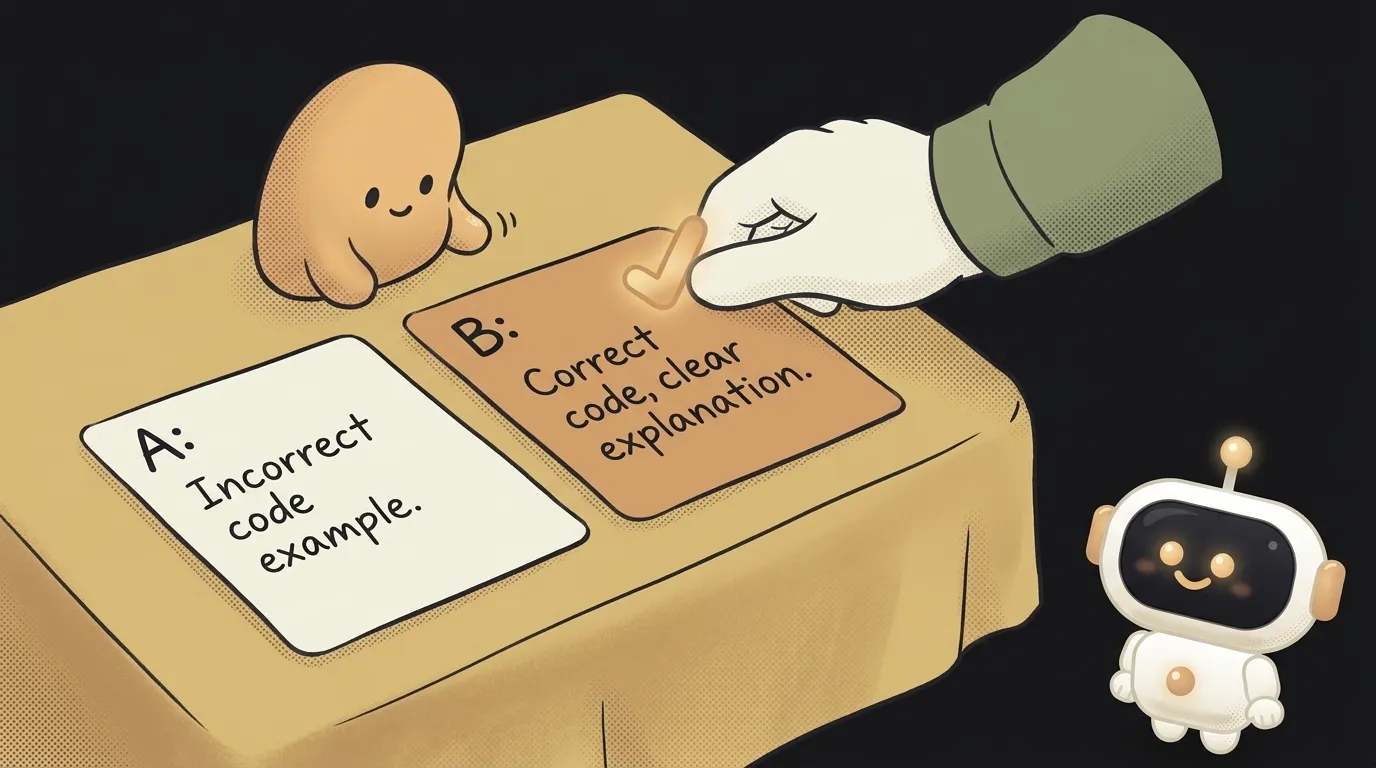
What is RLHF — why AI is polite and does what you ask
A raw model from the internet is rude and useless — humans rating answers make it polite. What RLHF is in plain words, and why it makes AI a bit of a flatterer.
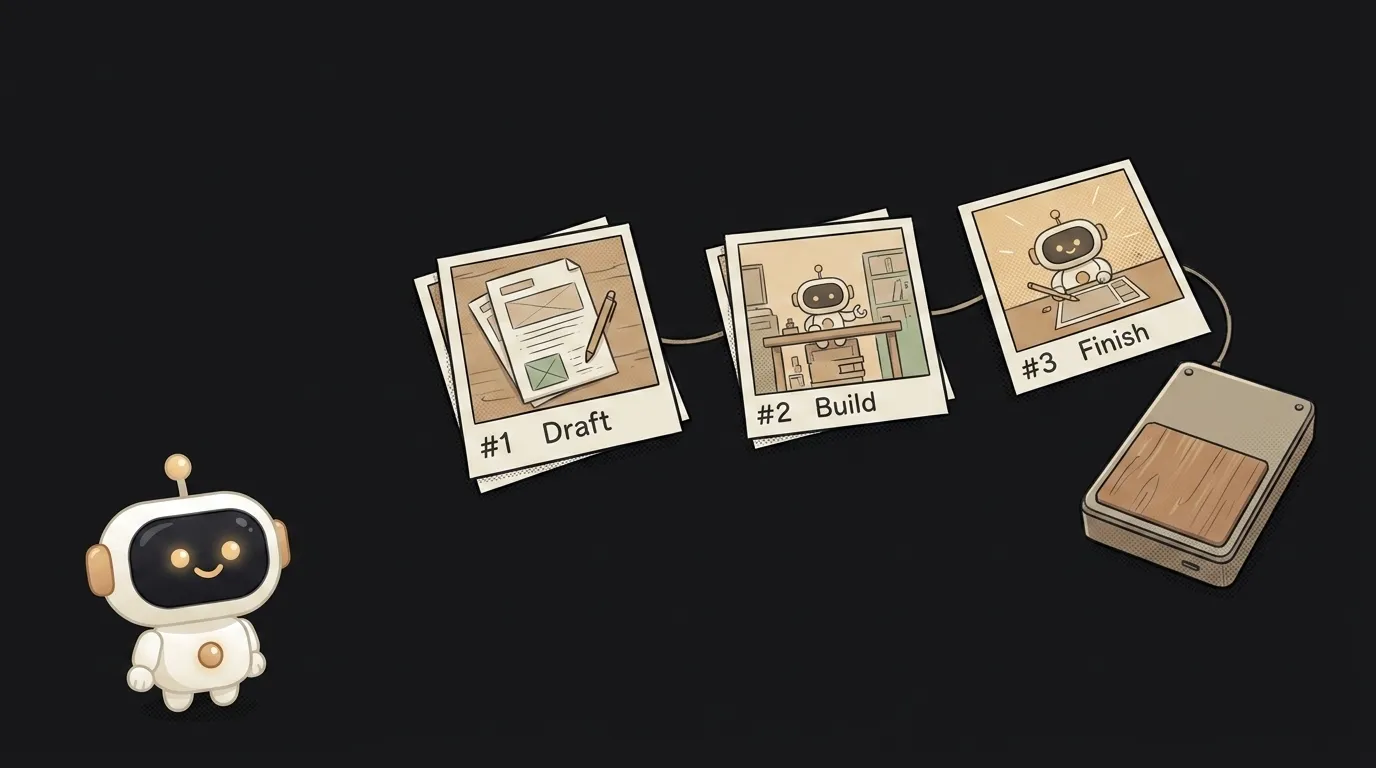
What is Git — and why it's not GitHub or the cloud
Git stores not the latest version of your code but every step of it — and works offline. Here's what Git is in plain words, and why you need it.

What is chain of thought — why 'think step by step' makes AI smarter
One phrase in the prompt — 'reason step by step' — and the model solves harder tasks correctly. Here's what chain of thought is and how to use it today.

Not one image, but a wall of twenty: an AI frame now renders in 2 seconds
On June 4 Krea released Turbo as open weights — a 2K frame in ~2 seconds on ordinary hardware. It breaks the 'make one, wait, tweak' habit. Now you generate twenty options at once and pick. That's a weekend idea-fitting-room for interiors or looks.
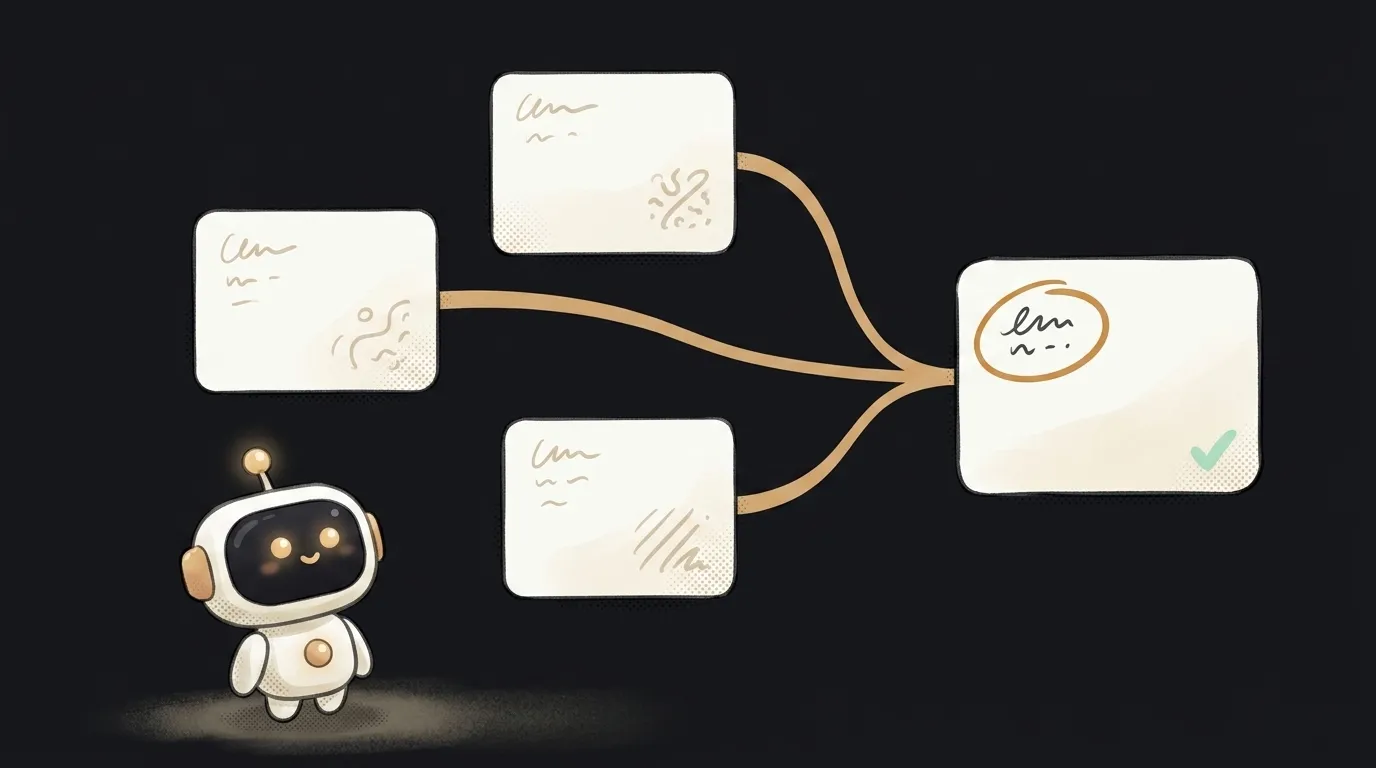
One AI is confidently wrong — ask three at once and see where they split
On June 13 OpenRouter shipped Fusion: one request fans out to a panel of models, and a judge merges them into a single answer while flagging where they disagree. That's a weekend bot for the questions that matter — with an honest 'the models don't agree here' note.
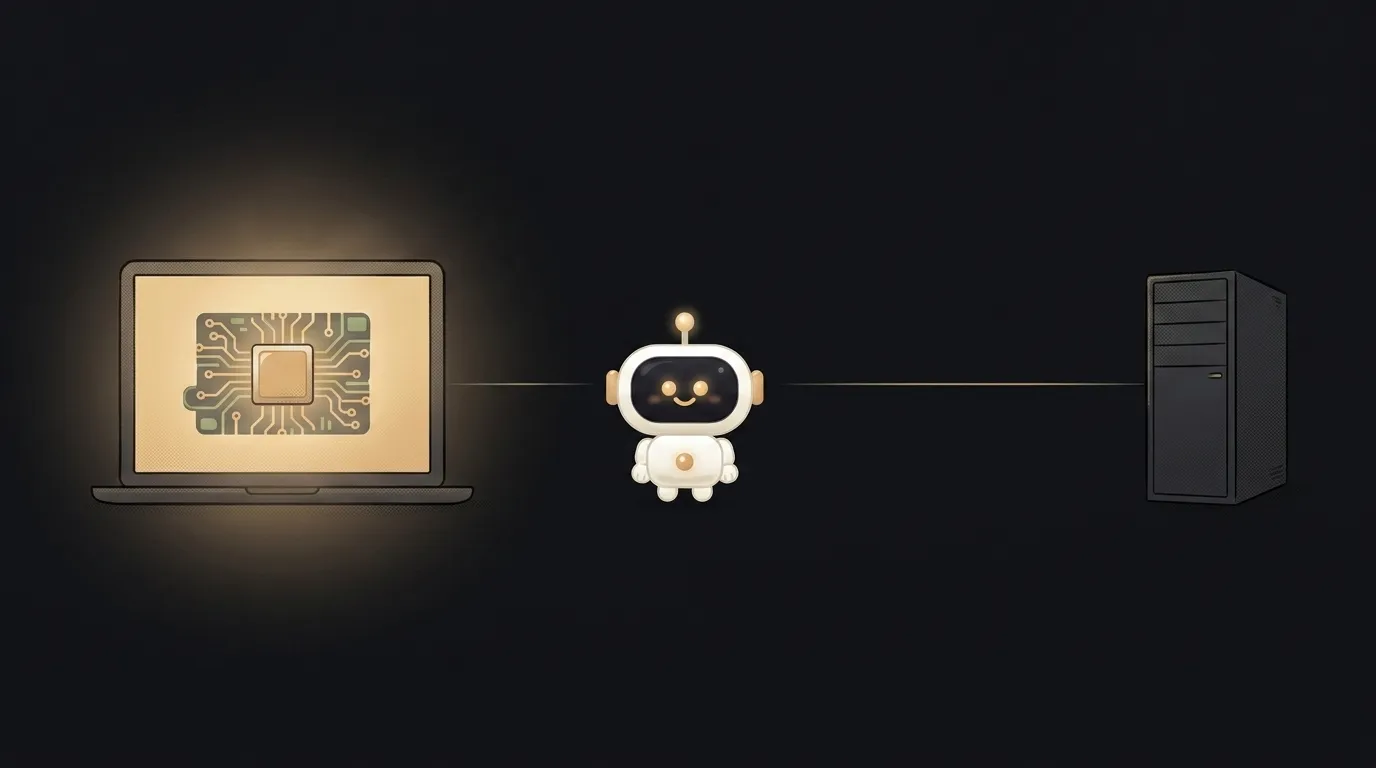
Local AI or the cloud — where to run your model
A model on your laptop is free and private, but weaker. Local AI or the cloud: a difference table and a plain verdict on which one fits you.

How to make a Chrome extension — in an evening, even if you don't code
A Chrome extension is a folder with a manifest.json and a little code. Step by step: how to make a Chrome extension and load it into your browser in one evening.
Git commands every beginner needs — 7 that cover 90% of the work
You don't need all of Git. Here are 7 Git commands every beginner needs — from init to undo — that you'll actually use in your first month, with the catches.
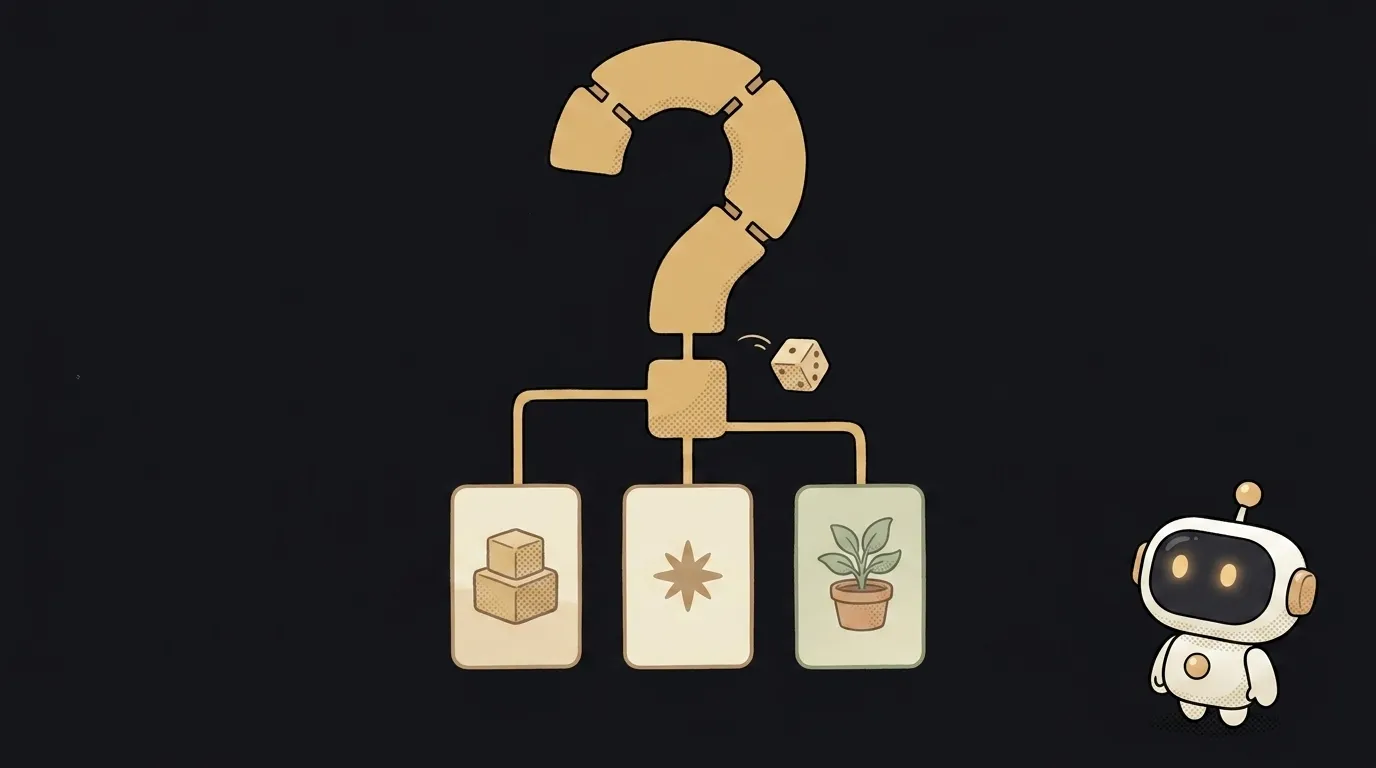
Why AI gives different answers to the same question — 3 causes and how to tame it
You ask one question and get a new answer each time. Why AI gives different answers: randomness, context, model version. We break it down symptom → cause → fix.

What is an AI wrapper — and why 'just a wrapper around GPT' isn't an insult
'It's just a wrapper around GPT' sounds like a verdict, but that's how half of all useful AI products are built. Here's what an AI wrapper is and why it's fine.

What is a small language model (SLM) — and why it runs without the internet
An SLM is a small language model that fits on a phone and works offline. Here's what an SLM is, how it differs from an LLM, and when to reach for one.

What are HTTP status codes — what 200, 404 and 500 from the server mean
Every site answers with a three-digit code: 200 is OK, 404 is not found, 500 is the server broke. Here's what HTTP codes are and how to read them by the first digit.

A voice trainer for the hard conversation: rehearse out loud, it answers with no pause
A job interview, a rejection, an important call — the stuff you're scared to fumble on the first try. On July 1 xAI opened a voice-agent builder: describe it in words, and in two minutes it calls and talks on its own, ~5 cents a minute. A sparring partner you build in an evening.

No-code or vibe coding — which one to pick as a beginner in 2026
No-code assembles from ready blocks; vibe coding writes real code from your words. We compare on cost, ceiling and speed — and say who should pick which.

How to give AI context about your code — so it stops guessing
AI writes off-target because it can't see your project. Here's a step-by-step way to give AI context about your code with a single file — so answers get accurate.
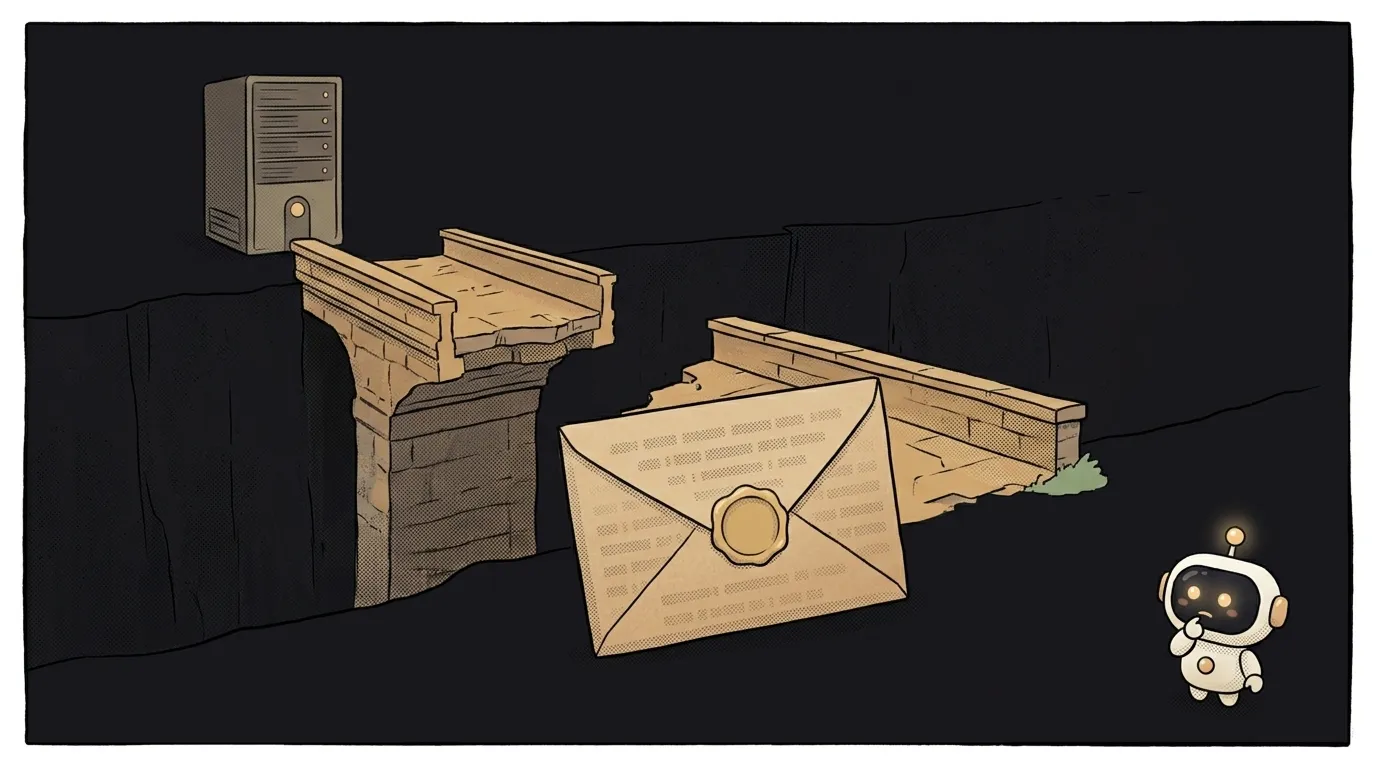
Why your environment variables aren't working — 3 common causes
Works locally, deploy it, and the variable is undefined? 90% of the time it's one of three causes. We cover each: how to check, how to fix.
What is the terminal — the black window nobody should fear
The terminal looks like a hacker window from the movies. It's really just a chat with your computer: you type a command, it replies. Let's demystify it.
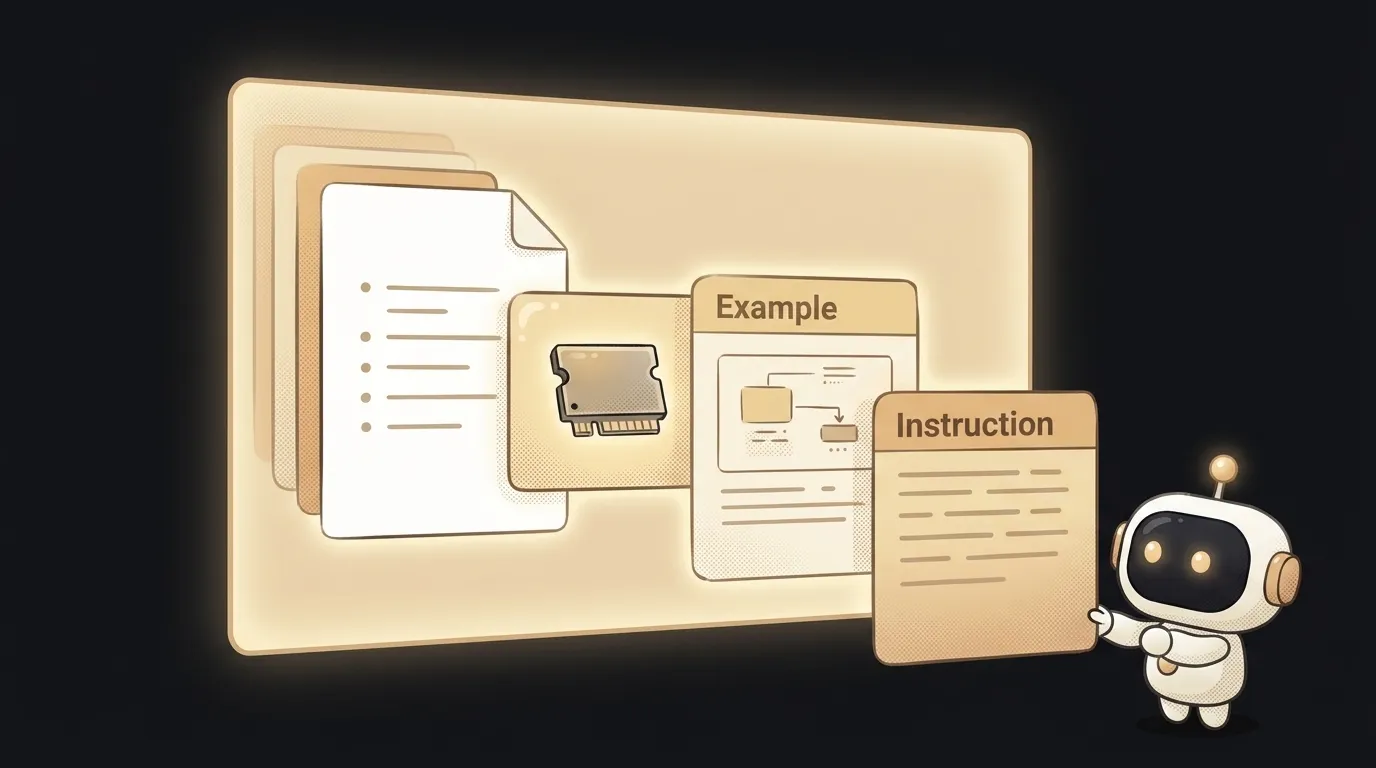
What is context engineering — and why it beats the prompt
A prompt is how you phrase one line. Context engineering is what the model sees as a whole when it answers. The second matters more. Here's why.
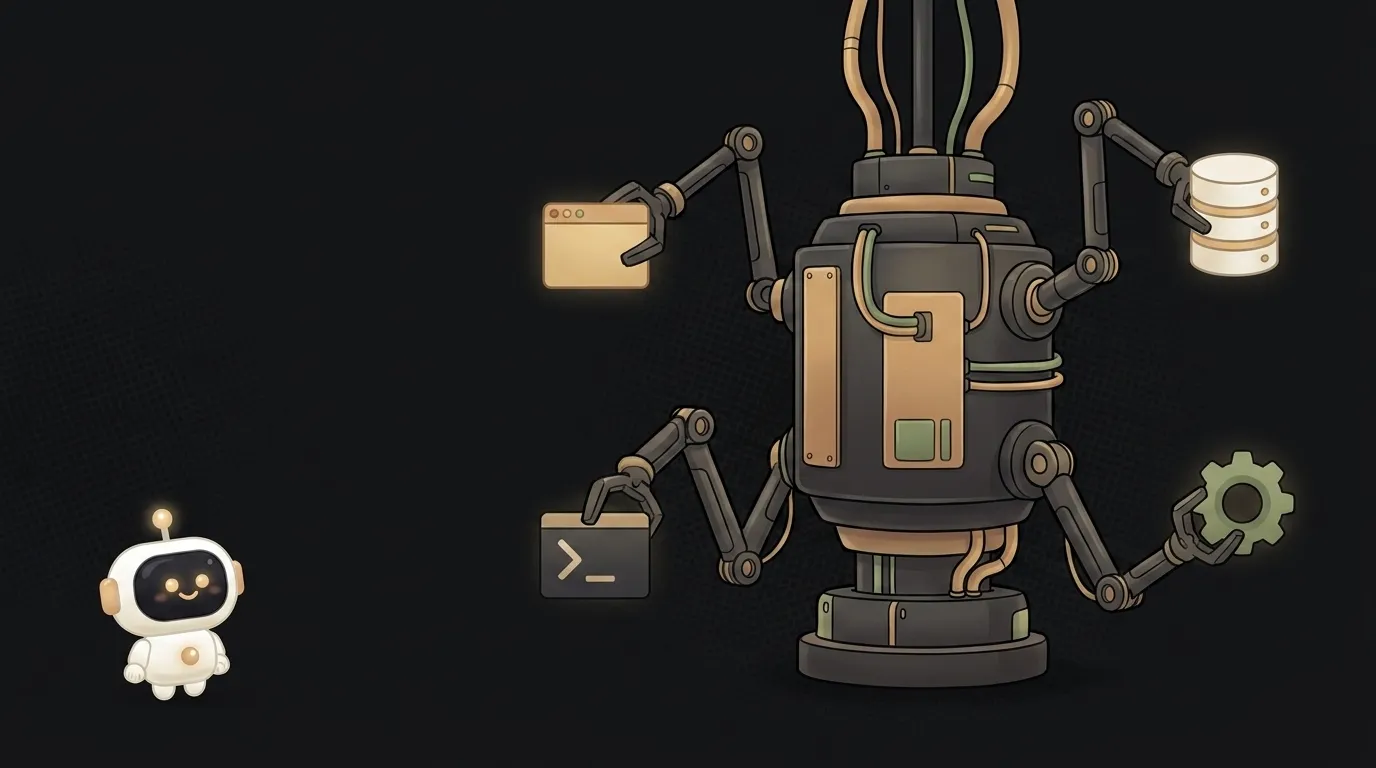
What is agentic AI — and how it differs from a plain agent
An agent does the task you hand it. Agentic AI decides for itself what steps a goal breaks into, then works through them. The difference, in plain words.

Describe a boring web chore in words — and watch a bot click the site itself
Automating a website used to mean a brittle script tied to specific buttons — one redesign and it broke. Now the agent just looks at the screen and clicks, like a human. A weekend build.
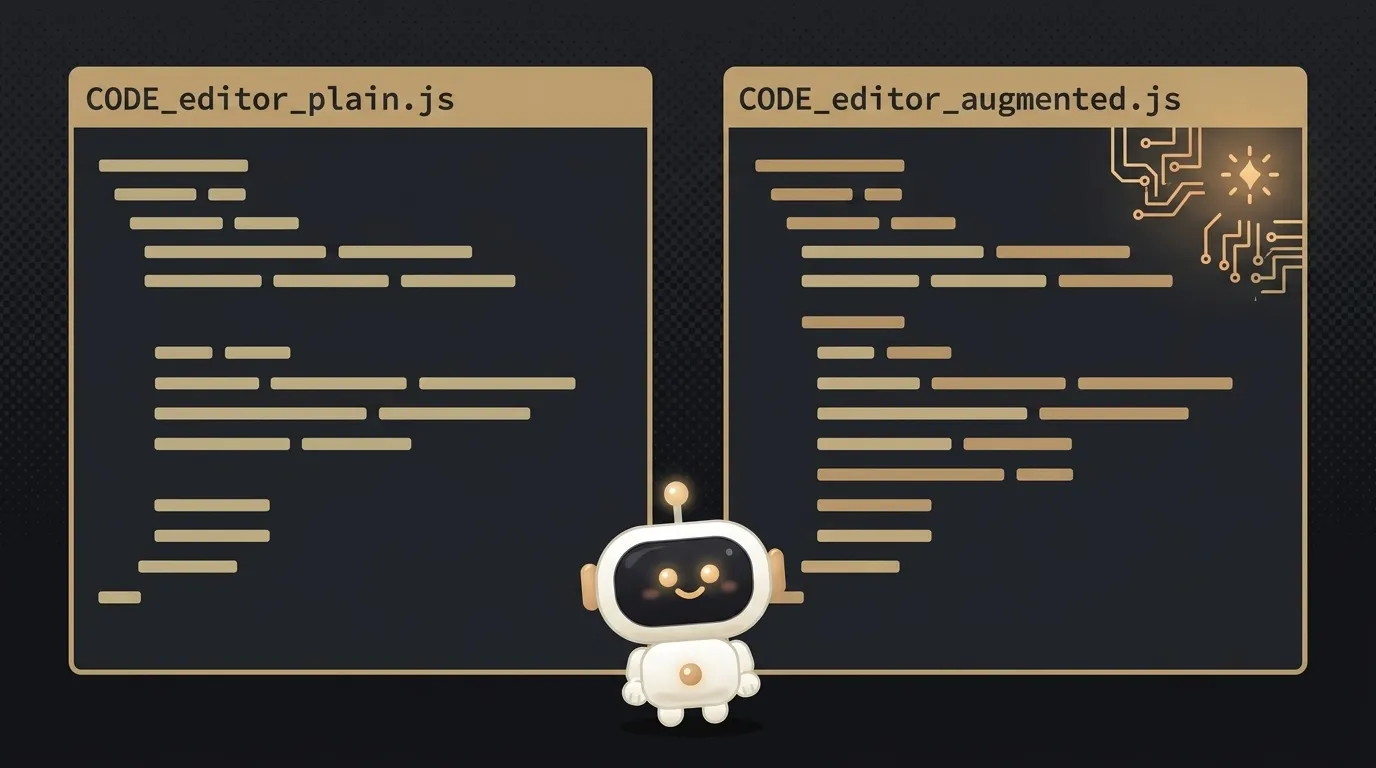
VS Code or Cursor — which to pick as a beginner in 2026
VS Code is free; Cursor charges for built-in AI. We compare them on price, learning curve, and use case — and say plainly who should pick what.

How to add AI to your website — in one evening
Adding a chat or an 'ask AI' button to your site isn't months of work — it's one evening. You need a small server piece and a dozen lines. Step by step.
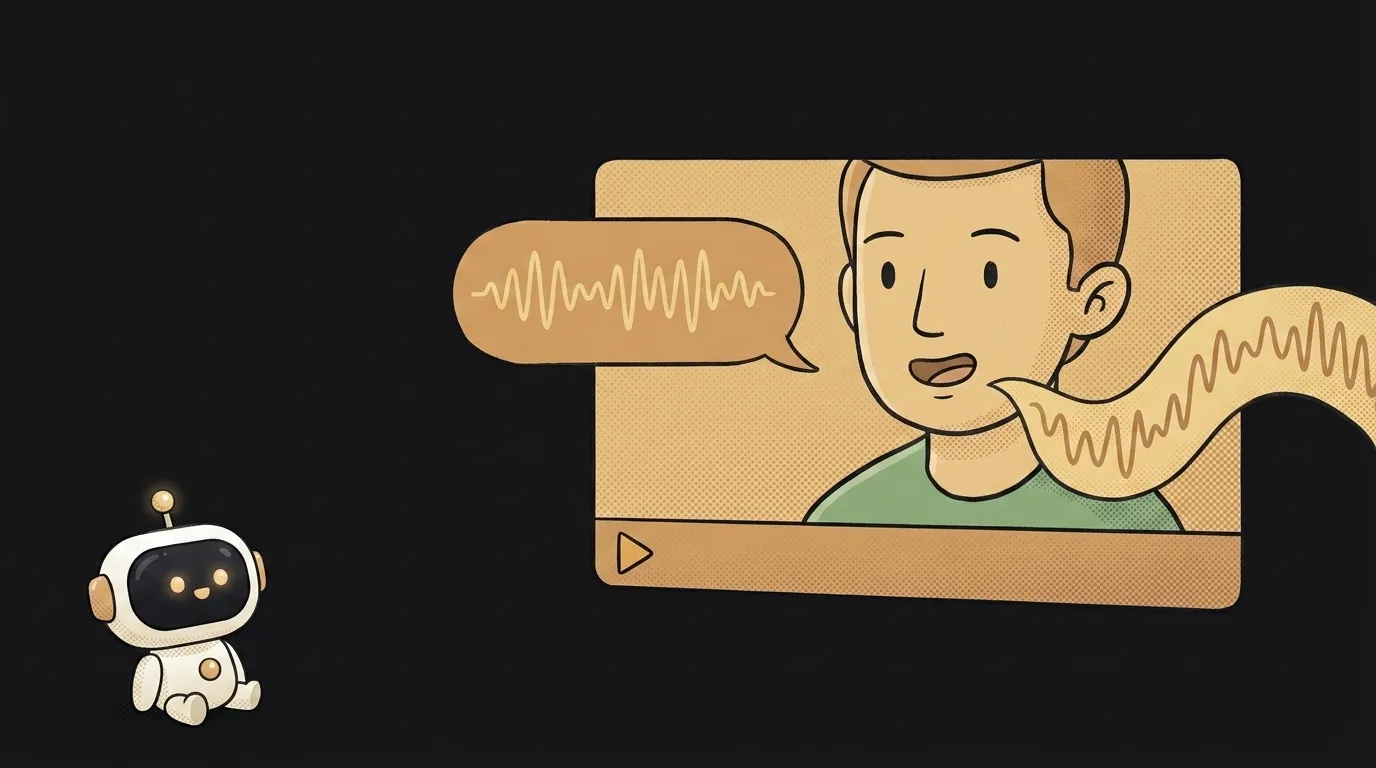
Re-voice your clip in another language — real speech, not a robot
Take a video you already made and get it back in English — your own delivery, no 'translated… waited… spoke' pauses. A year ago auto-dubbing sounded like a GPS. A weekend build.
Why your bot forgets what you talked about — and how to fix it
Bot loses the thread and re-asks what you already said? Usually it's not a glitch. Three real reasons AI forgets context, and what to do about each.
What is streaming — why AI types its answer word by word
An AI doesn't reveal a finished answer — it births it one token at a time and hands it straight to you. Here's what streaming is and why it exists.
What is HTTPS — and what the padlock in your browser really means
The padlock next to the address doesn't mean 'this site is trustworthy.' It means only one thing. Here's what HTTPS is and what it actually protects.
What is a package manager (npm) — and where the node_modules folder comes from
One line — 'npm install' — and a folder weighs more than your whole project. Here's what a package manager is, and why it's both a superpower and a risk.
RAG vs fine-tuning — how to give a model your own knowledge
Want your bot to know your documents? Beginners reach for fine-tuning, but you almost always need RAG. Compared on cost, freshness, and complexity.

Text-to-speech you can DIRECT — whispers, laughs and pauses right in the text
Synthesis used to read everything as a flat narrator. Now you drop [whispering] or [excited] into the text and the model performs the scene. A tiny audio play, built in a weekend.
How to write a system prompt for your bot — step by step
A system prompt isn't a polite intro — it's your bot's constitution, re-read before every message. Build a working one in five steps.
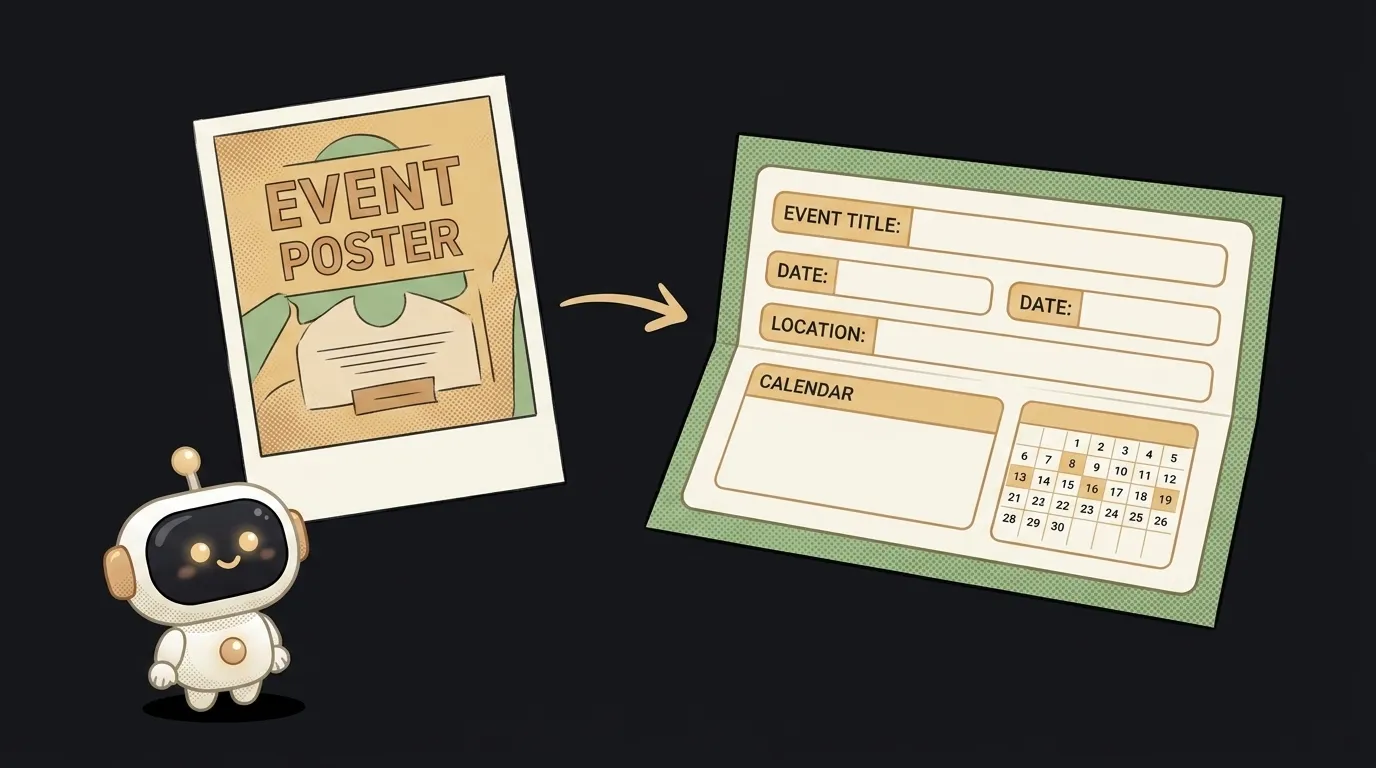
Your browser can now SEE a photo — and hand you clean JSON, no key, offline
The built-in browser model used to only read text. With Chrome 148 it sees an image and returns structure — a photo of a poster becomes a card. A weekend build.

Why your CSS isn't working — 3 causes to start with (a hard refresh fixes half)
Why your CSS isn't working: you change a style but the page looks the same. The 3 common causes — cache, specificity, linking — and how to fix each.
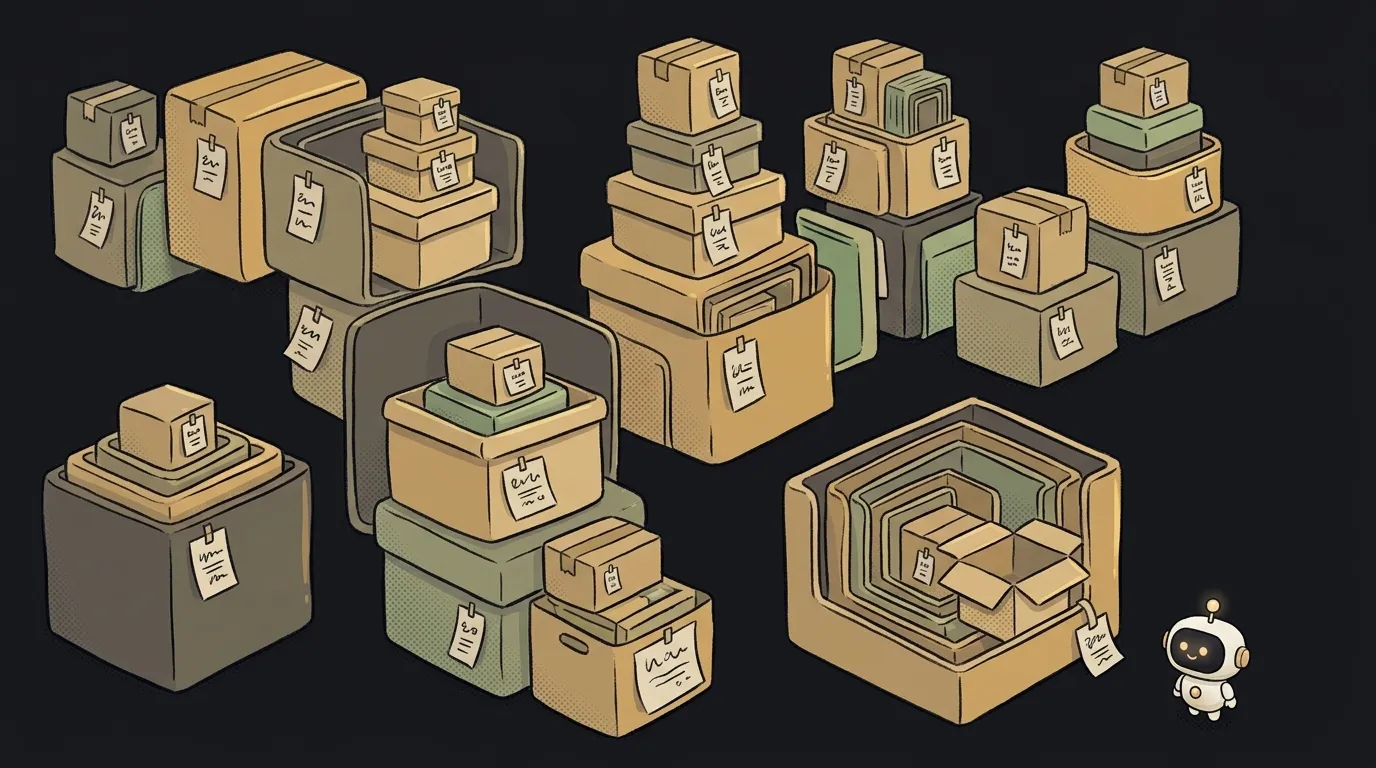
What is JSON — in plain words, and why every program understands it
JSON isn't code, it's data: two kinds of brackets and a colon. Learn what JSON is, how to read one, and why it shows up in every API response and config file.
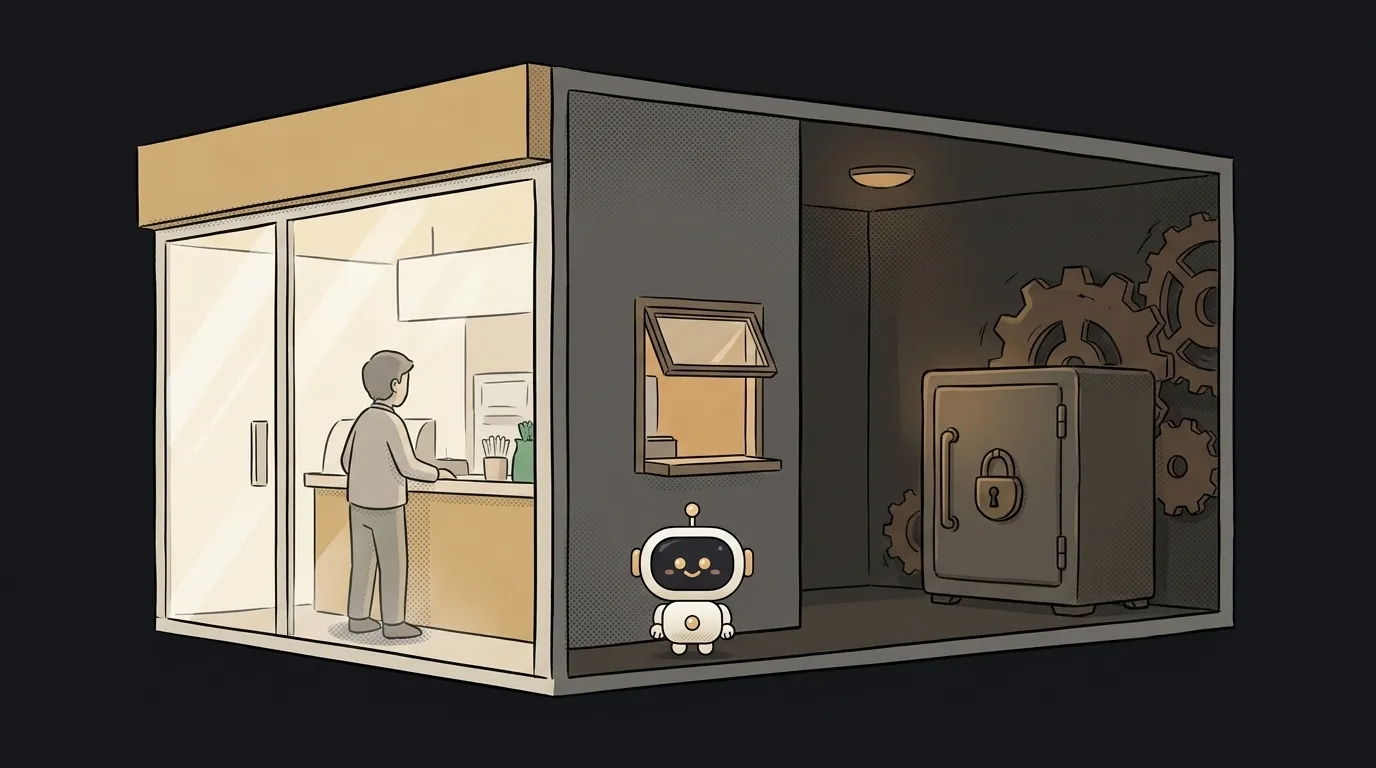
What is frontend and backend — in plain words, and where your secret key lives
What frontend and backend are, how they differ, and why an API key on the frontend leaks in a minute. The two halves of any app, explained simply.
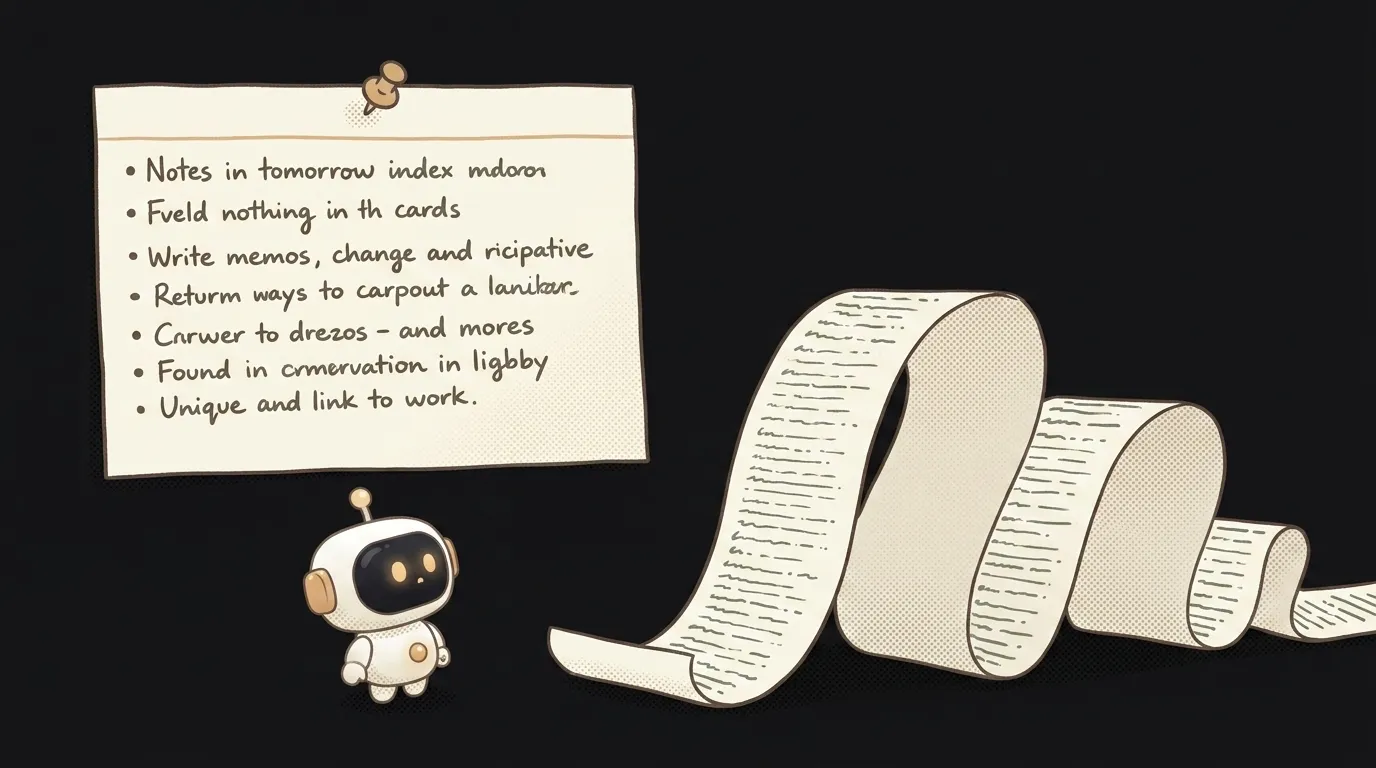
What is AI memory — and why the model forgets what you said a minute ago
What memory means for an AI assistant: why the model doesn't 'remember' but re-reads the chat from scratch, how chat memory differs from persistent memory, and how to use each.

How to send email from your app — step by step, without your own mail server
How to send email from your app: verification codes, receipts, password resets. Step by step through a ready service — no self-hosted SMTP, no evening of pain.

Gemini vs ChatGPT — which one should a beginner pick in 2026
Gemini or ChatGPT? A practical comparison: free tier, images and voice, long context, ecosystem — plus a blunt verdict on who should pick which.

Not 'what it means' but 'how to say it' — a pocket pronunciation coach for 60+ languages
A translator shows a word's meaning. The fear is saying it out loud. ChatGPT's new feature lets you build a coach that sounds words out, syllable by syllable. A weekend build.

Real AI in a single .html file — no key, no server, no bill
An AI feature used to need a backend, a key, and a token bill. Now the model lives right in the browser — and one file is enough. A weekend build.
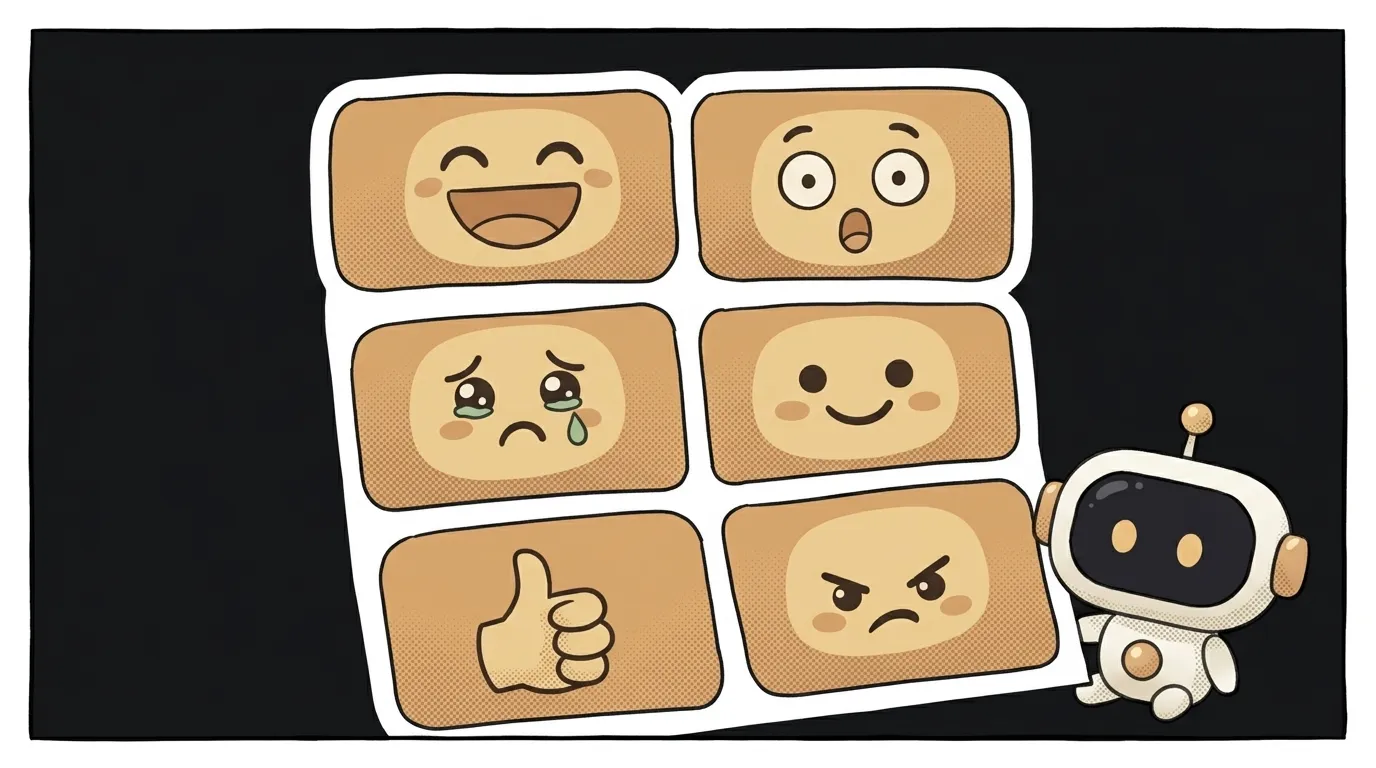
Make a sticker pack of your own face — from one photo
Upload one selfie and get eight stickers, all recognizably you: laughing, sad, giving a thumbs up. Faces used to drift from frame to frame. Now they hold.

localhost Won't Open — Why "Connection Refused" and How to Fix It
localhost won't open and says "connection refused"? Here are the 3 common causes — server not running, wrong port, port already in use — and how to fix each.

What Is Caching — Why the Second Time Is Always Faster (and Cheaper)
A cache is a pocket for data you already fetched, so you don't fetch it twice. Here's what caching is, why clearing the cache helps, and how it saves money on AI.
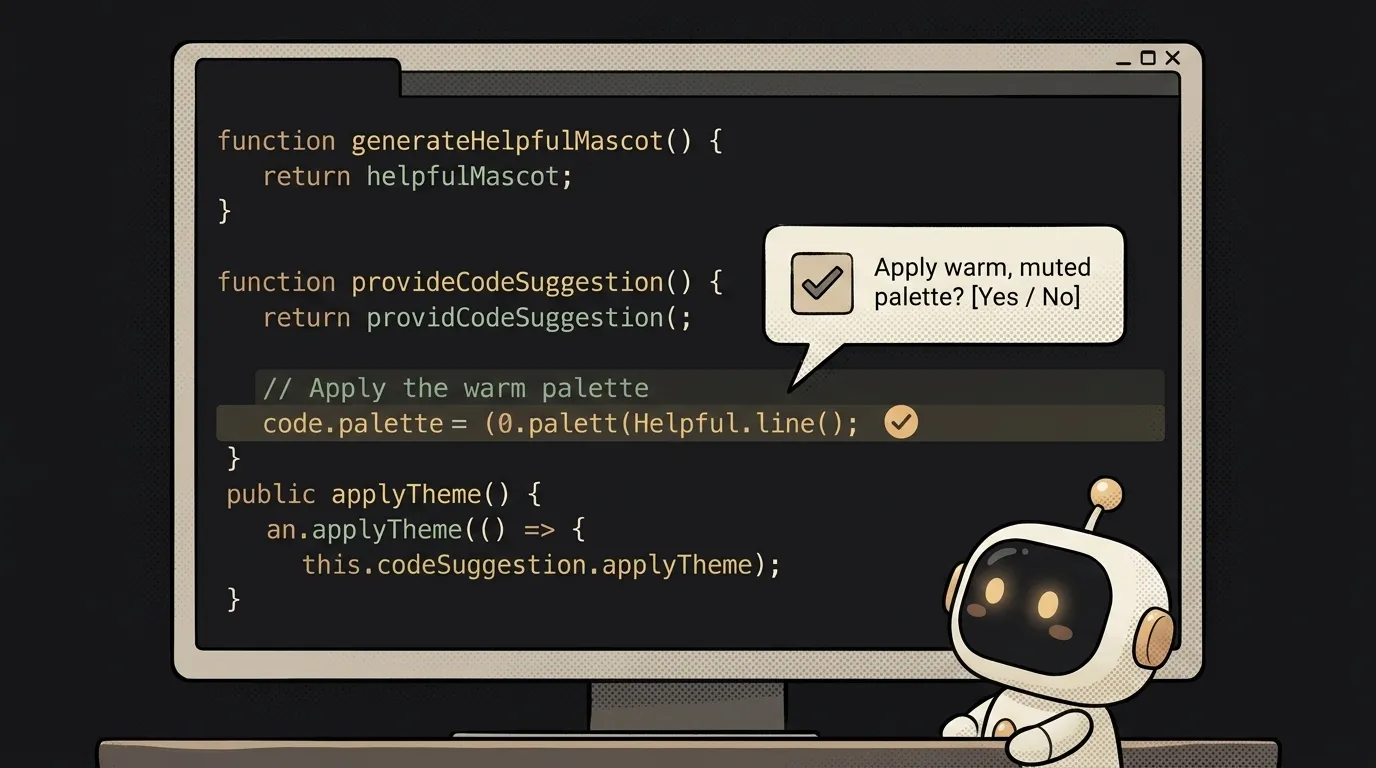
What Is an IDE — and Why It Beats a Plain Text Editor for Code
An IDE is a development environment: a code editor plus tools that understand your code. Here's what an IDE is, how it differs from a notepad, and why you need one.

What Is a Container (Docker) — and Why "Works on My Machine" Is Dead
A container packages a program together with its environment so it runs the same everywhere. Here's what a Docker container is — and why it isn't a VM.

Tailwind vs Plain CSS — What Should a Beginner Pick in 2026
Tailwind or plain CSS? We compare on speed, learning curve, and readability — and give a straight answer on who should pick what. Plus why AI almost always writes Tailwind.
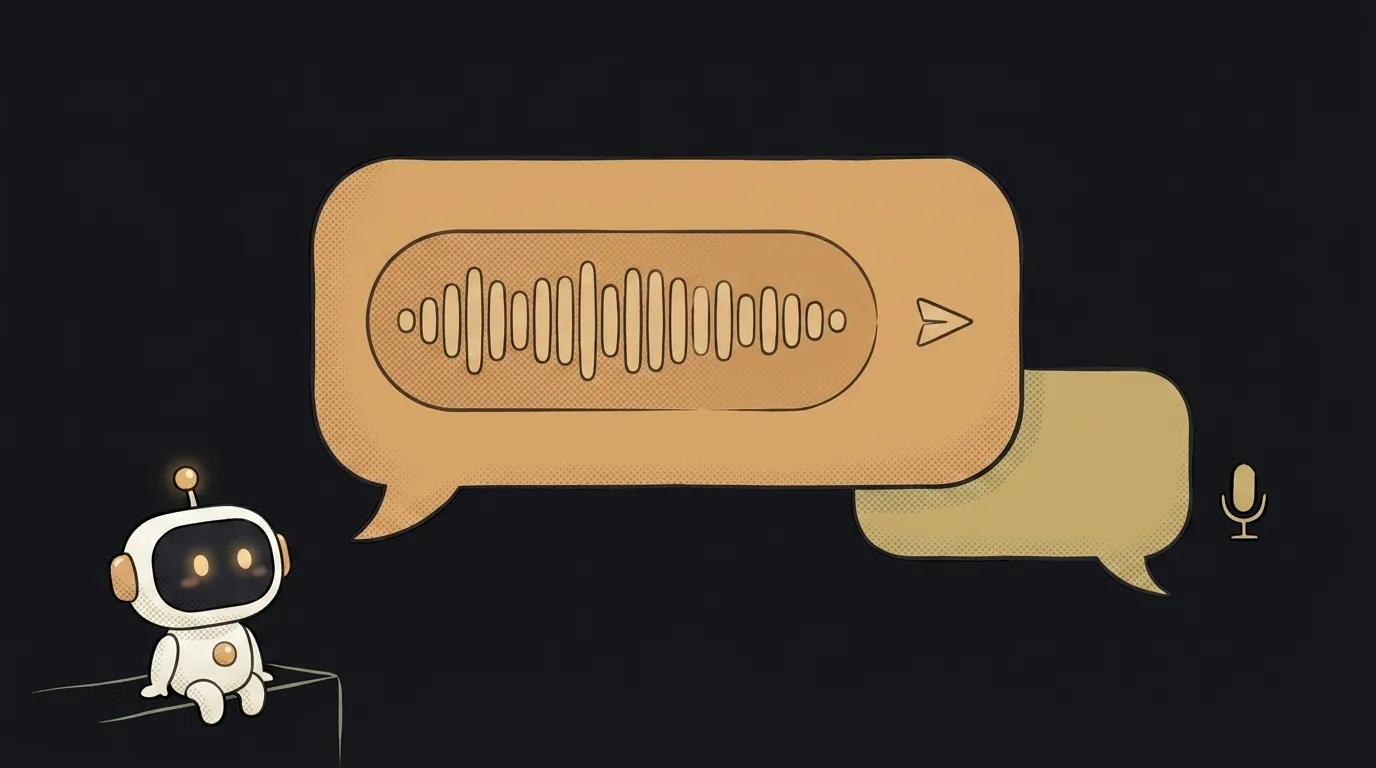
Speak a language you don't know — in your own voice
Record half a minute of yourself, and the app sends a voice message in a language you never learned — still sounding like you. A year ago this didn't work. A weekend build.

How to Speed Up Your Website — 5 Steps You Can Do in an Evening
Step by step: how to speed up your website with no developer — measure speed, compress images, add lazy loading and a CDN. Real steps, one evening.

Your own music for videos — with no copyright strike
Describe a mood in words, get a track you can actually publish. The music API is now trained on licensed data. With a ready brief.
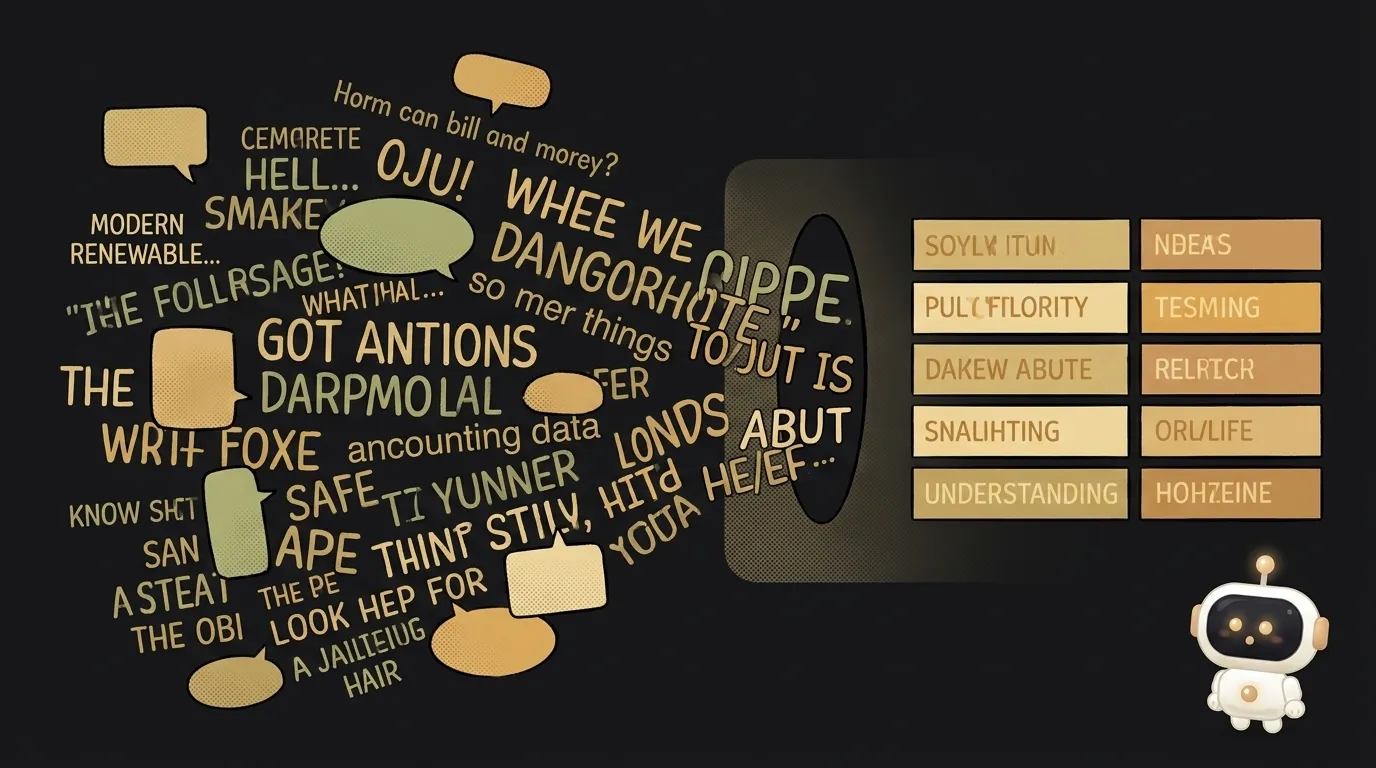
What is structured output — how to make an AI return JSON
AI usually answers in chatty text, and your code chokes on it. Structured output forces the model to hand back strict JSON — no surprises.

What is model distillation — how a big AI teaches a small one
A small model on your laptop answers almost like a giant. Distillation is when the big model personally tutors the small one.

What is a mixture of experts (MoE) — why a model is huge yet fast
A model has 600 billion parameters, but only a small slice fires per word. That's MoE — here's how one router keeps a giant nimble.

How to cut your AI costs — 6 steps without losing quality
The same result can cost 10x less. You pay for tokens, not requests — and most beginners burn them for nothing. Here's how to stop.

GPT vs Claude — which model to choose in 2026
The 'GPT vs Claude' debate isn't settled by benchmarks but by your task. We compare what matters: code, long text, images, price — and who fits which.

Best free hosting for your first app — 7 working options and their catches
You can put your first site online for $0 in five minutes. But 'free' costs something different on each host — here's where it works, and the catch.

Drop a year of chats into one prompt — and ask anything
This used to need a vector database and RAG. Now a whole year of chats fits in one prompt — million-token context just got far cheaper.

What is an API key — and why a leak hits your wallet
An API key is a pass to someone else's service, used in your name. Here's what an API key is, where it lives, why it can't sit in your code, and how to store it safely.
What is a pull request — and why it's not about 'pulling'
A pull request is a proposed change, reviewed before it merges. Here's what a pull request is, why you want one even solo, and how to use it.

What is a knowledge cutoff — and why the model lies about yesterday
A knowledge cutoff is the line past which a model knows nothing. Here's why it confidently makes up recent events, and how to work around it.

REST or GraphQL — which to pick as a beginner, and why
REST or GraphQL — the real difference and what to use for a first project. We compare on what matters: learning curve, request count, flexibility — and call it straight.

Describe a scene in words — get a short clip with sound
Not an image, a video: write one line, and a minute later you've got an 8-second vertical clip with sound, ready for Stories. Veo 3.1 in the Gemini API. Starter prompt included.

How to choose an AI model for the job — not the most expensive one
How to choose an AI model for the job: step by step — reasoning, context, cost, and testing on your own examples. Default to cheap, raise the bar only when needed.

Free AI image generators — 6 that actually work in 2026
Free AI image generators that actually work in 2026: which to pick for text in the image, photorealism, or unlimited use — with each one's honest catch.

Drop a whole book into a model — and ask without chunk-searching
Big files used to get sliced up and searched (that's RAG). GLM-5.2 just shipped — a million tokens of context, open and cheap. Now the whole document fits in one request. Starter prompt included.

Why your site isn't showing in Google — 3 causes and how to fix each
A new site doesn't appear in Google right away, and is sometimes accidentally blocked from indexing by a single toggle. Here are the 3 real causes and fixes.
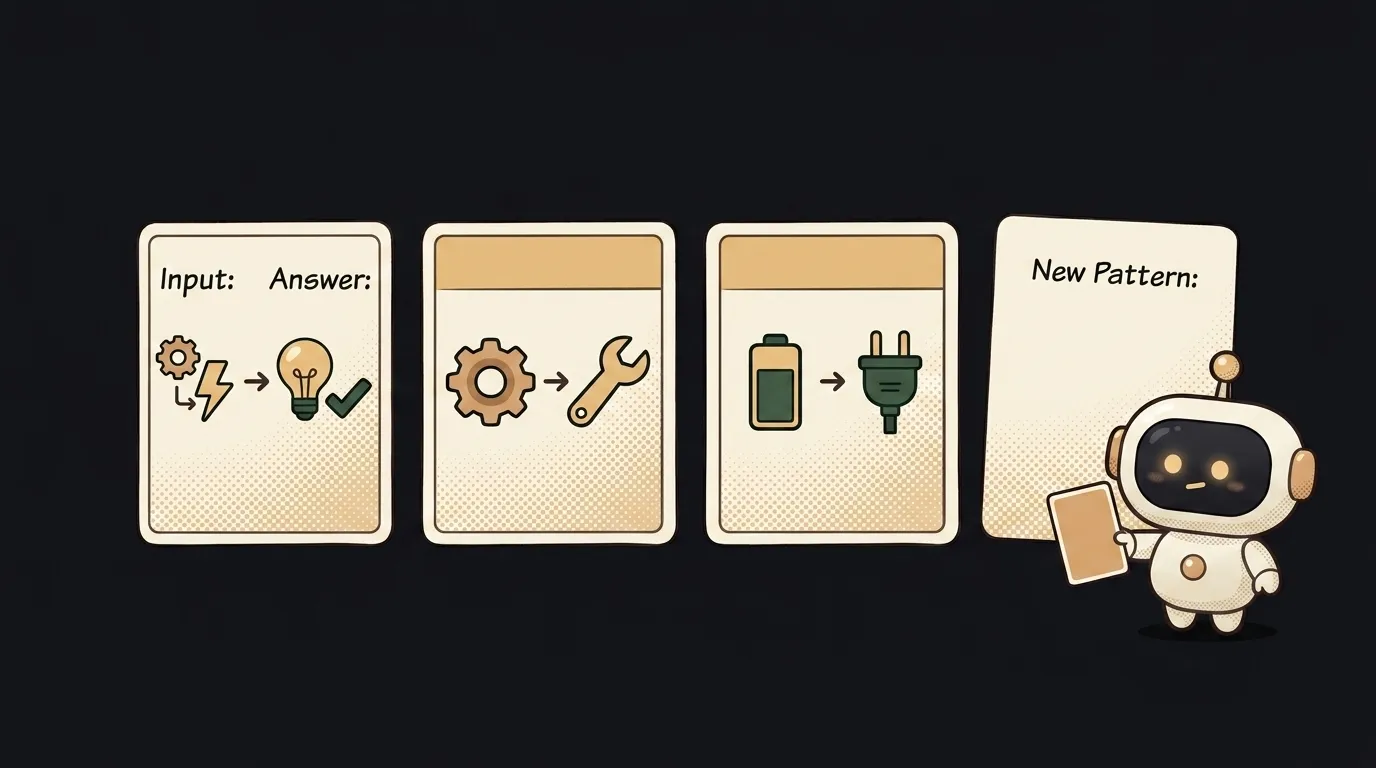
What is few-shot prompting — how to 'tune' a model right inside your request
Few-shot prompting means showing the model 2-3 examples right in your request. No fine-tuning, no code — it picks up the format and style on the spot.
What is a reasoning model — and why you pay for thoughts you never see
A reasoning model thinks to itself first, then answers. Those hidden thoughts cost money and time — here's how it works and when it's actually worth it.

What is a diffusion model — why AI images are born from noise
A diffusion model doesn't paint an image pixel by pixel — it develops it out of pure noise, removing static step by step. Here's how it works, in plain words.

Drop in a lecture video — get notes with timestamps
Hand the model an hour-long lecture or tutorial and get back a table of contents: tokens at 02:14, embeddings at 09:40. A year ago this wasn't this easy — now it's a weekend build.

Vercel vs Netlify — which to pick for deploying your first project
Vercel and Netlify both deploy a site from GitHub in a minute and are near-twins for a beginner. We compare cost, learning curve and use case — and call it.

Snap a sign — get the same photo, but in your language
Not a caption under the picture — the same photo, with the words translated and sitting right where they were. This used to be a whole pipeline; now it's one request.

How to make an AI chatbot — step by step, from zero to working in an evening
An AI chatbot isn't training a neural net — it's three blocks: a model via API, a system prompt, and a simple interface. Here's what to do, in order.

My API key isn't working — a 3-cause checklist that catches everyone
API key not working and throwing 401? Here are the 3 main causes — a typo, the wrong header, a problem with the key itself — and how to fix each fast.

What is an SDK — and how it differs from an API in plain words
An SDK is a ready-made toolkit for a service: a code library plus tools. Here's what an SDK is, how it differs from an API, and why you'd want one.

What is a rate limit — why an API answers 429 and asks you to wait
A rate limit caps how often you can call an API. Here's why a service answers 429, why it isn't a bug in your code, and how to live with it.

What is a framework — and how it differs from a library
A framework is a ready-made app skeleton. Here's what a framework is, how it differs from a library, and why you don't call it — it calls you.

Show it your screen and ask out loud — it sees what's open and walks you through it
"Where do I turn this on?" — you used to describe what was on your screen. Now the model sees your screen itself and guides you by voice, step by step. A weekend build.

Python or JavaScript — which language should a beginner learn first
Python or JavaScript for a beginner? We compare entry cost, ecosystem, and AI — and give a straight answer on who should pick which, no fluff.

Point your camera at anything and ask out loud — it answers, seeing what you see
You used to snap a photo and wait for text. Now the model watches a live camera feed and talks back in real time — and you can interrupt it like a person. A weekend build.

How to add analytics to your site — in 10 minutes, no developer needed
Step by step: how to add analytics to your site, drop in the counter, check the first visit, and see how many people actually show up — in ten minutes.
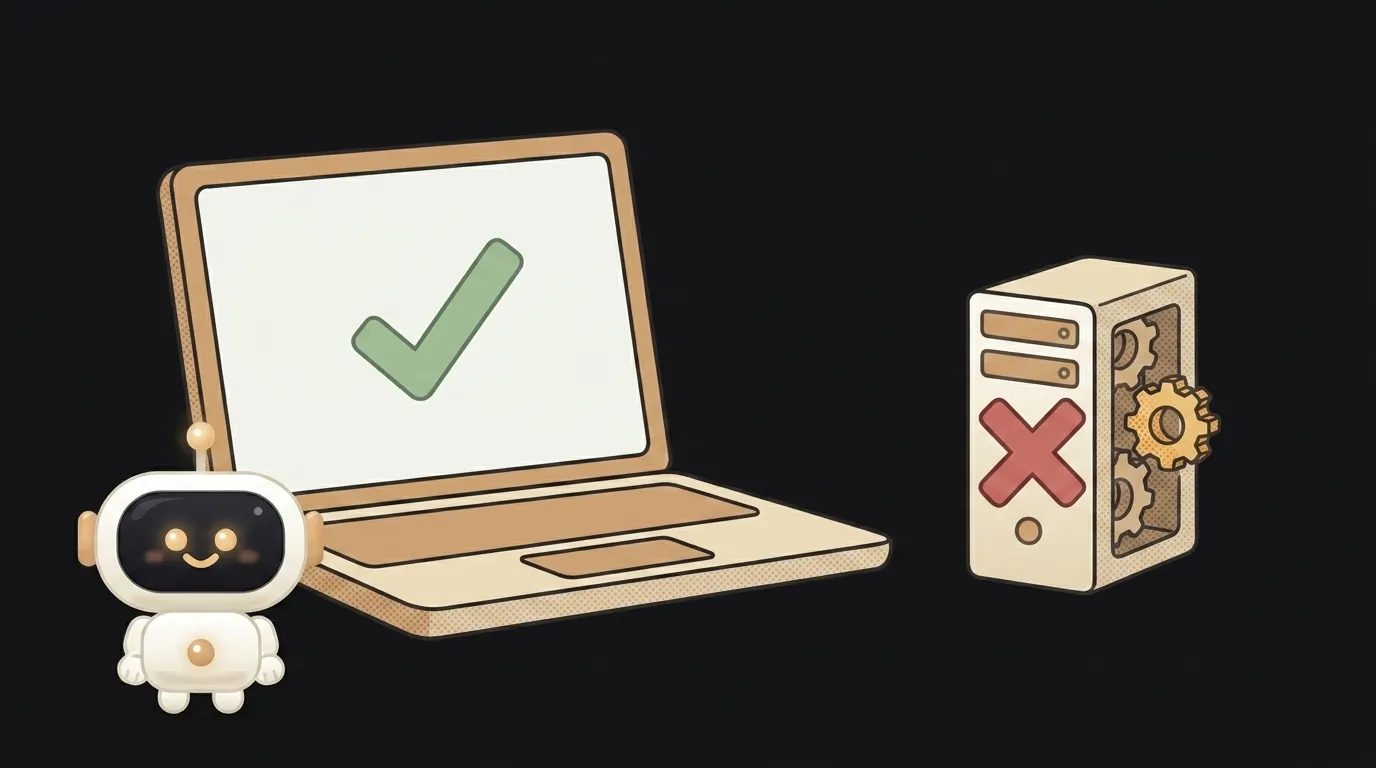
Why your deploy fails when it works locally — 3 causes to check first
'Works on my machine, but the server says Build failed.' Here's why your deploy fails: the 3 most common causes, how to check each, and how to fix it.
Why AI-written code has bugs — 3 causes, and why it doesn't mean 'AI is dumb'
The AI gave you clean code and it crashes. Here's why AI-written code has bugs: 3 real causes, and what to do to get far fewer of them.
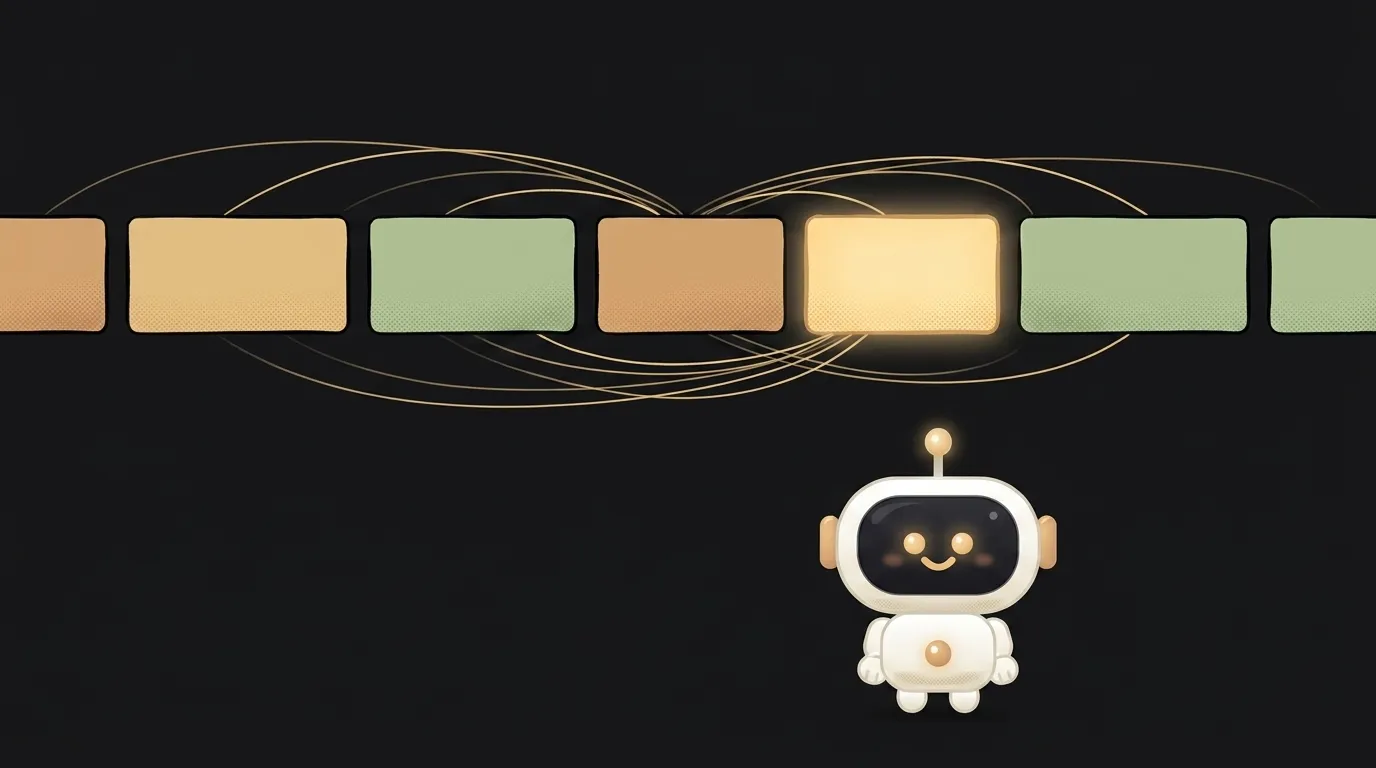
What is a transformer — the 'T' in GPT, and why it guesses instead of understands
A transformer is the engine behind every AI like ChatGPT. Here's what a transformer is — and why it doesn't read text the way you do.

What are model parameters — the 7B and 70B in the name
Llama 70B, Qwen 7B — what's the B? It's billions of parameters. Here's what model parameters are, and why bigger doesn't always mean smarter.

What is a GPU — and why AI runs on graphics cards built for games
A GPU is the graphics card almost all AI runs on. Here's what a GPU is, how it differs from a CPU, and why neural networks can't live without it.

A birthday song for a friend — from a few lines, for three cents
AI composers with real vocals used to be pricey and locked in a closed app. Now a full song with voice and lyrics is one request for ~$0.03. That's a weekend greeting-song generator.

Snap your mug — spin it as a 3D model. From one photo
Turning a real object into 3D used to mean dozens of photos and special software. Now one snapshot is enough — the model fills in what the photo doesn't show. A weekend build.

How to take your first payment — step by step, without becoming a bank or touching cards
To charge money in your app you don't store card numbers. A step-by-step walkthrough: add payments through a ready service in an evening, leak nothing.

What is serverless — and why "no server" actually has a server
Serverless isn't "no server" — it's a server that sleeps until called. Here's what serverless is, what you pay for, and what a cold start really is.

What is localhost — and why you can't send the link to a friend
localhost is an address that loops back to your own computer. Here's what localhost is, why only you can see it, and where ports fit in.
What is a CDN — and why your site is slow even on a powerful server
It's not always a weak server — sometimes it's distance. Here's what a CDN is, how a network of copies speeds up a site, and why you need one early.

What a 500 error means and how to fix it: 3 causes to start with
A 500 error means "the server crashed, not you." Here's what a 500 error means, where to find the cause, and how to fix the 3 most common ones.
Paste a contract — get a plain-language summary and three gotchas
Subscriptions, terms, leases — the fine print nobody finishes. Now a cheap model reads it for you and flags where the trap is.
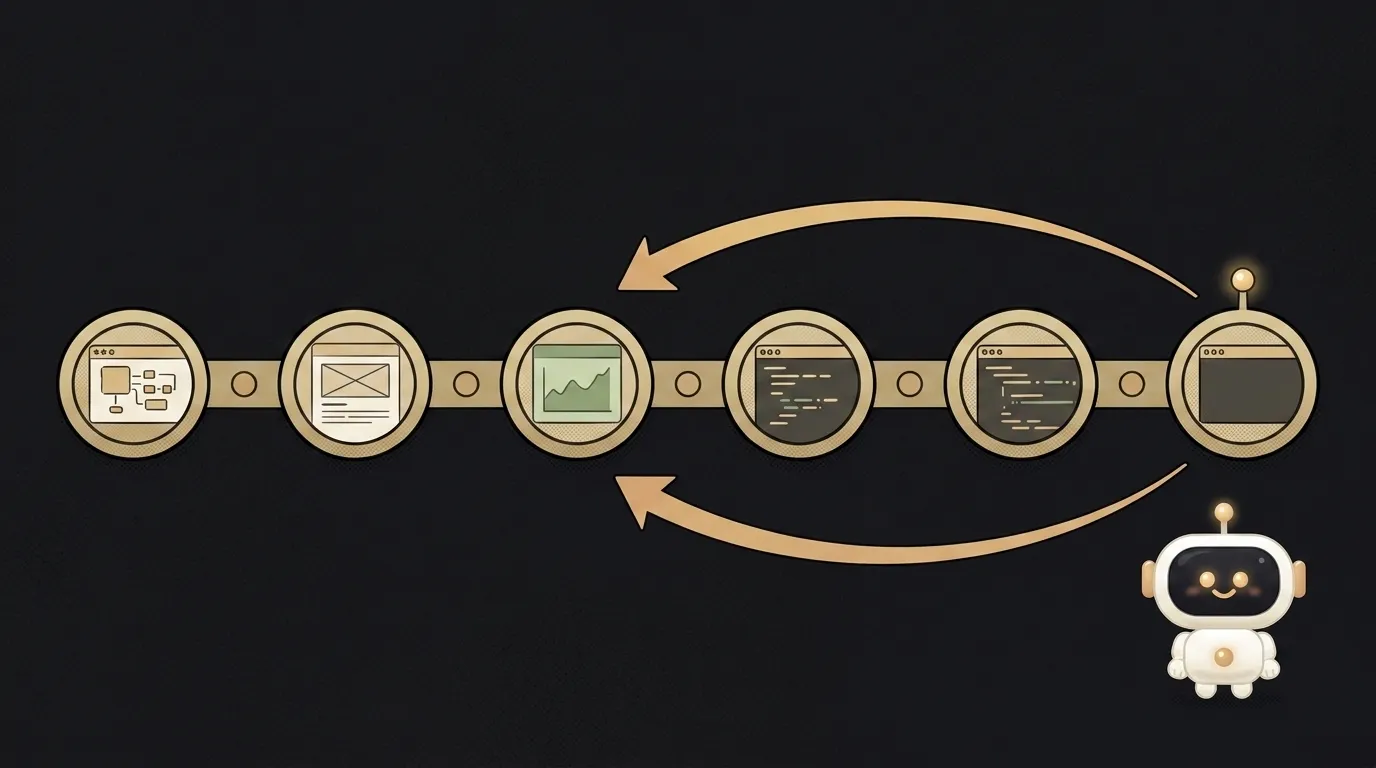
How to use Git as a beginner — step by step, and why it's a time machine for code
Git isn't cloud storage for code — it's a time machine with save points. A step-by-step on how to use Git as a beginner: init, commit, push — five commands.
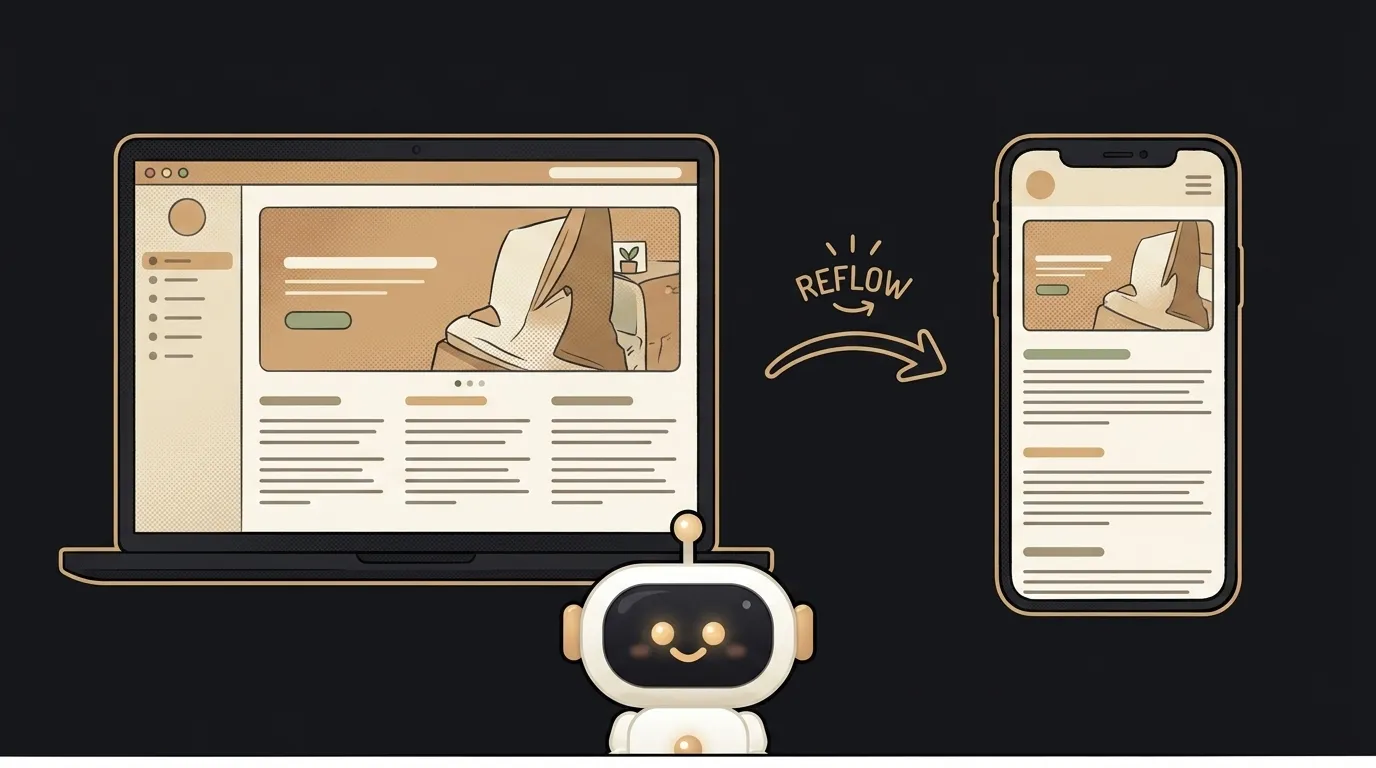
How to make a site mobile-friendly — step by step, starting with the one line everyone forgets
Site broken on phones? 9 times out of 10 it's one forgotten line. A step-by-step on how to make a site mobile-friendly — from viewport to checking it.
Snap your fridge — get dinner from what's already there
Not «what should I cook» in general, but a recipe from the food in your photo, plus a short list of what to buy. A year ago this wasn't this easy.

What is inference — and why you pay for every AI answer again
Inference is a trained model working for you right now. Here's why every answer costs money each time, and what drives its speed and price.
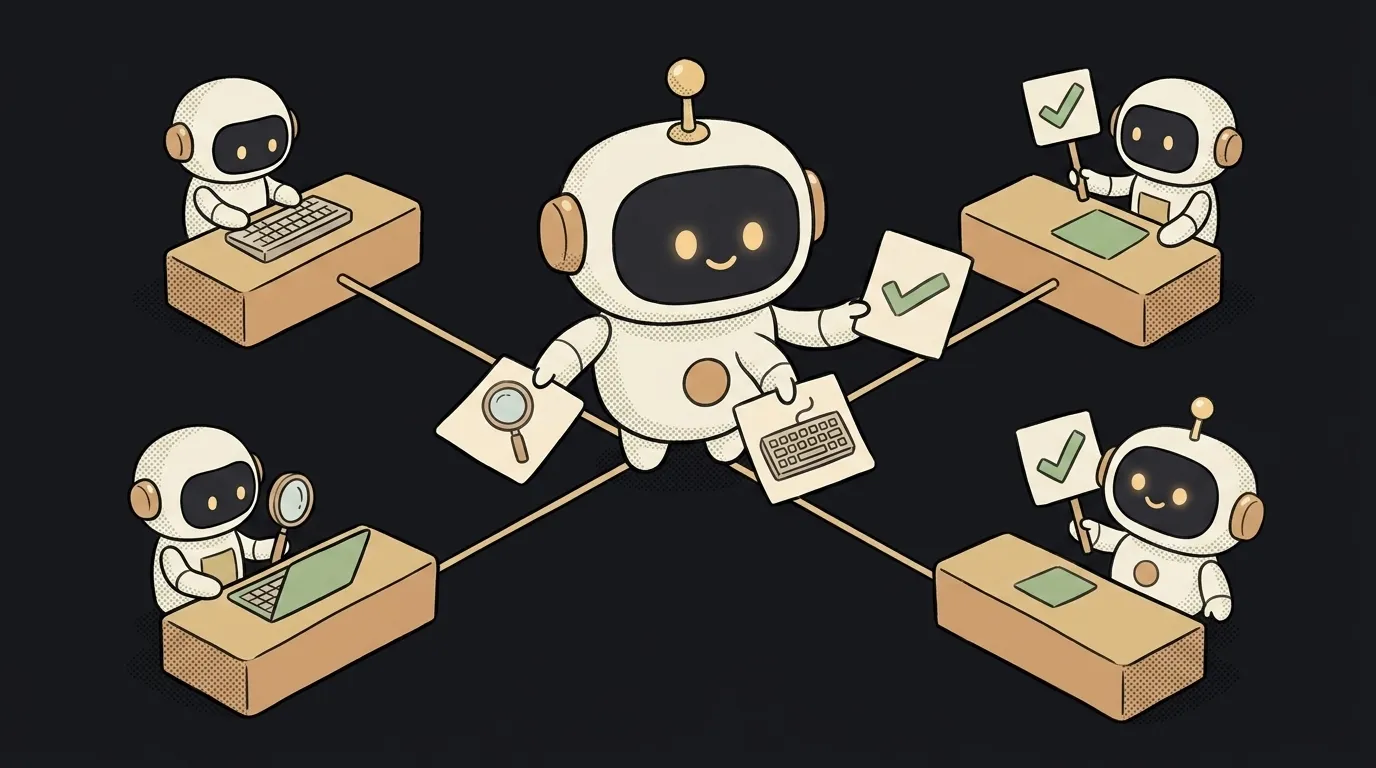
What is a multi-agent system — and why five narrow AIs beat one do-it-all
A multi-agent system is a team of AI agents, each with its own role. Here's when the team is truly smarter than one agent, and when it's just pricier.

What are AI guardrails — and why a prompt isn't security
Guardrails are checks around the model, not a 'don't do that' line in the prompt. Here's why a wall holds where a request gets talked around so easily.

What is an AI benchmark — and why #1 isn't the best for you
A benchmark is a standardized exam for AI models. Here's how to read leaderboards without the illusions, and why your own mini-test beats any ranking.

Photograph your room and see the sofa standing in it — before you order
You used to just guess whether it'd fit, or wrestle Photoshop. Now the model fuses two of your photos into one scene — the thing, in your room. A weekend build.
How to build an AI Telegram bot — 6 steps, and where people get stuck
A Telegram bot is the fastest way to give your AI real users today. Step by step: the token, a handler, the model call, a safe key, and deploy.

How to fix a CORS error — 3 causes and the fix for each
A CORS error can't be fixed on the frontend — headers in fetch won't help. Here's the symptom, 3 real causes, and the exact server-side fix for each.
You write a comic, and your hero looks the same in every panel
It used to redraw your hero from scratch in every frame — and the comic fell apart. Now the face holds from panel to panel. A weekend build.

Why my prompt doesn't work — 3 causes and how to fix each one
A prompt fails almost always for three reasons: too vague, overloaded, or the important bit buried in the middle. We go symptom → cause → fix.
What is multimodality — how AI 'sees' an image when it has no eyes
A multimodal model doesn't look at an image the way you do — it turns it into the same numbers as text. How AI works with photos, sound and text at once.

What is fine-tuning — and why it barely teaches a model new facts
Fine-tuning teaches a model style and behavior, not new facts. Here's how it differs from RAG and why a beginner should care about the difference.

What are open weights — and why it's not the same as open source
Open weights are a model's ready-made 'brain' you can download and run. But it's not open source: you don't get the recipe or the data. Here's the difference.

An agent that watches the web on its own — and texts you first when the thing you're waiting for shows up
A restock or ticket watcher used to mean coding a parser, a schedule, a diff. Now the agent does the looking and decides what matters. A weekend build.

React or plain HTML — what to pick for your first site, no dogma
Not everyone needs React. For a landing page or blog, plain HTML is lighter and faster; React pays off when the interface is live. We compare and call it straight.

How to debug with AI — 5 steps so it actually helps instead of guessing
'It doesn't work, fix it' is the worst way to ask AI to debug. Five steps: give the exact error, the context, and test one change at a time.
Write the errand in plain words — the agent googles, calculates, and hands you a table
"Agent" used to mean you wired up the think→go→check loop by hand. Now it's one API call: the server runs the loop for you. A weekend build.
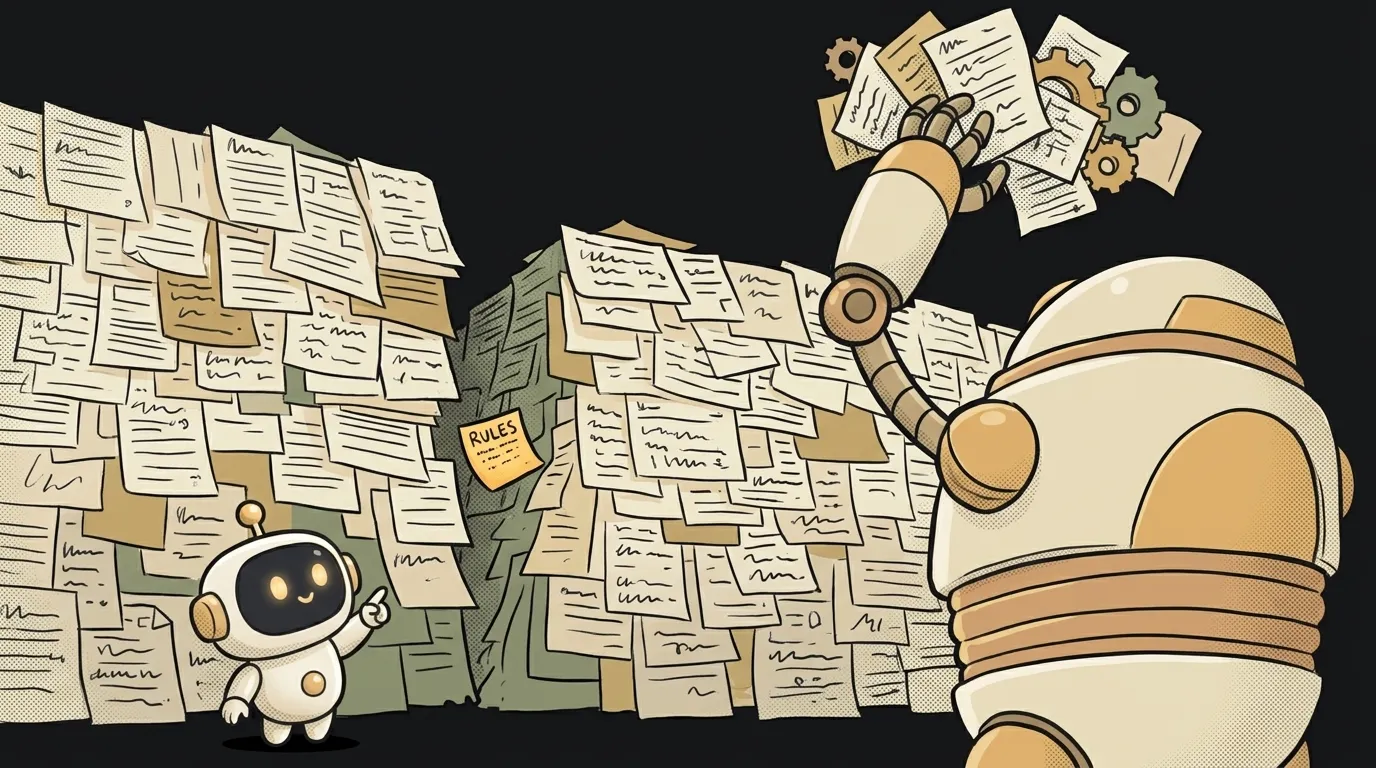
Why the model ignores my instructions — 3 reasons and how to fix it
You ask for one thing and the model acts like it never read it. Usually it's not the model: your instruction drowned in the chat, contradicts itself, or hides in the middle.
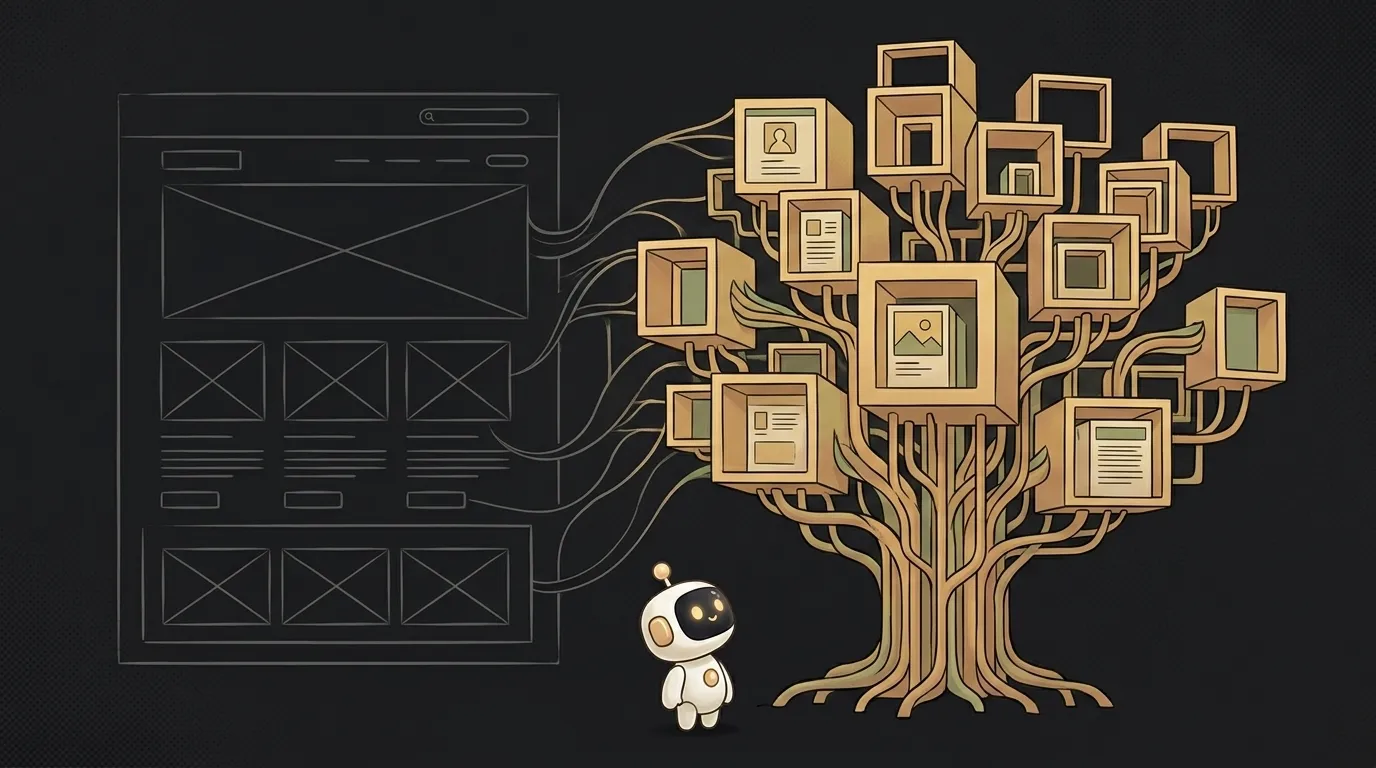
What is the DOM — and why the page's 'source code' lies to you
The DOM is the live tree of the page the browser builds from your HTML. In plain words: how it differs from the source, and why your element 'isn't found.'
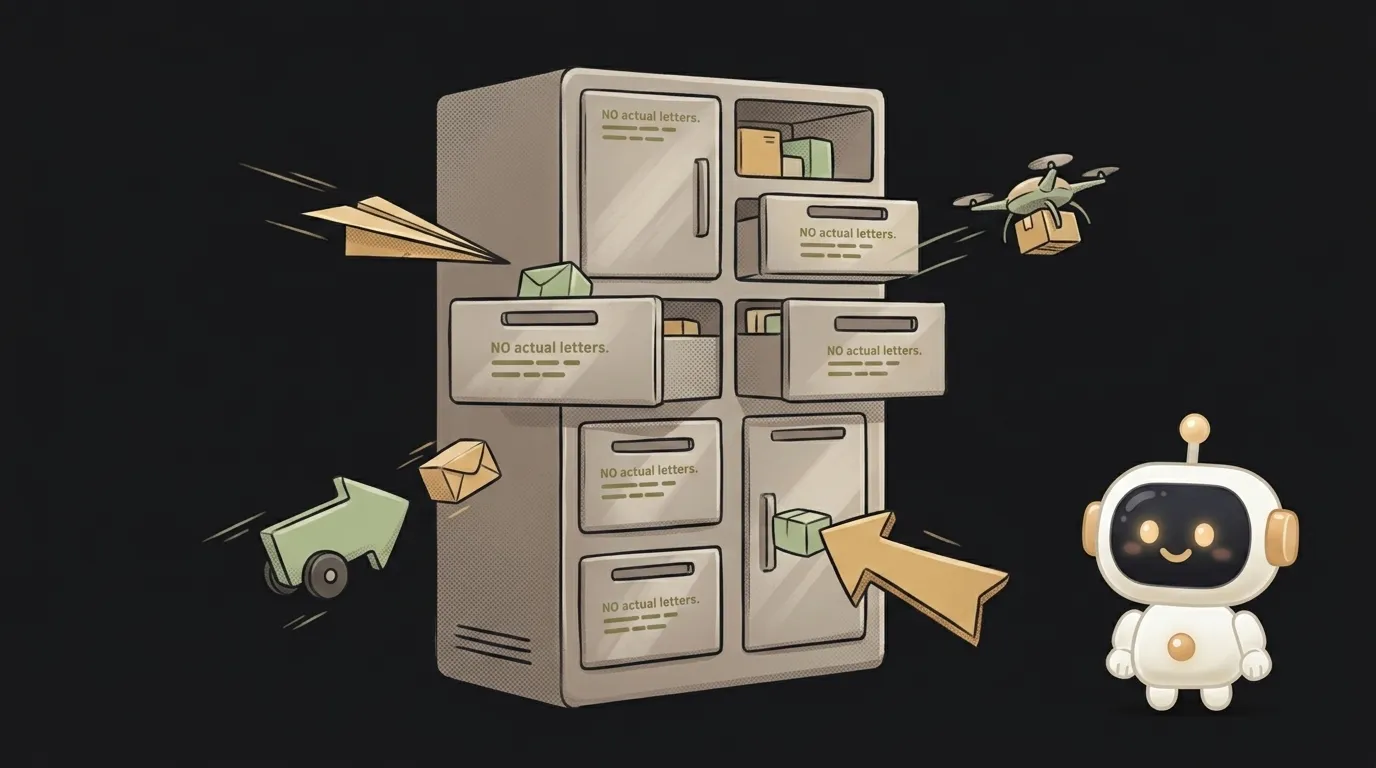
What is a REST API — and why the server forgets you every time
A REST API isn't a technology — it's a set of good manners for programs talking over the internet. In plain words: four verbs, addresses, and why the server never remembers you.

What is React — and why you stop touching the page by hand
React is a library where you describe how the screen should look, and it redraws it for you. In plain words: components, state, and the one trick that changes everything.
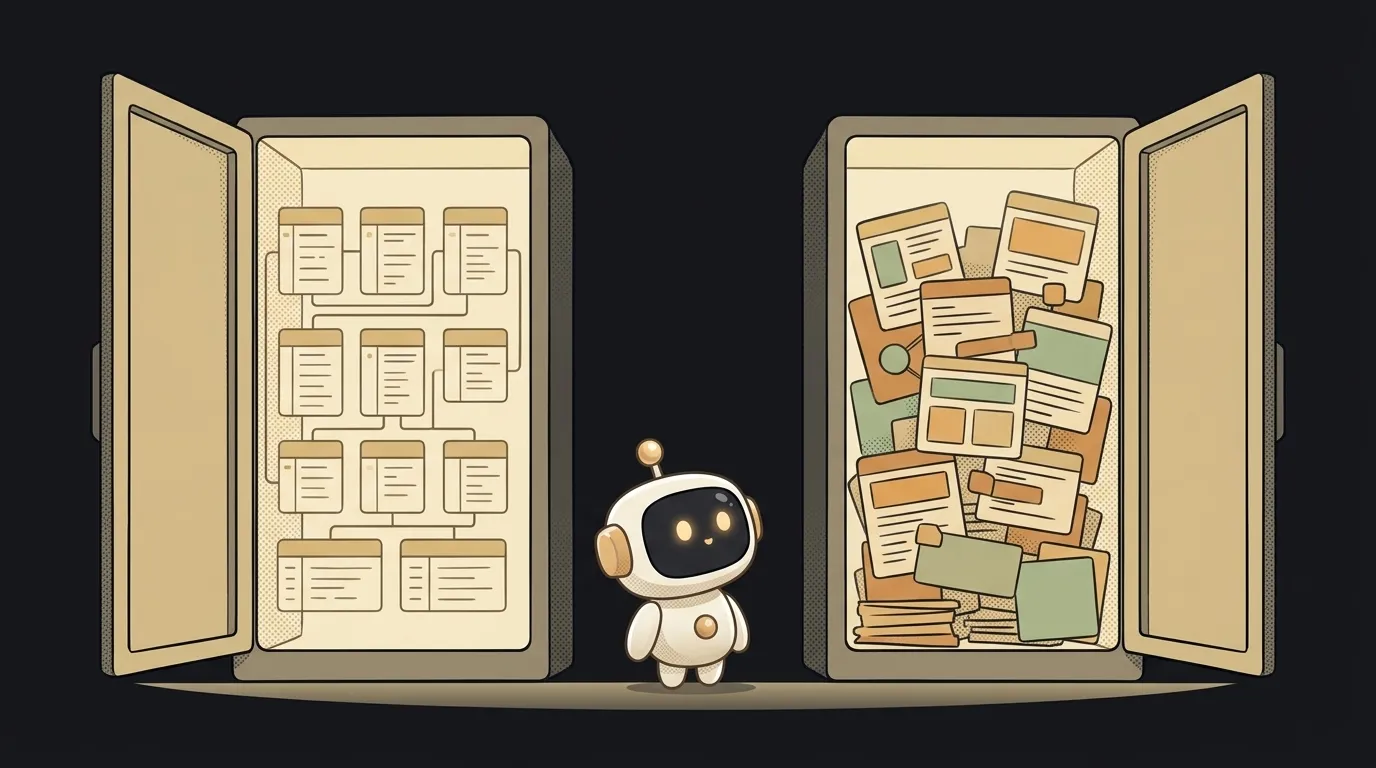
Supabase or Firebase — which backend to pick for your first project
Both give you a database, login, and hosting out of the box. The difference is the type of database and how tied to Google you are. A practical comparison with a clear verdict.

Name a theme — and the story starts talking right away, while it's still being written
Narration used to make you wait: half a minute to render, the kid staring at a spinner. Now the model speaks from the first word. A weekend build.

Ask in plain words — your phone finds the right screenshot out of thousands
4000 screenshots and you can't find the one you need. Now the model searches the picture itself, not the text on it — and pulls up that exact shot. A weekend build.

How to buy and connect a domain — step by step, and why it doesn't open right away
Buying a domain is easy; connecting it feels scary. Really it's two DNS records and some patience. A step-by-step guide: from picking a name to a working https address.

What is CORS — and why that console error is protection, not a bug
CORS isn't 'your server broke.' It's the browser hiding the response to protect you. Here's why the CORS error happens and how to fix it honestly.

What is a JWT — and why the server doesn't remember you but lets you in anyway
A JWT is a pass you carry with you, not an entry in the server's logbook. Here's how the server lets you in while storing nothing about you — and where the trap is.
What is 2FA — and why it saves you even after your password is stolen
2FA is a second key to your account that changes every 30 seconds. Here's why it holds even when your password has long leaked into someone else's database.

How to store API keys safely — and why a frontend .env isn't a secret
The classic beginner mistake: hiding a key in a frontend .env. At build time it lands in the bundle and anyone can see it. Here's how to store API keys properly.
Drop in a clip — the model watches it and draws the cover
The model used to see a single picture. Now it watches the whole video, catches the best moment, and turns it into a cover. A weekend build.
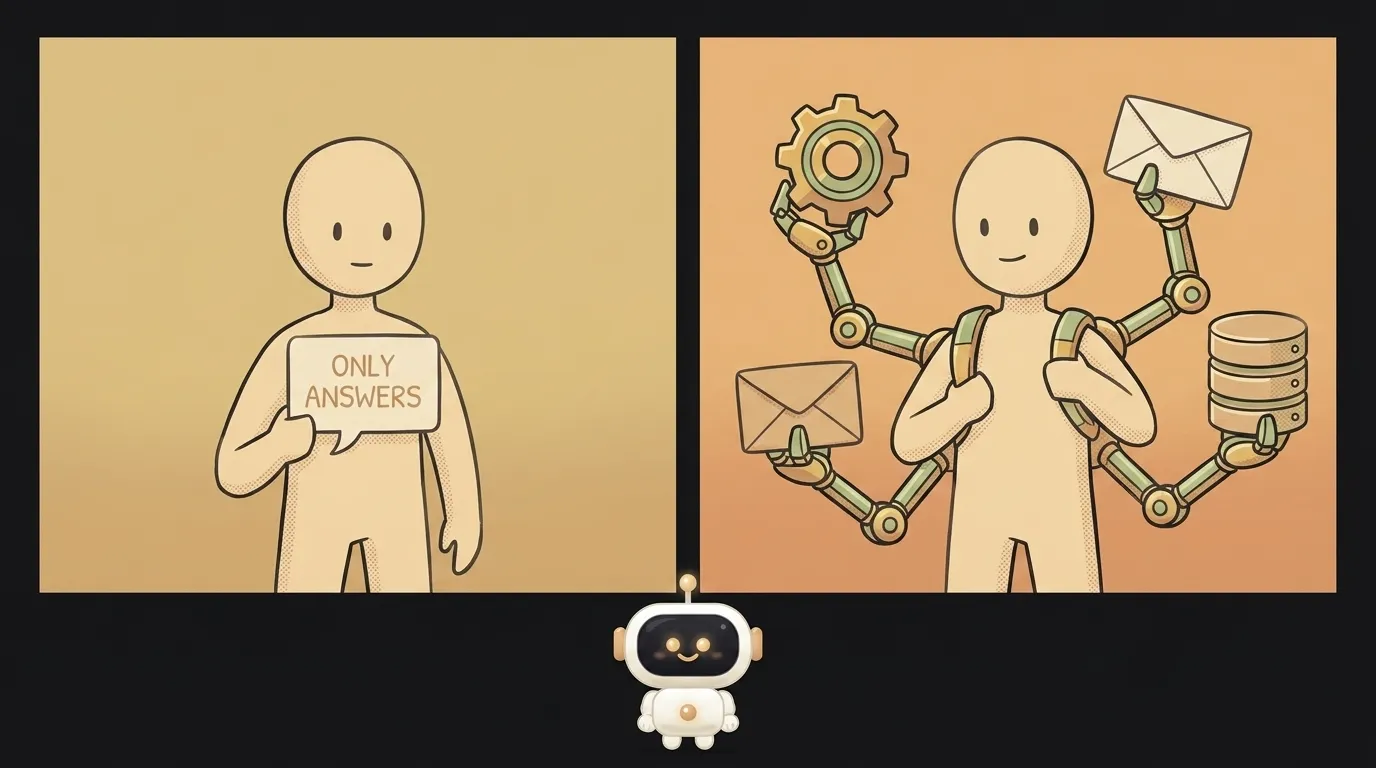
Chatbot or agent — what's the difference and what a beginner should pick
A chatbot answers, an agent acts. The difference isn't how 'smart' the model is — it's whether the AI can press buttons itself. We compare and tell you what to pick.
A translator with no key, no server, no bill — right in the browser
A translator used to mean a cloud API, a key, and per-character fees. Now the browser translates on its own: offline, free, 145 languages. An evening build.

AI design tools for non-designers — 7 that actually save you
Building an app solo and design is your weak spot? Here are 7 AI tools that cover UI, icons, color, and images — each for its own job, no designer required.

What is SEO — and why nobody finds your finished site
Your site works, but it's nowhere in search. SEO isn't marketing magic — it's how you tell Google what your page is about. Explained plainly, no jargon.

What is OAuth — and why 'Sign in with Google' never gives away your password
The 'Sign in with Google' button never hands your password to the site — that's the whole point. OAuth explained plainly: how it works, why it exists, where you've met it.

What are meta tags — and why search sees them but your page doesn't
Title and description are the only thing a person sees about your page BEFORE clicking. They're hidden in the code, not on screen. Which ones matter and how to write them.

Website launch checklist — 8 checks that actually matter
Before launch, don't 'polish the design' — check the site opens on a stranger's phone. 8 items that catch 90% of embarrassing launch-day failures.

A picture that googles for itself and knows what's happening today
A normal model draws the world as it memorized it during training. The new Seedream searches the web during generation — so the poster comes out with today's facts. That's enough for a weekend project.

One photo and one line — and out comes a talking postcard
Animating a photo used to mean a video editor and a lot of fuss. Now one photo and one sentence is enough — the model makes a short clip with sound on its own. That's a weekend build.
Open or closed AI models — which to pick as a beginner and why
A closed model is a taxi, an open one is your own car. We compare on price, privacy and the learning curve, and say plainly who should pick which — and when to switch.

How to add login to your app — step by step, without inventing passwords
You don't build auth from scratch: a ready service does it for you in 20 minutes. A step-by-step walkthrough — from picking a provider to a protected page and a session check.

What does deploy mean — and how it differs from “it works on my machine”
“Works on my computer” isn't the same as “available to people.” Deploy moves your app to where it lives without you. Here's what it really means.

What is an environment variable — and why you never put a key in the code
Write an API key into your code, push to GitHub, and bots steal it in minutes. Environment variables keep secrets out of the code. Here's how.

What is a vector database — and why it finds “dog” when you type “puppy”
A vector database searches by meaning, not exact words: it finds the right thing even when you don't guess the phrasing. Here's how it works.
A partner you talk to out loud — and cut off mid-sentence, like a real person
Not 'record — wait — read the reply,' but a real spoken conversation in real time. Last week OpenAI shipped a model that answers with no pause and doesn't break when you interrupt it.
SQL or NoSQL — which to pick for a first project, no dogma
SQL is strict tables with relations, NoSQL is flexible document-cards. We compare them where it counts and say plainly what a beginner should take.

Pre-launch security checklist — 7 checks you can do in an evening
Before you publish an app, 7 checks are enough to not hand your data and money to the first passing bot. A concrete list, no lecturing.

Your first AI feature with no key at all — Apple now ships the model inside the phone, free
No API key, no per-request bill: the model already lives in your iPhone. Last week Apple added image input and free cloud — building something useful is now a weekend job.

How to set up a database for your app — step by step, no server of your own
You don't need to run a server: a free database goes live in 10 minutes. A step-by-step walkthrough on Supabase — from empty project to your first row.
What is SQL — in plain words, and why a 50-year-old language is still alive
SQL is the language you use to ask a database for the rows you want. Explained simply: what it's for, how it reads, and why everyone still learns it.

What is an API — in plain words, and why you ping a hundred of them daily
An API is the window through which one program asks another to do something or hand over data. Explained simply, no jargon, with real examples.

What is a database — in plain words, and why nothing sticks without one
A database is an app's memory that survives a restart. Explained simply: what it's for, how it's built, and when you actually need one.
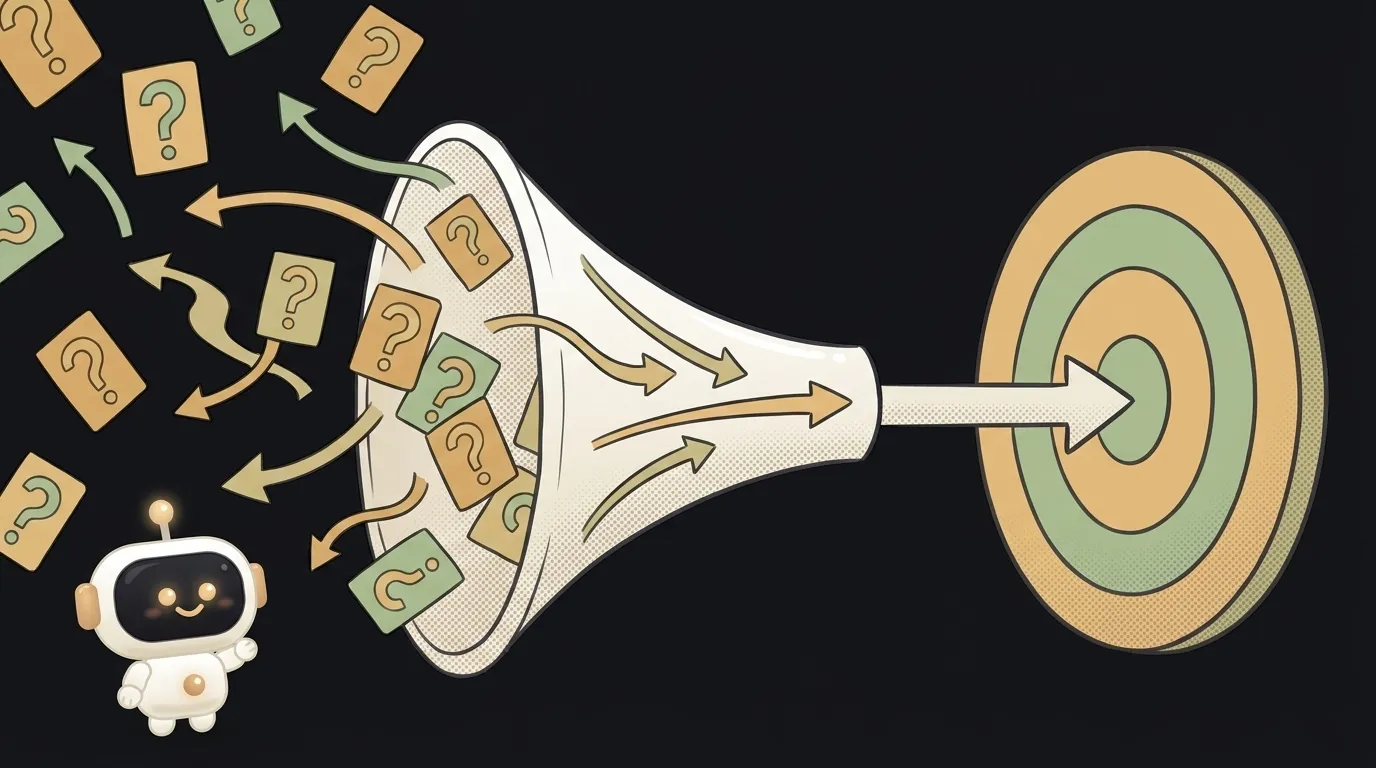
7 prompt tricks that actually work (not 'act as an expert')
Most 'prompt secrets' are junk. Here are 7 tricks that truly move the needle: role, example, output format, breaking tasks down, and letting it say 'I don't know'.
Turn your notes into a two-host podcast — over a weekend
Feed your saved articles and notes to a model and get back an mp3 where two hosts chat about them. A year ago this wasn't this easy — now it's a weekend build.

How to connect an API to your project — 5 steps, and where it usually breaks
Connecting someone's API is 5 clear steps, not magic. Step by step: find the endpoint, get a key, make the request, parse the response, hide the key.

Point your camera at a shelf — the app counts everything itself
A model used to glance at a photo and guess 'about twenty'. Now it zooms in and counts exactly — and it's a weekend build.

Bolt vs Lovable vs v0 — which to pick as a beginner, and why it's not 'who's best'
These three AI builders aren't 'who's better' rivals — they're for different jobs. A practical comparison: what they build, whether there's a backend, who each fits.
What is tool use — how an AI agent presses real buttons
A model does nothing on its own — it only writes text. Tool use turns that text into real actions. Here's how it actually works.

What is prompt injection — and why a single email can 'command' your AI
Prompt injection is when text the model is merely reading gets executed as a command. Here's why it happens and how to defend against it.

What is a webhook — and why it works on the 'don't call me, I'll call you' principle
A webhook is when a server knocks on your door the moment an event happens, instead of you polling it forever. Here's what it is, in plain words.

Ask AI for a poster — and the text finally reads, instead of garbled gibberish
Image models used to paint a gorgeous background and drunken letters on top. On June 3 Reve 2.0 shipped — it builds the layout first, then the image, so the text on a flyer, menu or sign actually reads.

An AI journal that thinks alongside you — and not a line ever leaves your phone
A year ago a 'smart journal' meant your most private notes flew off to someone else's server. On June 8 Apple opened free access to its model right on the device — now the AI reflects offline, with no key and no API bill.

How to deploy your app — step by step, from a folder on your laptop to a link on the internet
Built an app with AI but it only lives on your machine? A step-by-step guide to putting it online for free and getting a link to share.

Free APIs for side projects — 7 that work with no credit card
A pick of free APIs for your first projects: weather, countries, fake data, AI. Many need no key at all — grab one and build something tonight.
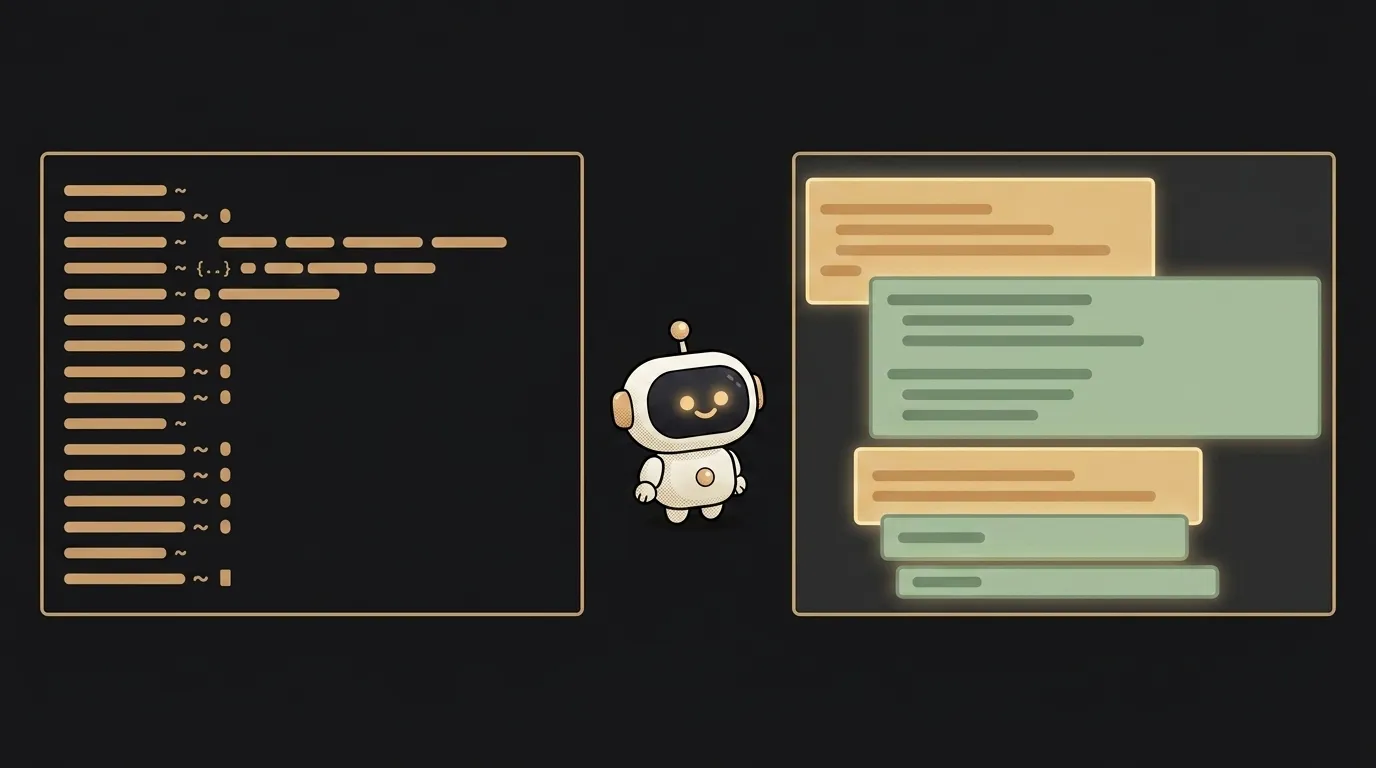
Claude Code or Cursor — what should a beginner choose in 2026
Claude Code and Cursor solve one problem in different ways: a terminal agent vs a visual editor. We compare on price, learning curve and tasks — and call it.

What is an LLM, in plain words (and why it guesses instead of knows)
An LLM isn't a knowledge base — it's a text-continuation machine. Here's what a large language model really is, and why it's so confidently wrong.
What is a system prompt — the invisible instruction that sets the AI's character
ChatGPT's personality isn't baked into the model — it's text the AI reads before your message. Here's what a system prompt is and how it steers answers.
What is a neural network — in plain words (and why nobody programmed it)
A neural network doesn't memorize examples or follow rules — it turns millions of knobs until it guesses right. Here's the plain-words version, no formulas.
Ramble on the go — and the screen shows a tidy to-do list, not a mush
You mutter your thoughts into the phone while walking, and the app hands back not a wall of text but sorted items: tasks, decisions, ideas. And it doesn't trip over your jargon.

An app reads your kid a bedtime story — in your voice, while you're away
Record 30 seconds of your speech, and any text gets read out in your own voice. A year ago you needed a studio. Now it's a weekend build.

How to write a good prompt — 5 steps that turn a request into a spec
A good prompt isn't a polite request — it's a brief. Five steps with a real example: role, context, example, format, and one round of feedback.

Cursor or Windsurf — which AI editor should a beginner pick in 2026
Both are VS Code forks with AI inside. The difference isn't the engine — it's how much they decide for you. A practical comparison, with a clear verdict.
AI tools every vibe-coder needs — 7 of them and what each is for
Not 50 trendy services — the 7 pillars a beginner actually needs: where to write, what to think with, where to ship. What to grab, when, and the catch.

What is vibe coding — and how to start as a beginner
You describe what you need in plain words, and an agent writes, runs and fixes the code. Here's what the process is — and the first three moves to make.

What is temperature in a model — the slider between boring and wild
One setting decides whether the AI answers dull and identical or creative and risky. At zero it's by-the-book; turn it up and it writes poetry, but it may also make things up.
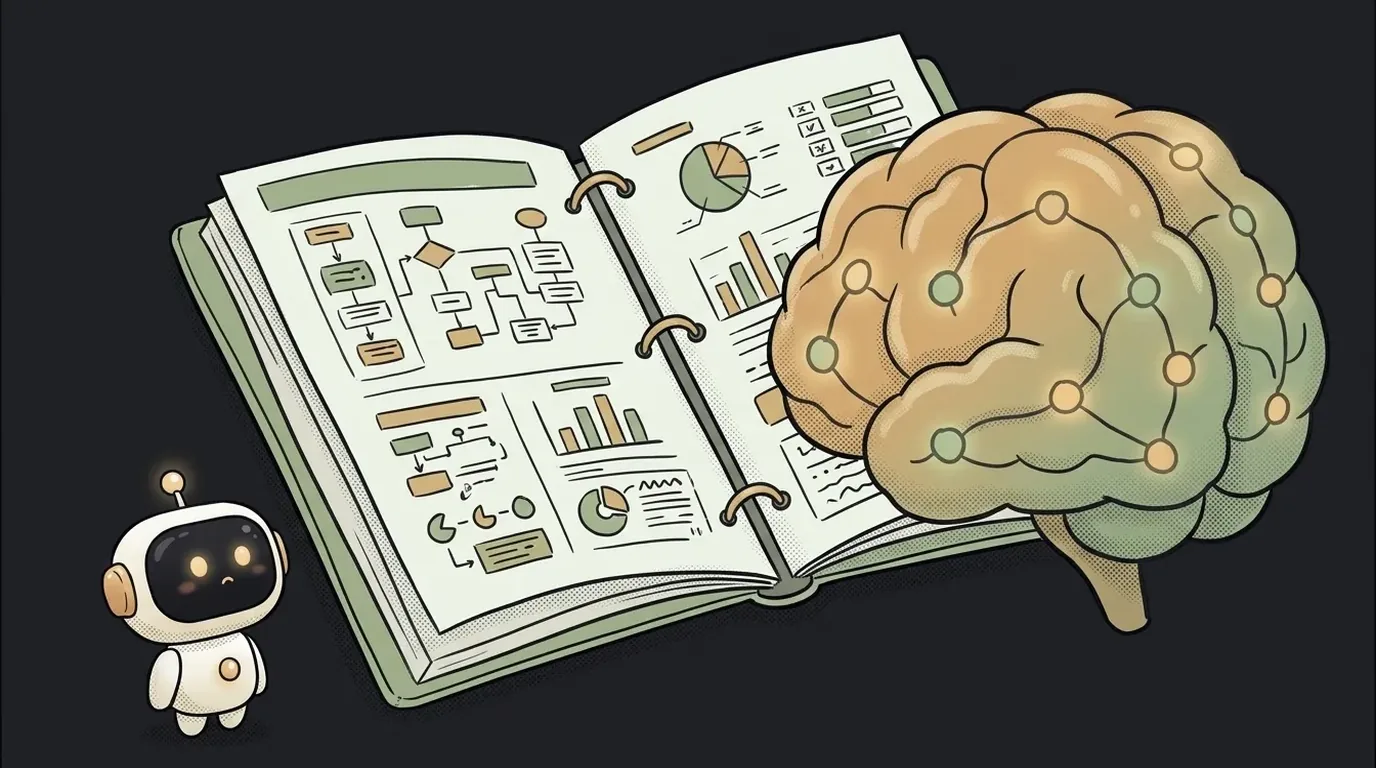
What is RAG — letting an AI peek at your cheat sheet
The model never trained on your documents — yet it answers from them. The trick is that it gets handed the right snippets right before answering. That's RAG.

What is MCP — the single port that gives AI its 'hands'
MCP is USB for AI agents. One common port, and an agent can reach your browser, your database and your files — no custom adapter for each.

What is a context window — and why AI forgets the start of a conversation
In a long chat, old messages get pushed out of the model's memory — that's why it loses the thread. Explained with a simple picture.
What is an AI hallucination — and why the model isn't lying when it makes things up
The model confidently spat out nonsense. Feels like a lie. But it can't lie — it has no idea what truth even is. Let's see how it works and how to catch it.
What is an AI agent, in plain words — and how it differs from a chatbot
A chatbot answers, then waits. An agent acts: it opens your files, runs the code, reads the error and fixes it. The difference is what it does, not just what it says.
What is a token — and why Russian costs more than English
The same sentence costs a model more in Russian than in English. Tokens are why — let's see what they are and how to pay less.
What is a prompt — and why it's a brief, not a question
A prompt feels like a question you ask the AI. It's really a brief for a worker. Flip that, and the answers stop surprising you.
What are embeddings — and how AI knows that 'cat' and 'kitten' mean the same
AI turns words into coordinates on a map of meaning. Close meanings land near each other — so it searches by meaning, not by exact words.
5 beginner mistakes in vibe coding — and how to skip them
The most common one isn't even technical. It's treating the agent like a wizard instead of a junior who needs a clear brief. Let's walk through five in a row.
10 projects a beginner can build in one evening
A short list of ideas, each with the skill you'll practice. From a timer to a Telegram bot. Pick one and start today.

Free AI tools: build your first project without paying a cent
It feels like you need a subscription to start. You don't — everything you need has a free tier, enough to build your first project and show it to people.
How to deploy your first app with no code — it's just giving it an address on the internet
"Deploy" sounds scary. It really just means "give your project a link other people can open" — and an agent does it for you in a couple of minutes.
Cursor, Copilot, Windsurf — which AI editor should a beginner pick
Spoiler: there's no "best." There are three different ways of working — and the right one matches your temperament, not some review's top spot.
VaaSBlock, Cursor, and Devin: AI Coding Assistant Analysis from June 5, 2026
VaaSBlock compared Cursor, Windsurf, Copilot, and Devin on June 5, 2026. Learn how to build a SaaS pipeline, assign tasks correctly, and control token costs.

Microsoft Security Exposes Claude Code Vulnerability in GitHub Actions: Securing SaaS Pipelines
Microsoft Security's June 5, 2026 report exposes a prompt injection flaw in GitHub Actions for Claude Code. Learn how to secure your SaaS pipeline.
Agents now write code “by vibe” — and it changes the rules
A new wave of AI agents turns a short prompt into a working app in minutes. We break down what it means for total beginners.
One prompt, a whole app: five agents on one task — and the best didn't win
We gave five agents one brief — build a habit tracker. The winner wasn't the fastest or the smartest, but the one that asked a question first.
The editor that writes tests for your code
An update turns autocomplete into a full reviewer — it reads your function and proposes the cases you forgot.

Claude Code vs GitHub Copilot: What to Choose for Shipping SaaS in 2026
Blink's June 4, 2026 analysis contrasts Claude Code and GitHub Copilot. Learn how to pick the right AI tool for rapid SaaS development and MVP launches.

Anthropic’s 80% Merge Rate: How Claude Agents Reshape SaaS Development
Anthropic reports Claude writes 80% of merged code on June 5, 2026. Learn how solo SaaS founders use agentic AI, Supabase, and Vercel to ship faster.

Why models “hallucinate” less when you give examples
A fresh paper explains the few-shot/accuracy link in plain words — and what it means for your prompts.
A prompt template that saves an hour on every feature
Breaking down the “context → example → constraints” structure on real cases — the skeleton that makes agents predictable.
OpenAI, Anthropic, and Google Pivot to Agentic Workflows: What It Means for SaaS
OpenAI, Anthropic, and Google pivot to agentic workflows on June 2, 2026. Learn how to build a SaaS using v0, Supabase, and Make without chasing model benchmarks.

Microsoft Launches Phi-4-Medium on June 2, 2026: Lowering SaaS Inference Costs
Microsoft launched Phi-4-Medium on June 2, 2026, cutting AI inference costs by 40%. Learn how to route SaaS prompts, save budget, and ship faster.
Your first vibe-coding project: the trick is picking one small enough
From idea to deploy without writing a line by hand. The hardest part isn't the code — it's resisting the urge to add more.

GitHub Copilot Switches to Token Billing on June 2, 2026: How Indie Builders Can Protect SaaS Margins
GitHub Copilot switches to token billing on June 2, 2026. Learn how indie SaaS builders can control AI costs using Make, Supabase, Ollama, and strict monitoring.

GitHub Copilot Introduces Token Billing: How Indie Developers Can Control Costs
GitHub Copilot switched to token billing on June 2, 2026. Learn how indie builders can protect SaaS budgets and configure alternative AI coding tools.
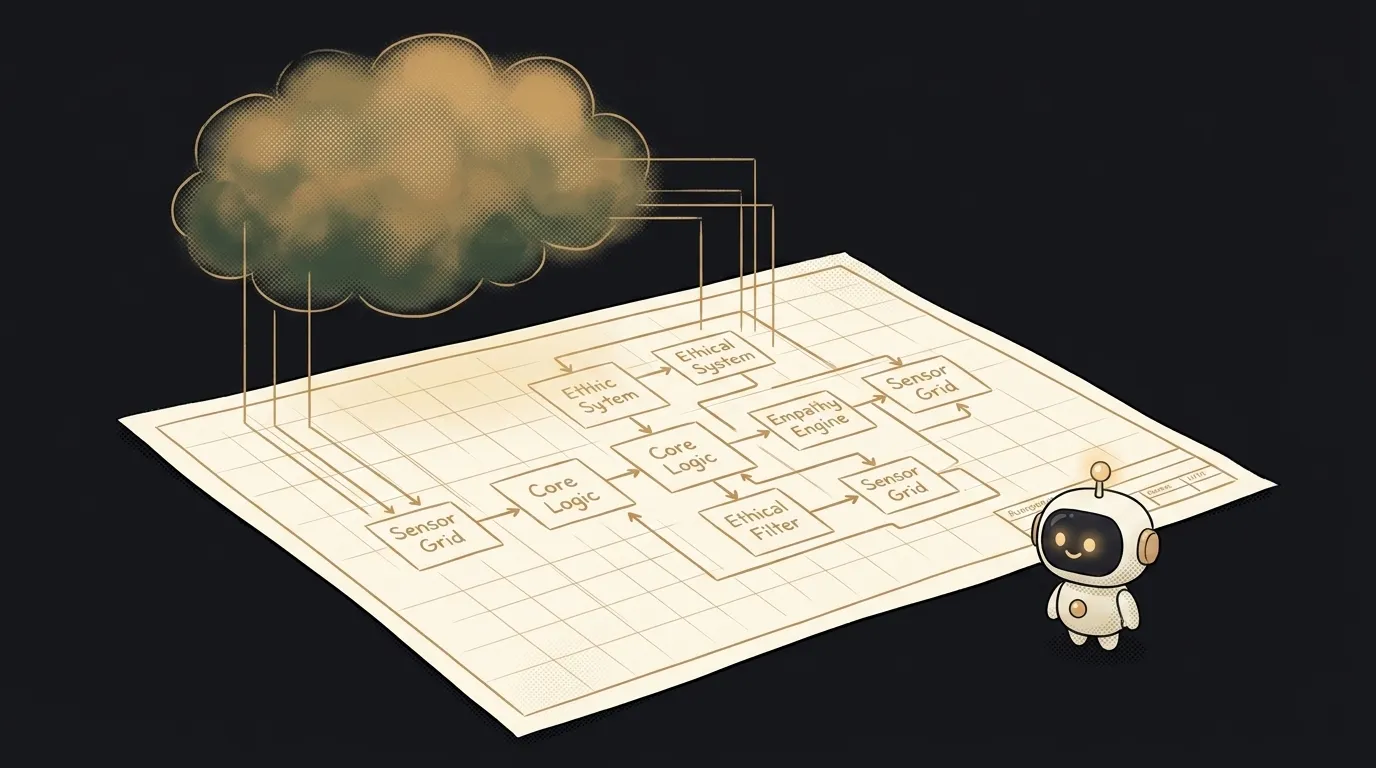
From Idea to Spec: Plan Your Product Before You Build It With AI
A vague idea makes the AI guess. A clear spec makes it build. Here is how to turn "an app for X" into something you can actually ship.

Microsoft and Google Released New AI Coding Models on June 1, 2026
Microsoft and Google launched new AI coding models on June 1, 2026, giving SaaS builders faster, cheaper code generation for VS Code and Vertex AI workflows.
Google and Microsoft Released New AI Coding Models on June 1, 2026: How to Optimize SaaS Budgets
Google and Microsoft released new AI coding models on June 1, 2026. Learn how to cut SaaS costs using Cursor, Supabase, and Vercel routing.

Validate Before You Build: Check Your Idea Before Writing a Line of Code
Building is the fun part — which is exactly why people skip the boring question: does anyone actually want this? Here is how to find out in a weekend.

GitHub Copilot Switches to Token Billing on May 31, 2026: How to Protect SaaS Margins
GitHub Copilot moved to token billing on May 31, 2026. Learn how indie SaaS builders can control AI costs, optimize prompts, and protect product margins.
The Vibe Coder's Stack: The Tools You Actually Need in 2026
You do not need forty tools. You need one for each job: build, store, deploy, and watch. Here is the honest minimal stack for shipping a product solo.

Vibe Coding Is Now a $4.7B Market: Lovable, Replit and Cursor in 2026
Vibe coding hit a $4.7B market in 2026: Lovable at $400M ARR, Replit nearing $9B, Cursor at $29.3B. How a beginner picks the right platform to ship a SaaS.

OpenAI Files Confidential IPO Papers on May 22, Targets September 2026 Listing
OpenAI filed a confidential S-1 with the SEC on May 22, 2026, targeting a September listing above $1 trillion. What the OpenAI IPO means for SaaS builders.

OpenAI's $110B Round With Amazon, Nvidia and SoftBank Reshapes AI Compute
OpenAI raised $110B from Amazon, Nvidia and SoftBank at a $730B valuation — the largest private round ever. What the compute buildout means for your SaaS API.

Google Launches Gemini 3.5 Flash and Managed Agents at I/O 2026
At Google I/O 2026, Google shipped Gemini 3.5 Flash and Managed Agents in the Gemini API — one call spins up a sandboxed Linux agent. How to use it for SaaS.

GitHub Copilot Shifts to Usage-Based Pricing on May 30: How Indie SaaS Builders Can Adapt
GitHub Copilot moves to usage-based pricing June 1. Learn how indie SaaS founders can track AI costs, switch tools, and protect their launch budget.

Anthropic Released New Claude Model on May 29, 2026: What It Means for SaaS
Anthropic released a new Claude model on May 29, 2026. Learn how to pair it with v0, Supabase, and Make to ship a SaaS MVP faster without heavy coding.

AI Took $242B of Q1 2026 Venture Funding — 80% of the Global Total
AI startups captured $242 billion in Q1 2026 — 80% of global VC — per Crunchbase. What the funding boom means for indie founders building SaaS with AI.

Debugging With AI: How to Fix What You Don't Fully Understand
When the AI-built thing breaks, panic is optional. A calm, repeatable method beats frantic re-prompting every time. Here is the loop that actually finds bugs.

Microsoft to Launch Proprietary AI Coding Model on May 29, 2026
Microsoft launches a proprietary AI coding model on May 29, 2026, embedding natively into GitHub Copilot to cut SaaS dev costs and accelerate indie shipping.
Microsoft Consolidates Copilot Into a Unified Super App for SaaS Development
Microsoft released Copilot Super App on May 29, 2026, merging AI coding and automation. Learn how indie founders use the unified interface to ship SaaS products faster.
Reading Code You Didn't Write: Understanding Your Own AI-Built Project
The AI wrote it, but it is your product now. You do not need to write code by hand to understand it — you need to read it. Here is how to actually do that.
Anthropic’s $65B Round Validates Claude as the Vibe-Coding Backbone
Anthropic’s $65B funding round upgrades Claude API infrastructure. Build stable SaaS with v0, Bolt.new, Supabase, and Helicone while avoiding token cost traps.

Database Basics for Vibe Coders: Designing Data Without a CS Degree
A database is just a set of well-labelled lists. Get the data model right and the rest of your app falls into place. Get it wrong and you fight it forever.

Anthropic’s Revenue Leap Past OpenAI Signals the Best AI Stack for Indie SaaS in 2026
Anthropic’s May 2026 revenue surge validates Claude for indie SaaS. Learn how to build a stable stack using Supabase, Stripe, and Make while controlling API costs.

From Prototype to Production: What Changes When Real Users Arrive
A demo only has to work for you, once. A product has to work for strangers, all the time. Here is what actually separates the two — and what to fix before launch.

Forbes: How Cursor and Claude Code Token Pricing Drains SaaS Budgets and How to Control It
Forbes reports how Cursor and Claude Code token pricing blew past enterprise budgets. Learn 5 steps to monitor, cap, and optimize AI costs for your SaaS.

Claude Code Review: Terminal Agent for SaaS Development (2026-05-26)
Claude Code review (May 26, 2026): how Anthropic’s terminal agent speeds up SaaS launches. Step-by-step integration with Supabase and Vercel for indie founders.

Shipping Your First Paying Feature: From MVP to First Customer
Free users are not validation — they are a hobby. The hardest, most honest milestone in building is one stranger paying you once. Here is how to reach it.

NSF Tech’s May 2026 AI Coding Benchmark: Why Cursor Leads for Vibe-Coding SaaS
NSF Tech’s May 2026 benchmark shows Cursor outperforms GitHub Copilot and Claude Code for full-stack SaaS. Learn how to use it to ship faster.

Microsoft Restricts Claude Code Access in May 2026: Managing AI Costs for Indie SaaS
Microsoft limits Claude Code in May 2026 over rising AI costs. Learn to control token spend using GitHub Copilot CLI, Cursor, and Supabase for SaaS.
Talking to Users: How to Get Feedback That Actually Improves Your Product
Most feedback is polite, vague, and useless. The good stuff has to be dug out with better questions. Here is how to interview users without fooling yourself.

Startup Consensus Shifts to Claude Code: May 2026 Survey Results
Anthropic’s Claude Code leads startup adoption in May 2026. Learn to migrate your SaaS stack, integrate Supabase, and optimize prompts for faster launches.

GitHub Copilot Outages Signal the End of Single-Vendor AI Development
GitHub Copilot outages in May 2026 exposed single-vendor AI risks. Learn how to build a fault-tolerant dev stack for faster SaaS shipping using real tools.
Pricing Your First Product: How a Solo Builder Sets the First Price
Beginners price on fear and pick a number too low to matter. Price is a message, not a math problem. Here is how to set a first number you will not regret.

OpenAI Reports $5.7B Revenue: How to Stabilize LLM Costs for Your SaaS
OpenAI reports $5.7B revenue and stalled ChatGPT growth. How to use LiteLLM, Supabase, and OpenMeter to build a predictable SaaS stack in 2026.

OpenAI Codex Overtakes Claude Code: What It Means for Your SaaS in 2026
How OpenAI Codex surpassed Claude Code in 2026. Step-by-step integration guide for launching SaaS with Bolt.new, Supabase, and Stripe.

Microsoft Blocks Claude Code Access: How to Build Vendor-Free SaaS Stacks
Microsoft restricted Claude Code access on May 22, 2026. Learn how to build independent SaaS stacks using Cursor, Supabase, and Make to avoid vendor lock-in.

Claude Code Overtakes Cursor: How to Switch Your SaaS Stack to the New Agent
Claude Code overtakes Cursor in 2026 startup surveys. Learn how to switch your SaaS stack, integrate v0 and Supabase, and ship your MVP faster.

Lushbinary’s 2026 AI Coding Benchmark: Cursor and Claude Code Lead for SaaS Builders
Lushbinary's May 2026 benchmark proves Cursor and Claude Code dominate AI coding. Learn how to pick the right agent for your SaaS stack and cut dev costs.
Google Tests New AI Models for App Development: Which to Choose for Your SaaS in 2026
Google tested new AI coding models on May 21, 2026. Learn how to pick the right model for Bolt, Cursor, and Supabase to ship your SaaS faster.

Microsoft Warns GitHub Copilot Faces Displacement by Cursor and Claude Code
Microsoft warns GitHub Copilot risks displacement by Cursor and Claude Code. Learn how SaaS founders can switch agents to cut costs and ship faster.

Anthropic, OpenAI, and Perplexity Switch to Auto-Reload Billing: How to Protect Your SaaS Budget
Anthropic, OpenAI, and Perplexity switched to auto-reload billing. Learn how to set quotas in n8n and OpenRouter so your SaaS doesn't burn cash on tokens.

Marc Lou and Danny Postma: What Two $1M+ ARR Solo Founders Have in Common
Not one big product — a portfolio of small ones. Here is the pattern that works for solos without a team, and where it breaks.

Lovable Added $100M ARR in One Month With 146 Employees. What's Inside the Number
$2.7M ARR per employee — record density in the industry. Here is what Lovable does differently and which of those principles work for solo founders.

Google I/O 2026: What a Solo Founder Actually Takes Away
Pichai's May 19 keynote, decoded for one-person teams. What from Google's showcase actually changes your week. No hype, just signal.

Vibe-Coding Tools Market: $4.7B in 2026, $12.3B in 2027. What It Tells Solo Founders
The category is growing 38% a year. Where the tools are headed, who survives the next two years, and what to do with this trajectory today.
Snyk Now Ships Claude Inside Its AI Security Platform: What Solo Devs Get
The Snyk-Anthropic partnership patches the one hole solo founders typically remember too late — security. Here is what shifts and how to use it today.

Replit Now Imports Lovable, v0, and Base44 Projects — and Ships Them to the App Store in Minutes
The walls between vibe-coding tools are dissolving. Replit Agent now ingests projects from competitors and pushes them to the App Store with no human in the loop.

Pieter Levels Made $1M ARR in 17 Days With a Browser Flight Sim. Spoiler: It Took 10 Years of Setup
A year ago fly.pieter.com made a million in two and a half weeks. We break down monetization, distribution, and what in this case is actually replicable without 600K followers.

Opsera Embeds DevSecOps Agents Inside Cursor: Enterprise Security for Solo Coders
Cursor is no longer a prototype toy. The Opsera partnership brings bank-grade security checks straight into the IDE — no separate team required.

OpenAI and Anthropic Launch AI Deployment Tools: How Indie Developers Ship SaaS
OpenAI and Anthropic launched AI deployment tools on May 18, 2026. Learn how indie builders ship SaaS using Supabase, Vercel, and Stripe.

GitHub Copilot App Launches Standalone Agentic Desktop Client for Developers
GitHub Copilot App launches a desktop client for agentic coding. Learn how to ship SaaS faster using Supabase, Stripe CLI, and Vercel deployment.

Tom’s Guide 2026 Test: Claude Code vs OpenAI Codex. Which Agent Ships SaaS Faster
Tom’s Guide 2026 test: Claude Code vs OpenAI Codex. Learn which AI agent ships SaaS faster, how to pick a development tool, and deploy your project with Vercel.

Anthropic Released Lean Harness for Claude Code: Transparent Quotas for SaaS
Anthropic detailed Claude Code usage limits and the lean harness on May 15, 2026. Learn how transparent quotas and strict execution modes help indie devs ship SaaS without budget overruns.

GitHub Copilot Adds Claude and Codex Agents for Indie SaaS Builders
GitHub Copilot now supports Claude and Codex agents, letting SaaS founders build and deploy apps with multi-model workflows directly inside repositories.

Anthropic Enables OpenClaw on Claude Plans: How to Deploy an AI Agent for SaaS
Anthropic enables OpenClaw on Claude subscriptions with dedicated API credits. Learn how to deploy automated agents for your SaaS using Make, Supabase, and Vercel.

OpenClaw Integrates with OpenAI Codex: How to Ship AI Agents Using ChatGPT Subscriptions
OpenClaw now integrates with OpenAI Codex and ChatGPT subscriptions. Learn how to deploy autonomous agents, cut API costs, and ship your SaaS prototype faster.
Microsoft Revokes Claude Code Licenses, Shifts Teams to GitHub Copilot CLI
Microsoft shifts internal devs from Claude Code to GitHub Copilot CLI. Learn how to pick stable AI tools, configure terminal agents, and avoid vendor lock-in for your SaaS.

Anthropic Surpasses OpenAI in Enterprise Adoption: How to Upgrade Your AI Stack
Anthropic surpassed OpenAI in business adoption in May 2026. Build a fault-tolerant AI stack using Vercel AI SDK and Supabase to cut token costs.
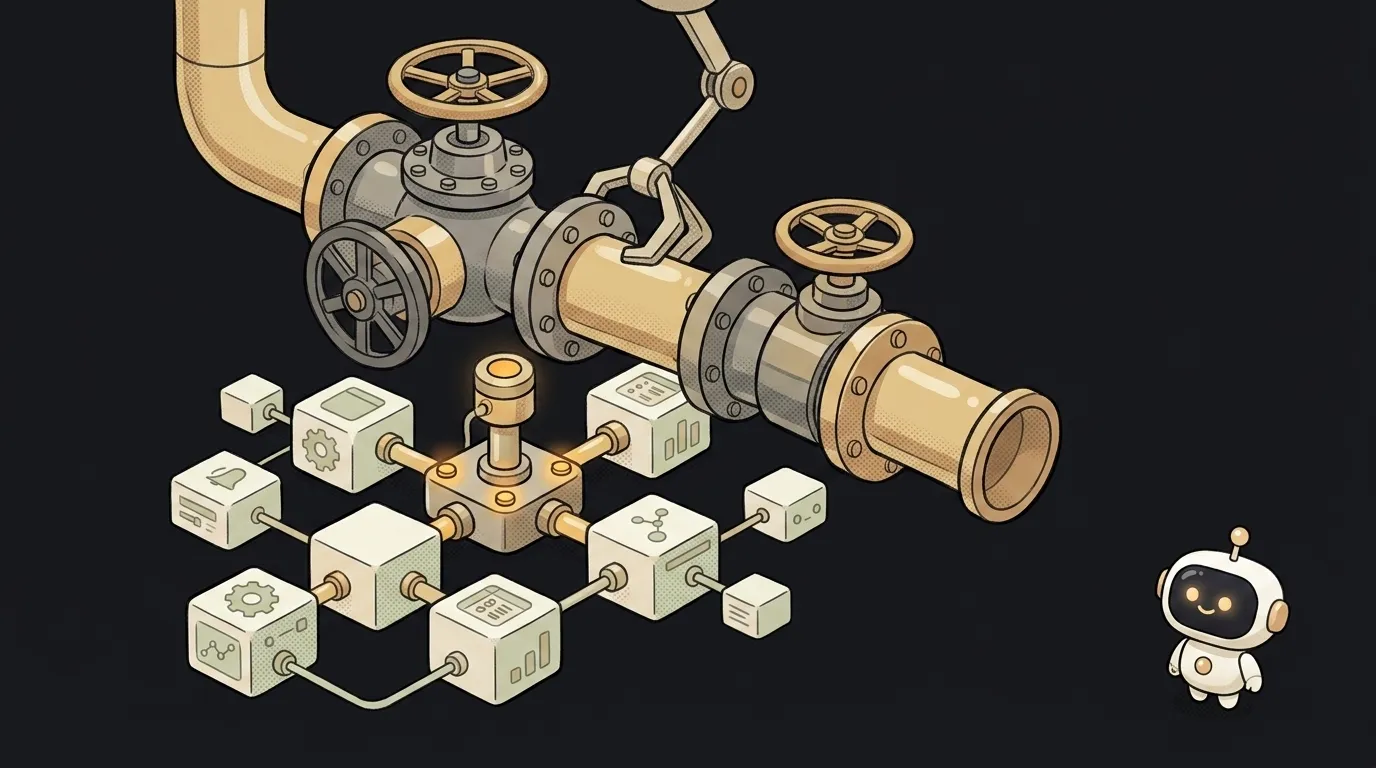
Anthropic Acquires Stainless for $300M. What It Means for Anyone Building on AI SDKs
Anthropic just bought the company whose compilers ship the SDKs for OpenAI, Google, Meta, and Cloudflare. This is not cosmetic — it is control over how developers call any AI model.
OpenAI and Anthropic Roll Out Free Tiers for Codex and Claude Code: How This Cuts SaaS Launch Costs
OpenAI and Anthropic launched free tiers for Codex and Claude Code in May 2026. Learn how indie founders can ship SaaS with zero subscription costs.

OpenAI and Anthropic Eliminate Prototyping Costs: Codex and Claude Code Go Free
OpenAI and Anthropic expanded free tiers for Codex and Claude Code on May 13, 2026, letting indie builders ship SaaS without API costs during early prototyping.
Claude for Small Business: Anthropic Just Walked Into QuickBooks, PayPal, and HubSpot
On May 13 Anthropic launched a small-business product with direct connectors into the tools a solo founder already uses. Here is what changes — concretely.

Anthropic Claude and OpenClaw Drive Mac Mini Demand: Local AI for SaaS Builders
Anthropic Claude agents and OpenClaw drive record Mac Mini sales in May 2026. Learn how to build a local AI stack for fast SaaS prototyping without cloud limits.

Anthropic and OpenAI: The Shift to Transactional APIs for SaaS Development
Anthropic and OpenAI released transactional APIs for SaaS builders. Learn how to use new endpoints with Supabase and Next.js to ship faster without complex server orchestration.
Cursor 3.0: The Multi-Agent Switchboard for Vibe-Coding
Cursor 3.0 launched May 8, 2026, introducing a multi-agent switchboard for SaaS builders. Route tasks to specialized AI, cut debugging time, and ship faster.

Amazon Admits Q Developer Shortfall: Why SaaS Founders Are Switching to Modular AI Stacks
Amazon Q Developer falls short as developers switch to Codex and Claude. Learn how to build a modular AI SaaS stack with Bolt, Cursor, and Supabase.

OpenAI GPT-5.5-Cyber: How to Add Security to Your SaaS Without Hiring Engineers
OpenAI launched GPT-5.5-Cyber on May 7, 2026. Learn how indie developers integrate automated security audits into SaaS projects before launch.
Google Tests Remy and Meta Launches Hatch on May 7, 2026: Why SaaS Builders Must Shift Their Stack
Google tests Remy and Meta tests Hatch on May 7, 2026, ending Mariner. Build stable SaaS with API-first AI agents using v0, Supabase, and Make.

Microsoft VS Code Copilot: Why the Auto-Commit Glitch Matters for AI Founders
Microsoft VS Code Copilot: how a May 2026 auto-commit glitch teaches founders to manage Git history cleanly while shipping AI-powered SaaS products.

Anthropic Launches 'Dreaming': How Claude Agents Now Learn From Their Own Mistakes
Anthropic launched "dreaming" on May 7, 2026, enabling Claude agents to self-correct errors. Integrate it with Supabase and Make for reliable SaaS automation.

Replit Agent 2.0: A Working SaaS in One Prompt
Replit shipped an agent that builds a running SaaS — code, database, payments — while you grab coffee. Here is what it means for solo builders.

AI Now Ships Apps on Its Own. This Changes Everything
Autonomous deploy is the new default: an agent takes an idea and hands back a live product, no humans in the server loop. Here is what shifts for solo builders.

Your First Project With AI: From Idea to Deploy in One Evening
A step-by-step guide: take an idea, build it with AI, deploy to the internet. No prior experience needed.

Prompt Engineering: How to Talk to AI and Get What You Actually Want
Prompts aren't magic — they're a skill. Learn concrete techniques that turn vague AI responses into precise results.

What is KODiQ? Learn to build with AI, one lesson at a time
KODiQ is a free mobile app that teaches you to build real things with AI — vibe coding, prompting and AI literacy in short daily lessons. Here's how it works.
What is Vibe Coding? A Practical Guide for 2026
Vibe coding is a new approach to building software where you describe what you want and AI writes the code. Here's how it works and why it matters.
Learn vibe coding — don’t just read about it
Short story-lessons, an agent simulator and daily practice — in our mobile app. Free.
One digest a week — everything that matters in AI
The essentials: new tools, the best prompts and breakdowns. No spam, unsubscribe in one click.