Describe a place in words — and hear it. AI now mixes sound as a scene, not clips
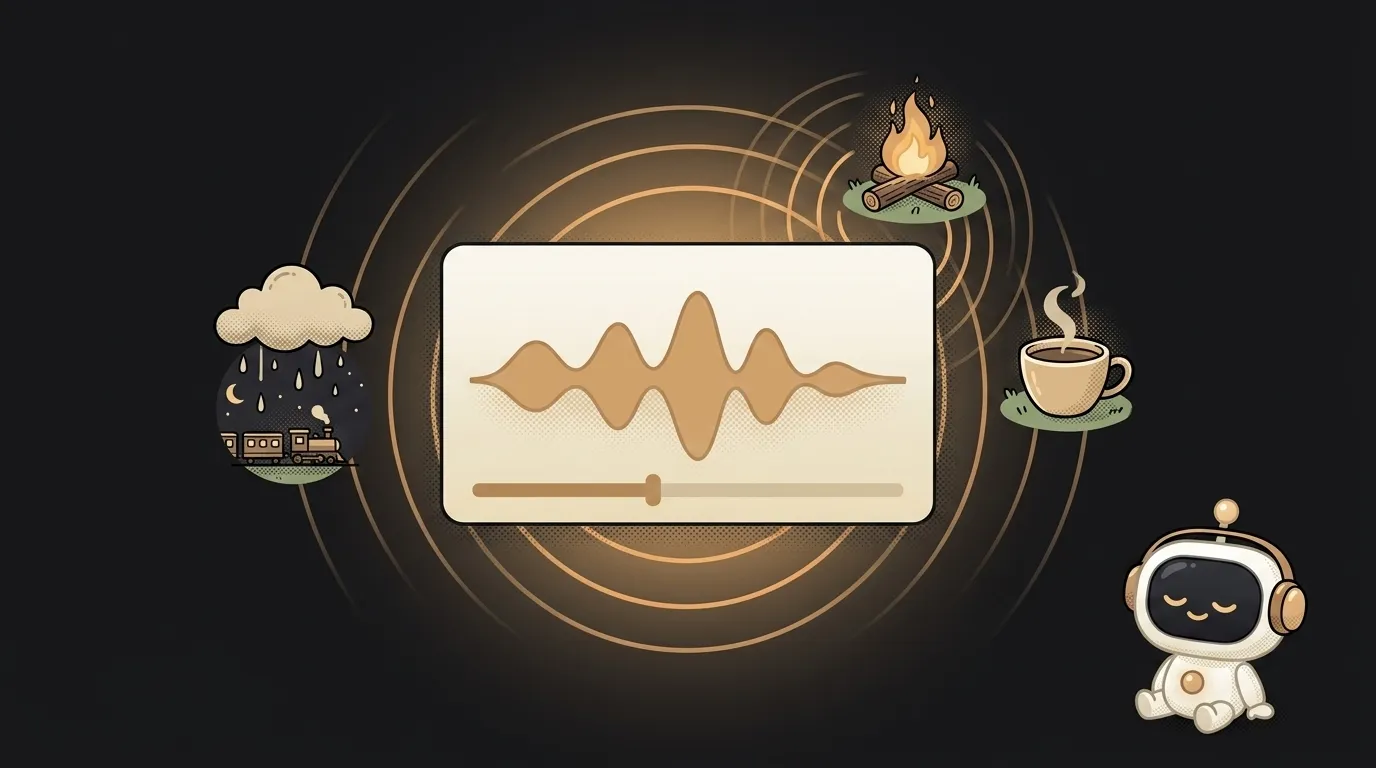
Look, here's the idea in one line: you describe a place in words — "a night commuter train, half-empty car, wheels clacking, someone rustling a bag" — and you get its sound. Not a single effect, but a whole scene: the car humming in the background, footsteps up close, a station announcement somewhere far away. Put your headphones on — and you're there.
Why this only became possible now
AI could generate sounds before — but in pieces. One service gave you a voice. Another — music. A third — a twenty-second rain effect. And "the sound of a place" isn't a list of effects, it's a balance: the room hums quietly, a spoon clinks up close, a train passes far away. Mixing those pieces into that picture was manual work — a sound engineer's job.
On July 20 the Seed team at ByteDance introduced Seed Audio 1.0 — a model that generates speech, noises, ambience and music in one request, already mixed into a single track. With breaths, room acoustics, near and far layers. Up to two minutes per pass — and you can ask it to continue.
And the part that matters for us: the model is already available through a plain API on fal.ai — a minute of finished audio costs about $0.19.
Why this project
Background sound is something you already use: rain for sleep, a coffee shop for focus, a campfire for reading. But until now those were someone else's presets — ten canned loops on a website. Here you make the background yourself, any one, straight from your head: "an old castle library", "a tent in a thunderstorm", "a space station, systems humming quietly".
And it's personal. "The sound of our hiking trip" — with the crackling fire and that exact river — can be sent to a friend like a postcard. And if you give the model a photo as a reference, it will make the sound of the place right off your vacation shot.
What you'll learn
- Calling a generative API like a grown-up. Audio isn't instant: you submit a request, get a job id, fetch the result. That's the async pattern — you'll meet it everywhere, from images to video.
- Writing a prompt as a script. "Make rain" gives you boring noise. A scene with layers — "close / background / occasionally" — gives you cinema. It's a skill of its own, and it transfers to any kind of generation.
- Handling audio in the browser. The
<audio>tag, looping, stitching tracks — simple things that turn an mp3 file into an "endless" background. - Doing the math. $0.19 per minute means an evening of experiments costs about as much as a coffee. Worth calculating once before, not being surprised after.
A ready starter prompt
Don't ask your agent to "make a sound generator" — you'll get a stub with one noise. Be exact: which model, what input, what's on the page:
Make a website that generates sleep sounds.The strong prompt bakes in three things a beginner wouldn't guess: the key lives on the server, not in the page; the result comes through a queue; the model prompt is a scene template with layers, not free text.
What the result looks like
A little page with a field and three buttons. You hit "Campfire in the woods" — half a minute of "mixing the scene…" — and the player fills with two minutes of sound: crackling up close, wind in the treetops behind it, an owl hooting now and then. It's all mixed already — you didn't stitch a single file. One download button — and the "sound postcard" flies off to a friend's chat.
The weekend plan
- Saturday morning: get a key on fal.ai and hit the model with one request from the terminal. Hear your first scene — the best moment of the project.
- Saturday afternoon: prompt your agent → a page with the field, presets and player. Check it on your phone.
- Sunday: add looping, a "two more minutes" button (scene continuation), and try giving the model a vacation photo as a reference. If you'd rather direct the voices, not the world — there's speech with emotion tags nearby: that one is about the lines, this one is about everything around them.
A year ago "the sound of a place" was a profession with a studio and a mixing desk. Now it's an input field and one request — all that's left is to invent the place.
Short story-lessons, an agent simulator and daily practice — in our mobile app. Free.
Source: ByteDance Seed — Seed Audio 1.0, fal.ai — model & pricing
Read next

Fly down your own route in pixel art — with the buildings standing where they really stand

Cut a jet engine in half — and it works out what just happened to it
A $7 board — and AI taps around your iPhone on its own. No Mac, no jailbreak
47 vacation clips — and an agent cuts them into a video on the beat

Build a “send as-is” button — a model that hands you the email, not advice about it