Ask one question — and a swarm of agents splits it up and stitches the answer back
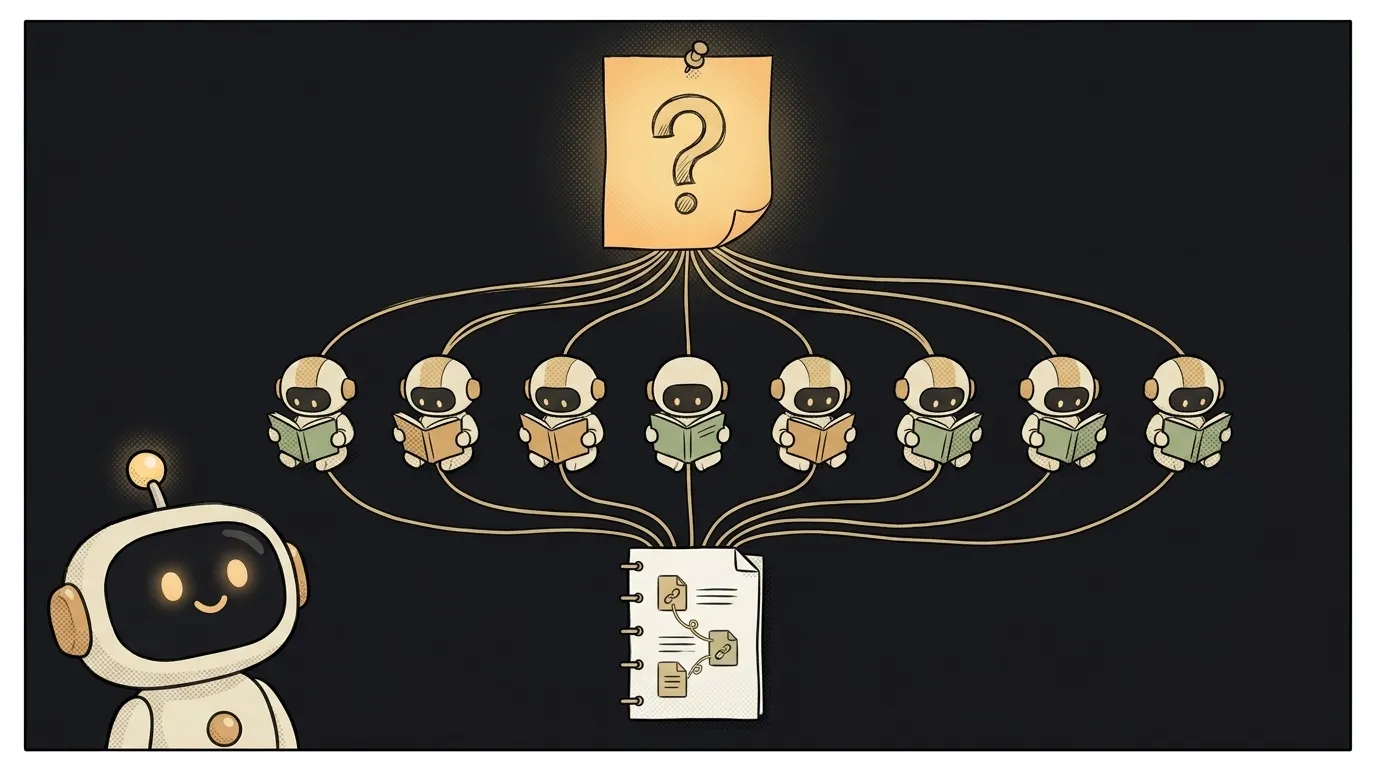
Here's the idea in one line: you ask one big question — "compare five strollers across six criteria and give me a table", "gather everything I need to know about moving to Tbilisi" — and instead of one slow answer dribbling out piece by piece, a swarm of small agents kicks off. Each takes one angle of the topic, digs in parallel, and at the end one of them stitches it all into a single answer with sources.
And this isn't asking three AIs at once, where you compare three opinions on the same thing. This is the opposite: one question is split into ten sub-tasks and assembled back. And it isn't the errand agent that hauls everything alone, one step at a time.
Why this just became possible
This kind of "swarm" used to be something you assembled by hand: separate frameworks to spell out who does which part, run them in parallel, then glue it together. A lot of plumbing — not something a beginner could touch.
On July 9, 2026 OpenAI shipped GPT-5.6 with an Sol Ultra mode: the model itself breaks a task into sub-tasks, spawns parallel sub-agents, and then synthesizes their results. What you used to wire up by hand is now a built-in move. And the family added a cheap tier — Luna at $1 per million tokens: running ten workers at once now costs pennies, not what it did a year ago. That's what turns the swarm from a big-team trick into a weekend build.
What you'll learn
- Split and stitch (fan-out). One prompt breaks the question into several sub-questions, each goes out as its own call, and a final prompt stitches the answers into one. This is the core agent move — map the task, then assemble.
- Parallel calls. Ten requests fired all at once come back in nearly the time of one. You'll feel how "all at once" differs from "one after another" — and why the swarm is fast.
- Counting tokens and cost. You put the cheap model on the workers and the strong one only on the final stitch. You'll see where money goes and where it's saved.
A ready starter prompt
Don't ask for "make a research assistant" — you'll get one long wall of text, no swarm. Describe three steps: split, spread out, stitch.
Make an assistant that researches a topic and gives an answer.The strong prompt leaves nothing to guess: you can see the three steps, that the cheap model runs the workers and the strong one does the stitch, and that every agent must cite a source. The swarm comes out working the first time, not chatty.
What you'll get
You ask one question — and watch it break into six sub-questions. Six workers spread out at the same time: one checks prices, another weight, a third the reviews. A minute later you don't have a wall of text but a two-line verdict, a table across all six criteria, and a list of links showing where each fact came from. Like a big Deep Research — except you built it yourself in an evening.
Weekend plan
- Saturday. Take your question and split it into three sub-questions by hand. Make three separate calls, glue the answers with one final prompt. It already works — that's the swarm in miniature.
- Sunday. Drop the manual split: let the first call come up with the sub-questions itself. Fire them in parallel, not one by one. Add the final stitch into a table with links.
- Point it at a real question of yours — a purchase, a move, a tool choice — and get a finished write-up.
Start with three sub-questions by hand. Leave the "swarm of a hundred agents" for later — first let three workers reliably converge into one answer.
Short story-lessons, an agent simulator and daily practice — in our mobile app. Free.
Read next
47 vacation clips — and an agent cuts them into a video on the beat
Build a “send as-is” button — a model that hands you the email, not advice about it
A song where you change one chord — instead of spinning the generator again
The clip is already rolling — and you call out what happens next

A web page that watches your camera live — 30 frames a second, offline, no server