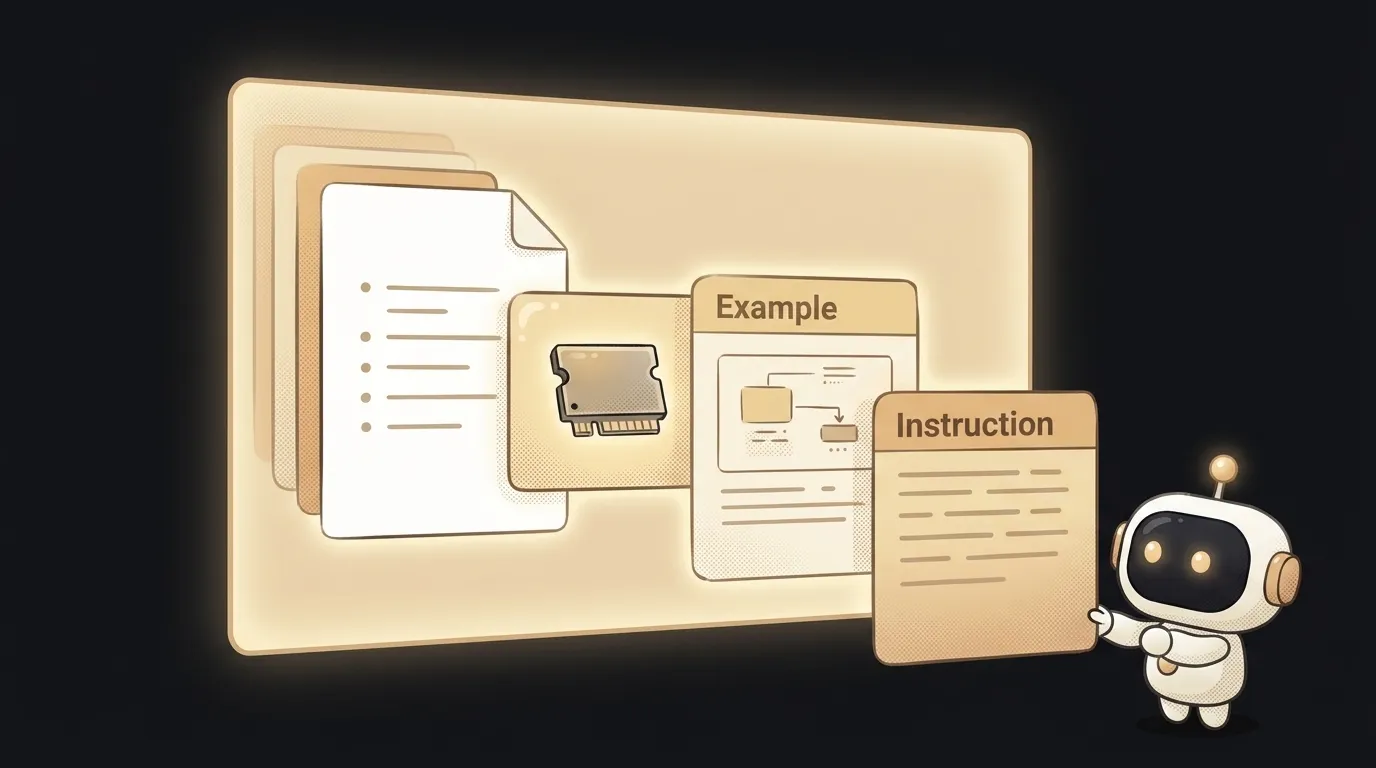
What is few-shot prompting — how to 'tune' a model right inside your request
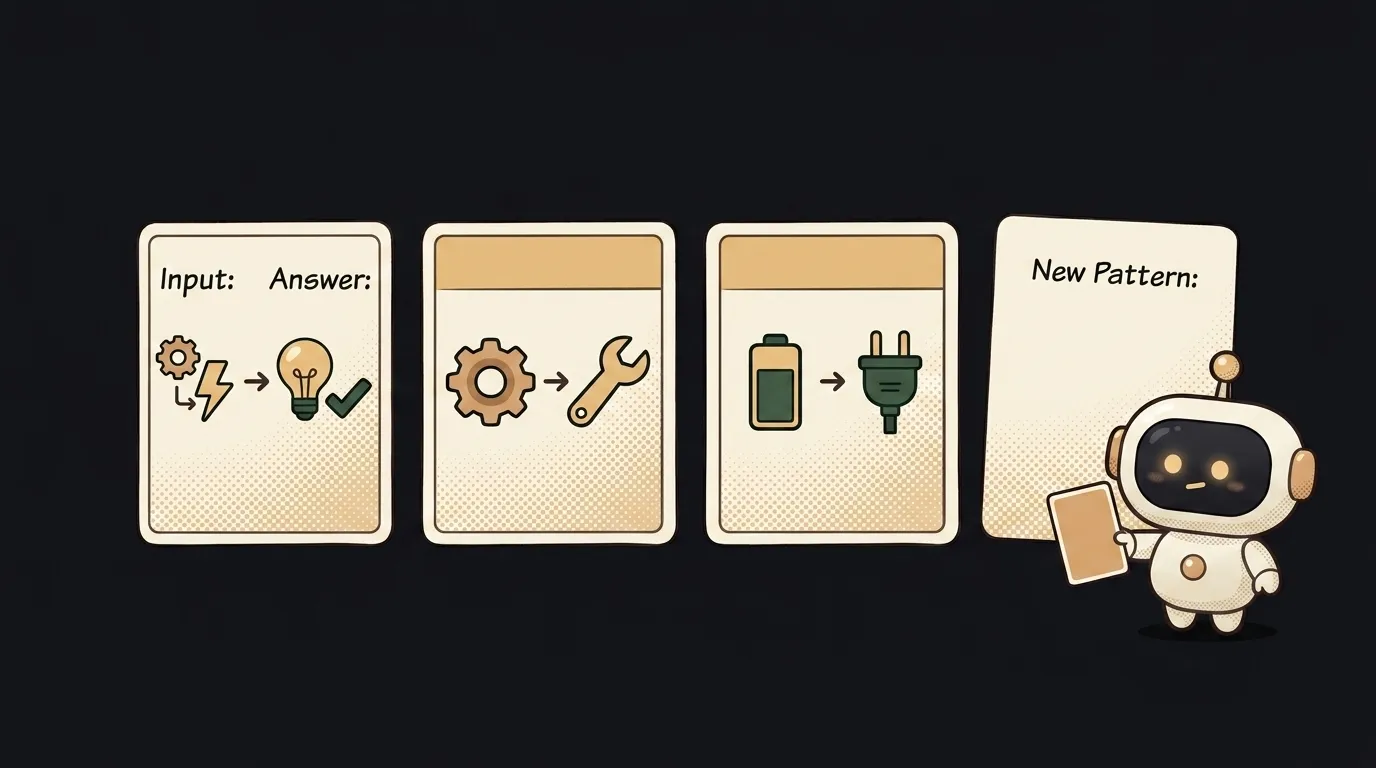
Here's a surprising thing: you can tune a model to your needs right inside the request — no training, no code, no files. Just by showing it a couple of examples of "this is how I want it." The model picks up the pattern on the fly and keeps going in the same vein. This trick is called few-shot, and it solves half the cases where "the AI answers in the wrong format."
What it is, in one line
Few-shot prompting is when you give the model several examples (shot = "attempt," "sample") right in your request, so it understands what kind of answer you want. You don't describe it in words — you show it.
There are three levels:
- Zero-shot — zero examples. You just ask: "classify the sentiment of this review." The model guesses the format itself.
- One-shot — one example. "Here's a review → here's the answer. Now do the same for a new one."
- Few-shot — several examples (usually 2–5). The stricter the format you need, the more samples you give.
Think of a new hire. You can say "fill out tickets correctly" (zero-shot) — and get a mess of styles. Or you can show three correctly filled tickets and say "follow the pattern." With the second, mistakes almost vanish.
What it looks like in practice
Compare two takes on the same task — sorting reviews.
Classify the sentiment: 'Delivered fast, but the box was dented'The weak version leaves the format up to the model — it might reply with a paragraph of reasoning. The strong one shows three samples, and now the model knows: one word, one of three options. The answer is predictable — which is all you need when the result feeds into code or a spreadsheet next.
Why it works (and why it's not fine-tuning)
This is easy to get wrong, so let's be blunt: few-shot teaches the model nothing. The weights don't change, nothing is remembered for next time. The examples live only in the current request — this is called in-context learning. Close the chat, and the model doesn't know them anymore.
Think of it as a hint placed right before the answer, not as training. That's why few-shot and fine-tuning are different things: the first is free and instant but works once; the second genuinely changes the model but needs data, time, and money. For 90% of a beginner's tasks, few-shot is plenty.
When to reach for it
- You need a strict format — JSON, a table, one of a fixed set of options. A couple of examples beat any worded description.
- Style or tone matters — show 2–3 lines of "how we write," and the model lands the voice.
- The task has a catch — hard to explain in words, obvious from an example. Edge cases (what counts as a "mixed" review) are better shown than described.
For a simple question, examples aren't needed — zero-shot handles it, and you won't waste space in the request. And if the model misses even with examples, dig into why with why your prompt isn't working.
Question: how many examples should I give?
Start with two or three. That's enough to set the format. Add more if you see the model stumbling on certain cases — cover them with an example. But don't overdo it: ten near-identical samples bloat the request and barely improve the answer. Three different examples beat ten similar ones.
Question: is few-shot the same as prompt engineering?
It's one of the basic techniques, but not the whole thing. Prompt engineering is about how you frame a task overall: role, context, constraints, examples. Few-shot covers the "examples" part. To put it all together, see how to write a good prompt and a roundup of prompt tricks that actually work.
Short story-lessons, an agent simulator and daily practice — in our mobile app. Free.
Read next
What is prompt chaining — why a chain of simple prompts beats one giant one
What is an AI jailbreak — and how it differs from prompt injection
What is chain of thought — why 'think step by step' makes AI smarter
Why AI gives different answers to the same question — 3 causes and how to tame it