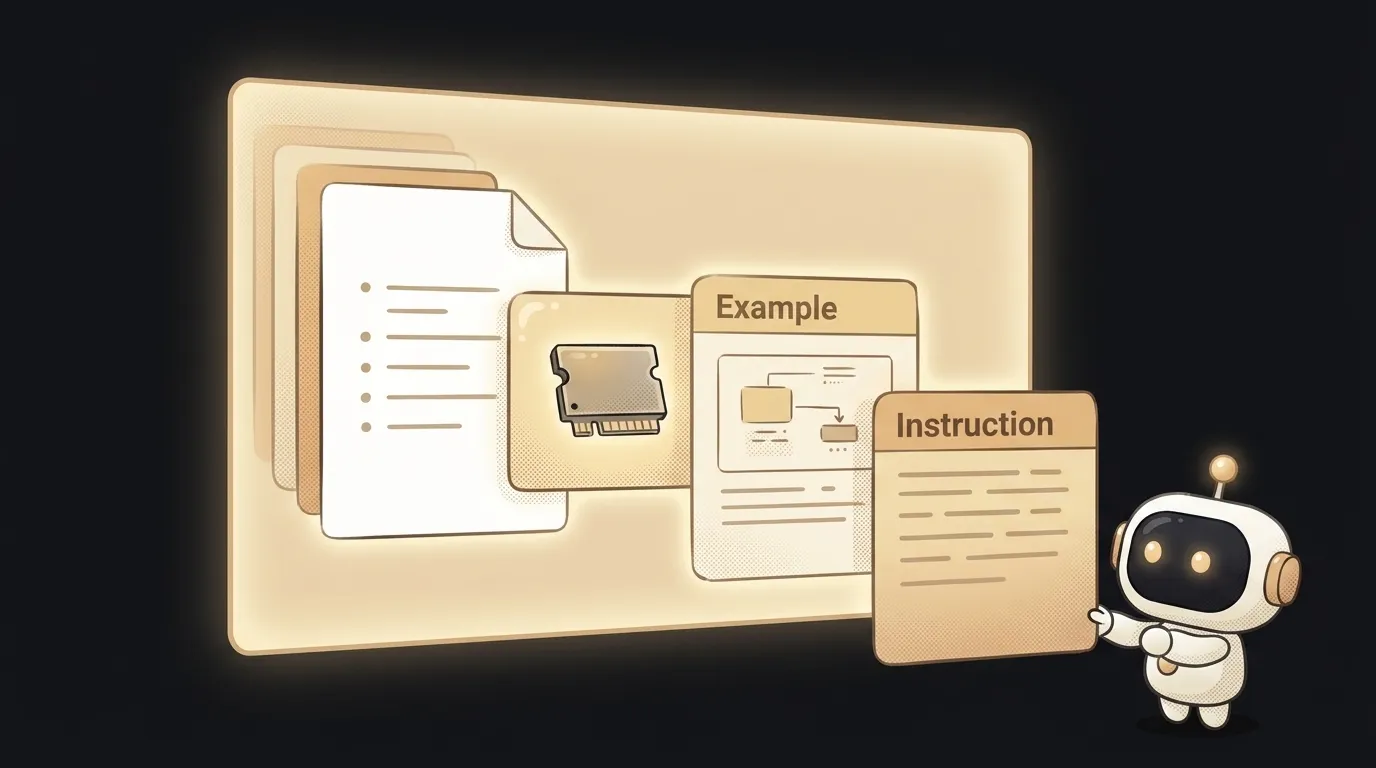
How to write a good prompt — 5 steps that turn a request into a spec
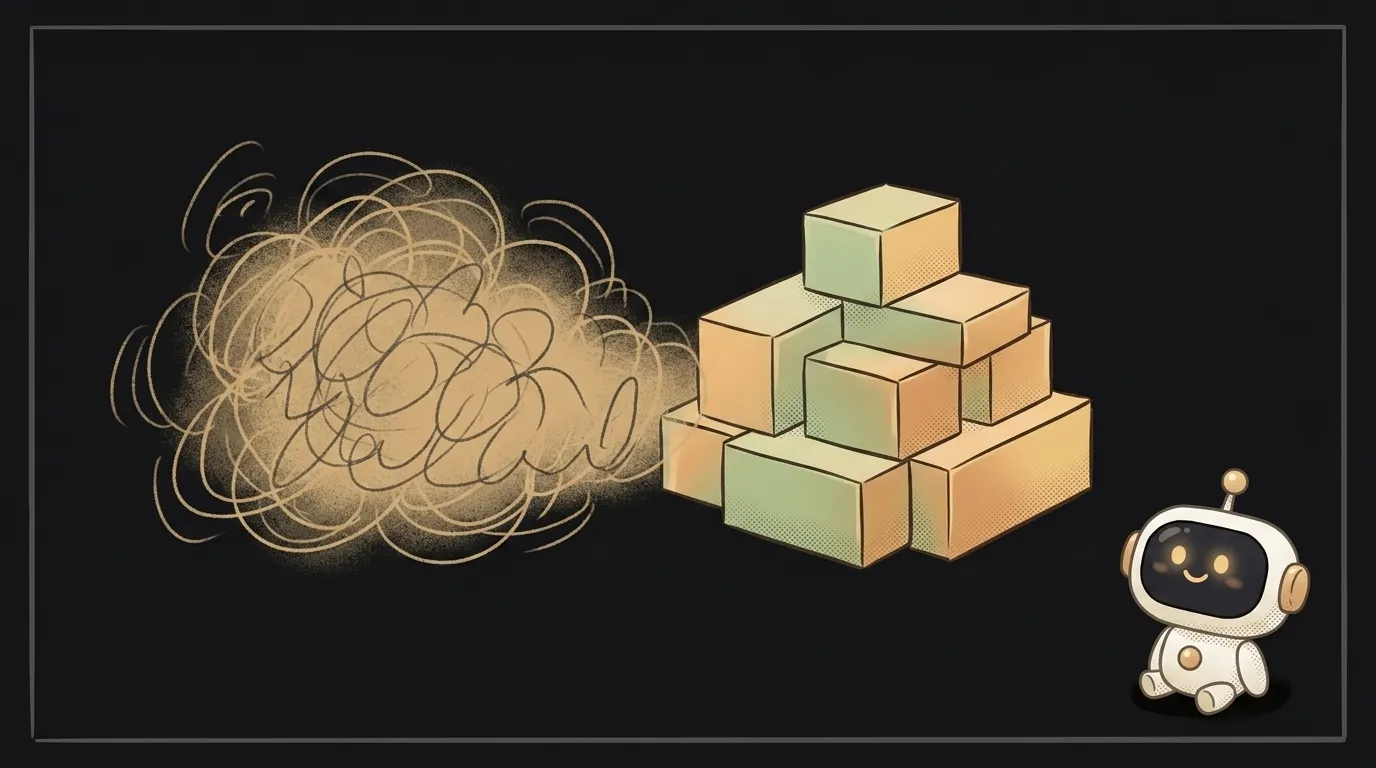
The biggest beginner mistake with AI is asking politely. "Please write a good caption" sounds nice, but the model has no idea what "good" means to you. A good prompt isn't a request — it's a spec. The sharper the spec, the fewer redos.
Here's the difference on one task:
Write a post about our cafeThe second prompt is longer, but its output is nearly ready to publish. Let's break down how to build one — in five steps.
Step 1. Give the model a role
Start with "You are a ...". A role instantly pulls in the right style and vocabulary.
You are a nitpicky editor with 10 years of experience.
The model doesn't "become" an editor, but it continues the text the way editors usually write. Same principle as a system prompt — you set the frame before the task. What you get: tone and depth land much closer to what you wanted.
Step 2. Give context the model can't know
The AI doesn't know your situation: what the product is, who's reading, what you've already tried. Without that, it answers in averages. Add the facts:
Context: a water-tracking app, audience is beginners who forget to drink.
Reminders already exist and aren't helping.
What you get: the answer stops being "in general" and becomes "about you."
Step 3. Show an example of what you want
One example beats ten adjectives. This is the most underrated trick.
Here's the headline style I like:
"Forgot to drink? Your glass will remind you."
Make 5 more in the same spirit.
Show a sample and you remove the guesswork. The model copies the rhythm and tone of the example. What you get: hitting the style on the first try instead of "not it, redo."
Step 4. Specify the output format
Say plainly how you want the result: length, structure, what to include and what to avoid.
Format: bulleted list, 5 items, each under 12 words.
No intro, no conclusion.
Without this the model picks a format for you — usually longer and waterier than needed. What you get: an answer that drops straight into your work, no manual cleanup.
Step 5. Read the answer and refine in one step
A prompt is almost never perfect on the first try — and that's fine. Don't rewrite everything; nudge it:
Good, but the second point is too vague. Rewrite it with a concrete number.
The model holds the context of the conversation, so it understands "the second point" without you repeating it. Iterating with one precise note is the fastest path to the result. What you get: in 2–3 edits you reach exactly what you need.
What you end up with
Put the five steps together and you're not writing a "shot-in-the-dark request" but a brief the model works against predictably. It's the same skill behind vibe coding: you don't guess, you set a clear task. Memorize the order — role, context, example, format, feedback — and answer quality jumps without any magic.
Is a longer prompt always better than a short one?
No — the more precise one is better. For a simple question, one line is enough. The layers from these steps matter when the output matters and redos are costly. Don't pad for length.
Do you need to be polite to the AI?
For quality, no — "please" doesn't change the answer. Specificity and context do. Politeness is your habit, not a control lever on the model.
Short story-lessons, an agent simulator and daily practice — in our mobile app. Free.
Read next
What is prompt chaining — why a chain of simple prompts beats one giant one
What is an AI jailbreak — and how it differs from prompt injection
What is chain of thought — why 'think step by step' makes AI smarter
Why AI gives different answers to the same question — 3 causes and how to tame it