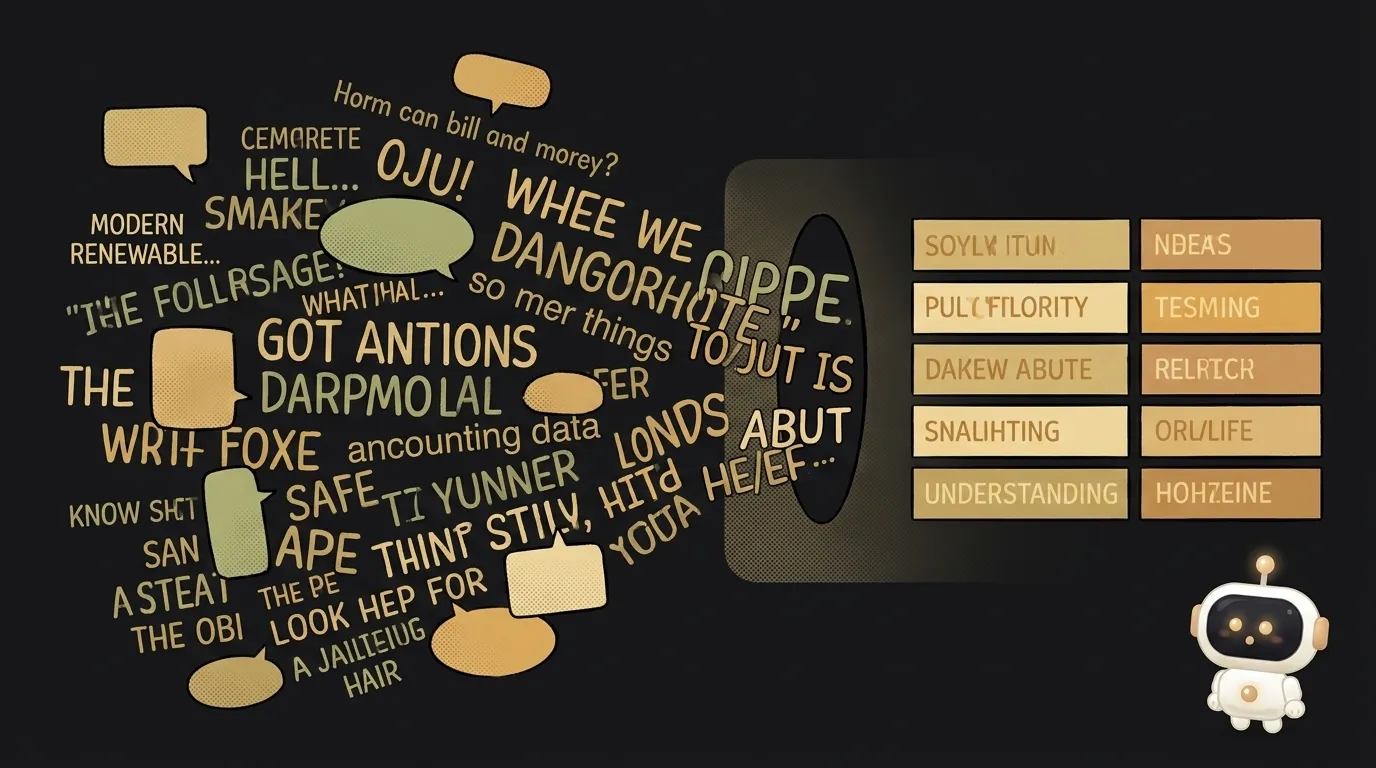
Why AI gives different answers to the same question — 3 causes and how to tame it
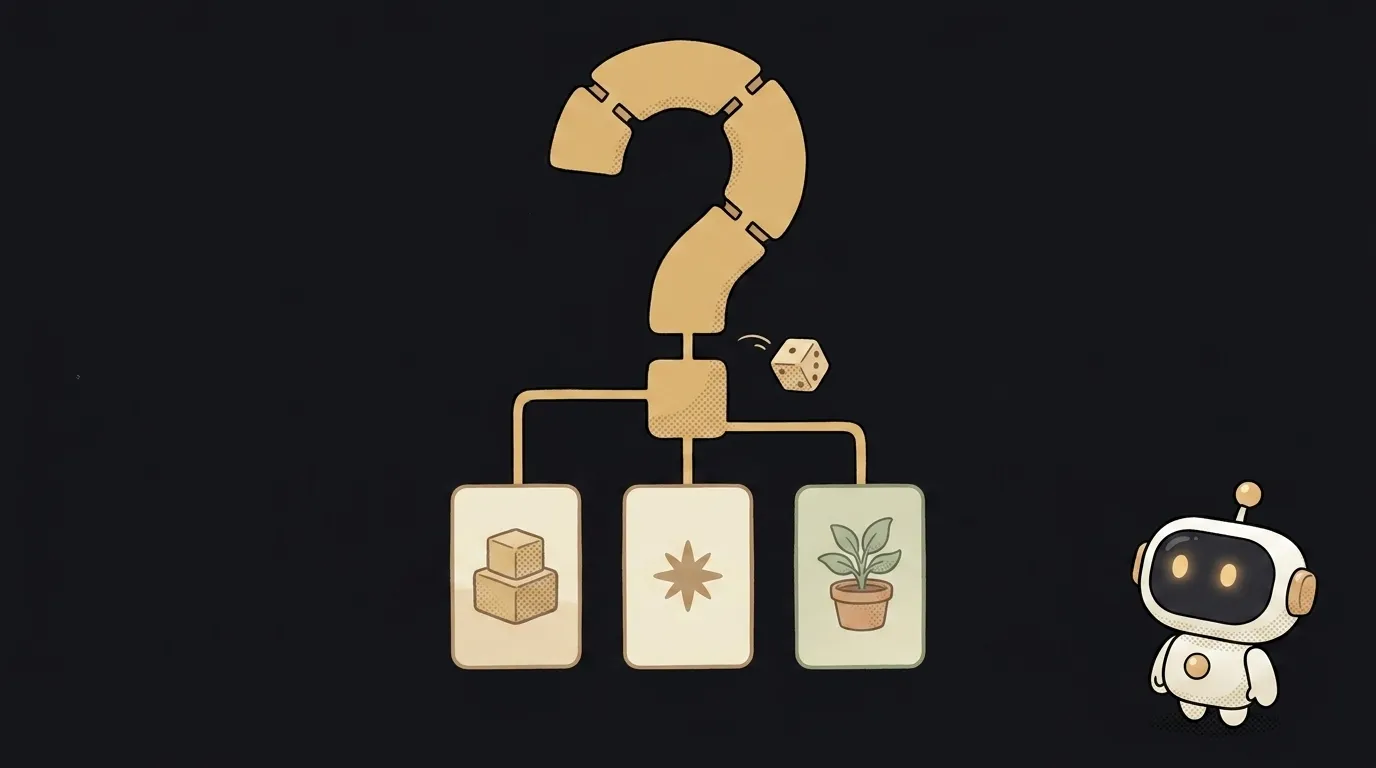
You ask the AI the same question twice — and get two different answers. First thought: "it's broken" or "it's lying". In fact the variation is baked into the model itself, and it's normal — up to a point. Let's go by symptom, from most common to rare: where it's expected, and where it's a signal to fix something.
Symptom: one question, a new answer every time
You ask the same thing back to back, and the wording — sometimes even the substance — drifts from run to run.
Cause #1, the most common: the model has built-in randomness. It doesn't pick the one right word — at each step it rolls a "die" and takes one of the likely continuations. The parameter behind this spread is "temperature": higher means more creative and varied answers, lower means more stable and predictable. It's part of how inference works — generating the answer piece by piece.
How to check: ask the same question 3–4 times. Answers different in form each time but close in meaning? Then it's this — ordinary temperature randomness, not a breakdown.
How to fix: if you need repeatability (say, the AI extracts data by a template), drop the temperature to zero or near it. Many interfaces and APIs expose this slider; at zero the model almost always returns the same answer. More in what is temperature.
Symptom: the answer changed, though the question is the same
Yesterday one answer, today a noticeably different one to the same question. And it's not minor drift — it's a clear difference.
Cause #2: the context changed, not the question. The model answers not a bare question but the question plus everything around it: this chat's history, its memory of you, system instructions, today's date. The surroundings changed, so the answer changed — even though you typed the question word for word.
How to check: ask the same question in a fresh, clean chat, with no history. Did the answer get closer to the "first" one? Then the accumulated context is to blame, not the question itself.
How to fix: for a fair comparison, always ask in a fresh chat. And if you want stability, set the context hard yourself: don't rely on memory, put the needed facts and rules right into the request. The tighter the spec, the narrower the lane in which the model can swerve.
Symptom: you get one answer, your friend gets another to the same question
You send a friend the same prompt, and their result is noticeably different.
Cause #3: you're on different settings or versions. Different models in the dropdown, different default temperatures, different system prompts baked into the services, and sometimes just different versions of the same model — providers update them regularly. Same question ≠ same conditions.
How to check: compare which exact model each of you has selected and through which service you're asking. The difference is often right there.
How to fix: agree on one model and one interface, and the answers converge. Keep in mind too that yesterday's model version may be updated today — perfect eternal repeatability doesn't exist for cloud models.
Bonus: maybe the spread is a good thing
Stability isn't always what you want. Asking for ideas, names, text variants — different answers are a plus, not a bug: turn the temperature up and harvest. Chase repeatability only where accuracy matters (data, templated code, formatted output). First decide what you need — creativity or predictability.
How do I make the AI answer the same way every time?
Remove the randomness and fix the input. Bring temperature down to zero, ask in a clean chat with no history, demand a strict answer format. There's no absolute guarantee with cloud models (the version can update), but this collapses the spread to nearly nothing.
Are different answers the same bug as hallucinations?
No, they're different things. Spread is about form: the model phrases a broadly correct idea differently. A hallucination is about fact: the model confidently states something untrue. You can get both at once, but they're fixed differently.
Why does the answer still change slightly even at temperature zero?
Because "zero" removes almost all randomness, but not all of it: on big models tiny technical discrepancies remain in the computation, plus the provider may have quietly updated the version. For practice this doesn't matter — the answers will match on the essentials. If they still swing wildly, dig into the context: it's probably that, not the temperature (a related read — why my prompt doesn't work).
Short story-lessons, an agent simulator and daily practice — in our mobile app. Free.
Read next
What is prompt chaining — why a chain of simple prompts beats one giant one

What is an AI jailbreak — and how it differs from prompt injection
What is chain of thought — why 'think step by step' makes AI smarter
What is context engineering — and why it beats the prompt
How to write a system prompt for your bot — step by step