OpenAI API vs OpenRouter — which one to plug into your project
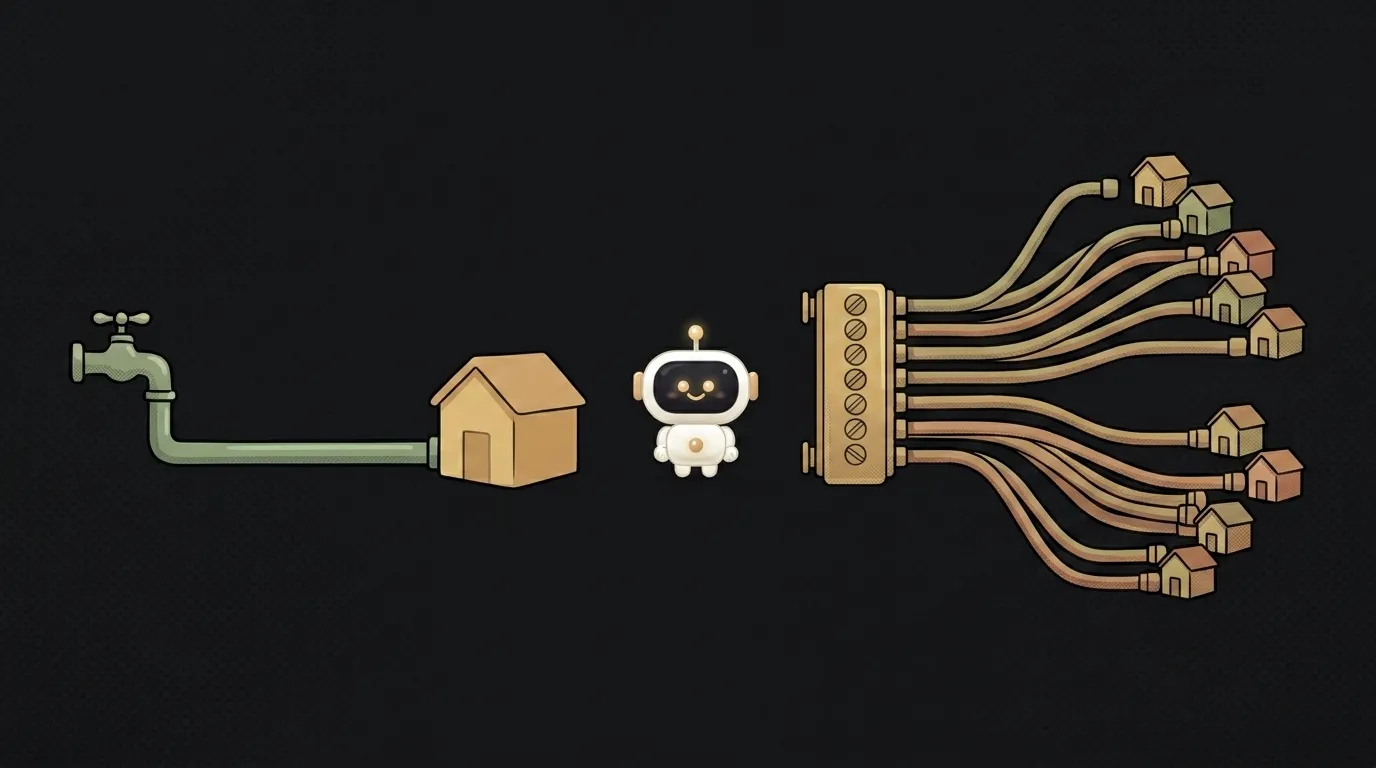
Here's what surprises everyone reading about OpenRouter for the first time: it doesn't mark up tokens. Run a model through it and you pay exactly what you'd pay the provider directly.
Reasonable question: so what does it live on?
A fee on topping up your balance. Add funds by card — 5.5% on top (minimum $0.80); by crypto — 5%. After that, tokens go at the provider's own price, no surcharge.
That one detail explains who needs OpenRouter and who doesn't. Let's dig in.
What these things actually are
OpenAI API — direct access to OpenAI's models. One vendor, one account, your own keys. The classic: sign up, get a key, plug it in.
OpenRouter — a middleman. One key and one address, behind which sit hundreds of models from different companies: OpenAI, Anthropic, Google, open models. You switch models by changing a string in the request, not by rewriting an integration.
An important similarity: both speak the same request format. OpenRouter talks OpenAI's dialect, so moving either direction means swapping an address and a key, not rewriting code.
The table: how they actually differ
| Criterion | OpenAI API | OpenRouter | |---|---|---| | Token price | OpenAI's price | Same provider price, no markup | | Hidden fee | None | 5.5% on card top-ups (5% crypto) | | Model choice | OpenAI models only | Hundreds of models, dozens of providers | | Switching models | Within OpenAI's lineup only | One string in the request | | If a provider goes down | You wait | Falls back to a backup automatically | | Free trial | No | Free models: 50 requests/day (1,000 if you've topped up $10+) | | Bring your own key | — | Yes (first million requests a month free, then 5%) | | Who you pay | OpenAI directly | One account for all of them | | Extra link in the chain | None | Yes: one more service between you and the model |
Where the difference actually lives
Money. The top-up fee is flat. Put in $100 by card — $105.50 leaves your account. Then that $100 is spent at normal prices. So OpenRouter costs roughly 5% more than direct — but not 5% of every request, once at the door. At $20 a month that's a dollar. Not the scale on which you make architecture decisions.
Choice. Now this is the scale. With OpenAI you live inside one lineup. Want to compare your task on a model from another company? Another account, another card, another key, another bill. Through OpenRouter — change one string. For a beginner who hasn't yet worked out which model they need, that's the difference between "I'll try it in a minute" and "ugh, forget it."
Reliability. Every provider has outages and rate limits. Direct — you sit and wait. Through OpenRouter — you can list backups and it moves to the next one itself. Your users never notice.
The extra link. That's the honest price of the convenience. If OpenRouter goes down, you go down, even when the provider is fine. And your requests pass through one more company: irrelevant for a side project, a conversation with a lawyer once other people's personal data is involved.
Who should pick what
No hedging.
Take OpenRouter if you're starting out. Not for the price — because at the start you don't yet know which model suits you. Trying five through OpenRouter is an evening. Direct, it's five signups and five bills. Plus the free models: 50 requests a day to poke around with no card at all. Five percent is a fair price for not locking yourself into one vendor in week one.
Take OpenRouter if you have a live product with users. Automatic failover when a provider goes down is worth more than 5%. It's the difference between "the service works" and "the service is down, but it's not my fault."
Take the OpenAI API directly if you already know you need OpenAI's models and your volume is serious. At a big bill, 5% is real money, and an extra link is an extra point of failure. Another case: you need OpenAI-specific things (the newest features, fine-tuning, an enterprise contract) — a middleman may not have them, or gets them later.
Take it direct if other people's personal data flows through you. Fewer intermediaries, fewer questions.
The opinionated but honest conclusion: start on OpenRouter, move to direct access once the bill gets noticeable. The move costs half an hour — same request format. The opposite mistake is pricier: locking into one vendor while you still don't know what you're building.
Does OpenRouter really not mark up tokens?
Per its docs, yes — the provider's price passes through as-is, and the service lives on the top-up fee (5.5% card, 5% crypto) plus 5% beyond the first million requests a month if you bring your own provider key. Check the current numbers before you budget: pricing changes more often than articles do.
Can I move from OpenRouter to direct access later?
Yes, and it's half an hour of work. Both speak OpenAI's format: change the address and the key, the code stays. That's exactly why starting with a middleman isn't a trap. Just don't scatter features across your code that the other side doesn't have, or the move stops being a two-line swap.
Short story-lessons, an agent simulator and daily practice — in our mobile app. Free.
Read next
Claude Code or Codex — and why price is the worst way to choose

Word blocklist vs AI moderation — what to filter user content with

ChatGPT subscription or the API — two different products, and here's which one you need
npm vs pnpm vs yarn — which package manager to pick as a beginner
Ollama vs LM Studio — which to pick for running AI locally