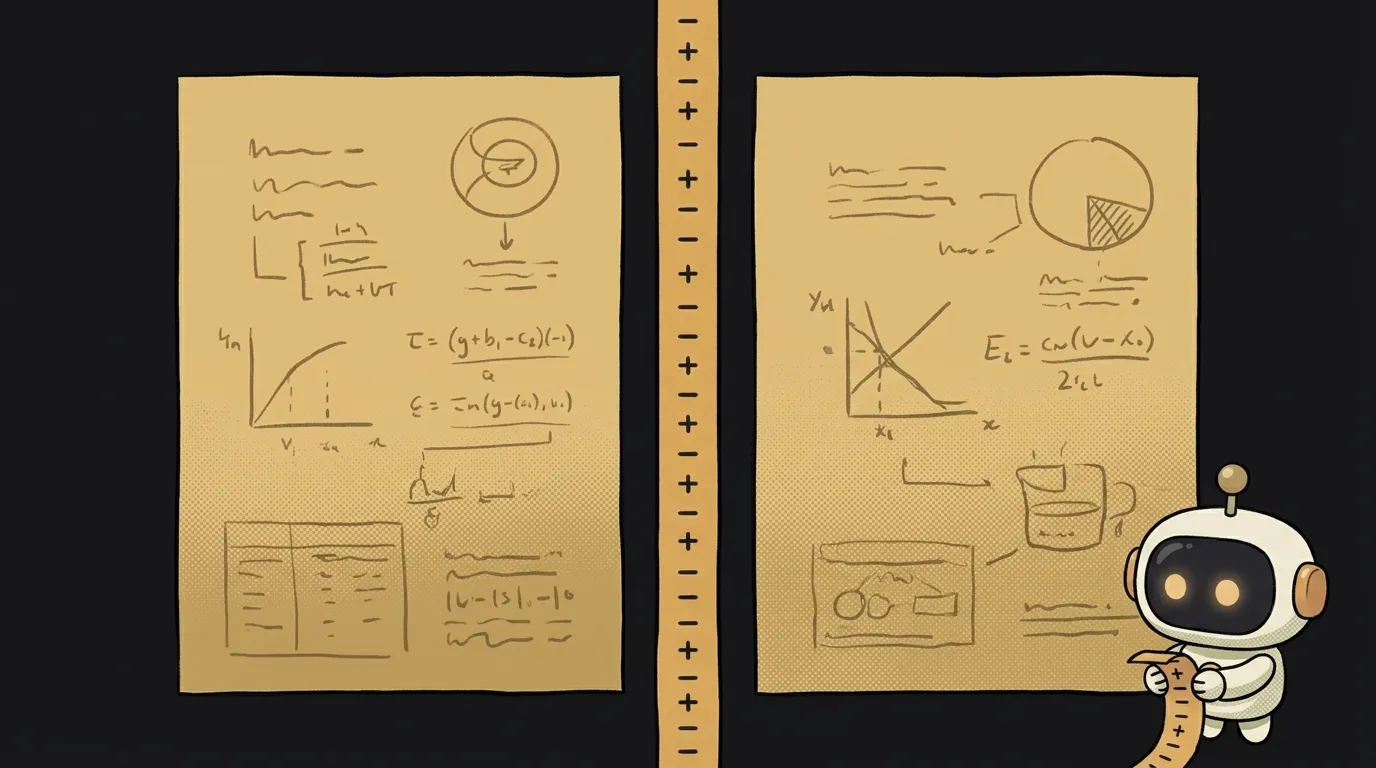
What is an AI detector — and why it flags careful humans more often than machines
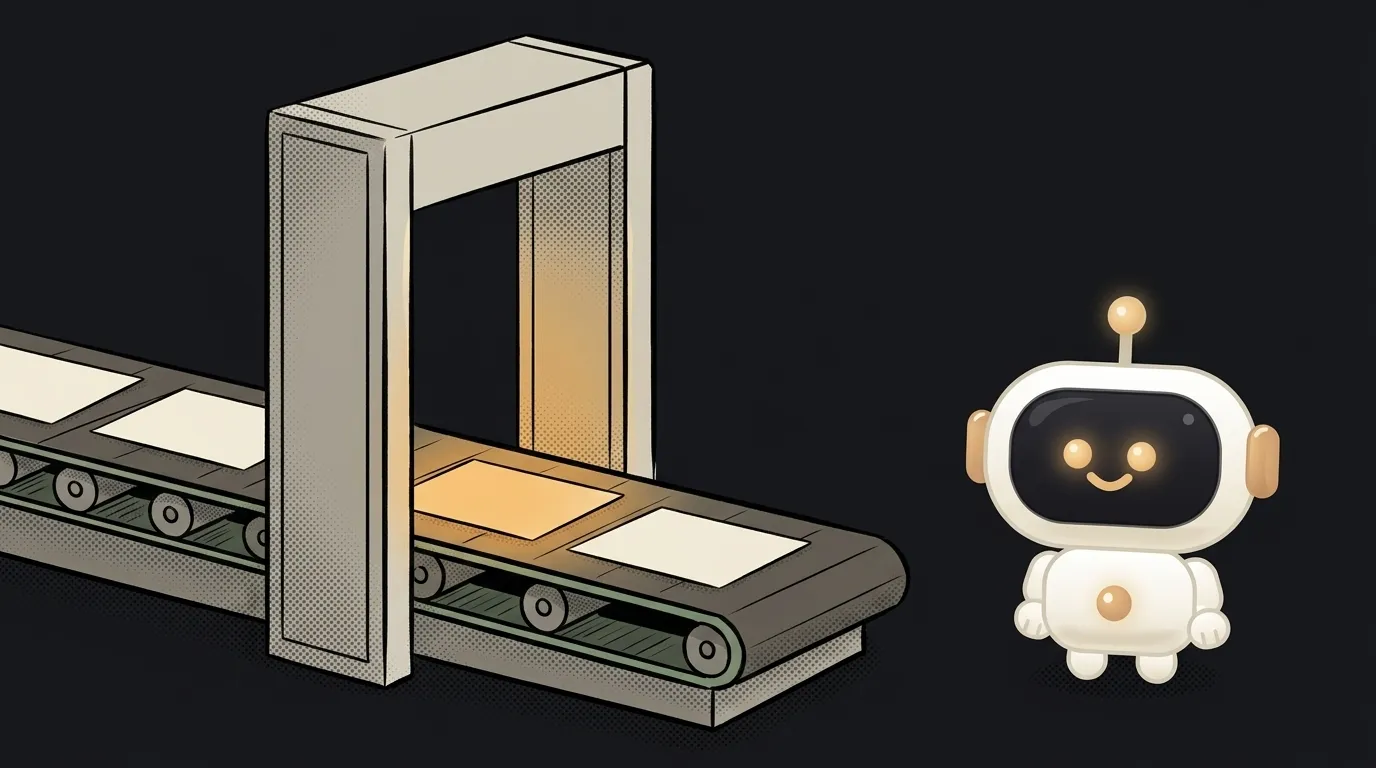
Here's the uncomfortable part. Stanford researchers took seven popular AI detectors and ran essays written by real humans through them. On essays by US eighth-graders, the detectors were near-perfect. On TOEFL essays by non-native English speakers, they flagged 61.22% as "written by AI". At least one detector flagged 89 out of 91 essays.
Not one of them was written by a machine. They were written by people whose second language is English.
That's not a bug in one product. That's how detectors work.
What an AI detector is
An AI detector is a program that guesses, from the text alone, whether a human or a language model wrote it. You paste text in, you get a number out: "87% likely AI".
The key word is guess. The detector finds no signature and no mark inside the text. There isn't one. It looks at the writing itself and places a statistical bet.
What it actually measures
A detector doesn't ask "who wrote this". It asks: "how predictable is each next word here?"
A language model picks one token after another, each time taking one of the most likely options. The result is smooth, even, average prose. Two numbers catch that:
- Perplexity — how "surprising" the text is. The more predictable the words, the lower it goes. Models score low.
- Burstiness — the variation. Humans write unevenly: a long sentence, then a short one. Then a very short one. Models hold a steady rhythm.
So the detector concludes: "low perplexity plus even rhythm means machine".
And here's the trap. That isn't a description of a machine. It's a description of any predictable writing.
Why humans take the hit
Who writes predictably and evenly? Not just models.
- Anyone writing in a second language. Smaller vocabulary, more set phrases, textbook-tidy constructions. Exactly what the detector reads as machine-like.
- Anyone writing in a formal genre. A report, a legal notice, documentation, an academic paper. There, smoothness is a requirement, not a suspicion.
- Anyone who simply tried hard. You proofread, cut the clutter, evened out the paragraphs. Congratulations — you now look like a model.
This isn't a one-off finding from 2023. It was replicated in 2026 on different data and different tools. At the ACL conference, researchers ran 16 detection systems over student essays: work by English-language learners was flagged as machine-written noticeably more often. A separate paper that year showed why — detectors react to style, not to authorship.
And the flip side: fooling a detector is easier than being wrongly caught by one. In the same Stanford experiment, asking the model to "rewrite this in more literary language" was enough to slip through. So the detector misses anyone trying to cheat and catches someone who was hiding nothing.
What to do if you're accused
Arguing number against number gets you nowhere: they have "94% AI", you have "another tool says 12%". What works is showing the process, not the result.
- Version history. Google Docs keeps edits, so does Word. A draft that grew over twenty revisions isn't something a model can fake.
- Your notes and drafts. Messy, typo-ridden, full of crossed-out lines — that's your best evidence.
- Commits, if it's code or text in a repository. The dates and the order are right there.
- A conversation. Ask to explain the text out loud. Whoever wrote it can.
And hold on to the rule everyone should know: a detector flag is a suspicion, not evidence. It's a textbook false positive — a system accusing an innocent party simply because they resemble a guilty one.
Can I just ask the model, "did you write this?"
No, and it's the fastest way to hurt yourself. The model has no memory of what it generated. There's no log of its past answers. Asked "did you write this?", it will invent a plausible answer — and say "yes" as readily as "no". That's an ordinary hallucination, just one with very serious consequences for whoever got "identified".
Is there any reliable way to tell?
From the text alone, no. Reliability is only possible at the source — when the generator marks the content as it creates it.
That's where regulation is heading. Article 50 of the European AI Act applies from 2 August 2026: whoever builds an AI system must attach a machine-readable mark to generated content, and whoever publishes a deepfake must label it. The logic is exactly this — the argument is settled by a mark from the source, not by guesswork over the finished text.
But that's no detector in reverse either: the absence of a mark proves nothing. Marks get lost when content is copied, and text can be rewritten by hand.
What percentage counts as proof?
None of them. A detector's number is its own confidence, not the probability of being right. The same text will score 12%, 60% and 94% across three services. If someone's grade, job or reputation hangs on the outcome, a detector can be a reason to ask a question — never grounds for a verdict.
Do detectors work on code?
They try, and it's worse there. Code is boilerplate by nature: imports, error handling, standard patterns. Humans and models write them the same way, simply because that's the convention. In code, predictability is the norm, not the evidence.
Short story-lessons, an agent simulator and daily practice — in our mobile app. Free.
Read next

What is a git worktree — and why keep a second folder of the same project

What is state — and why a button doesn't "turn" grey
What is a regression — and why a fixed bug comes back

What is a dependency — and why one library pulls in two hundred
What is a variable — and why a copy of a list changes together with the original