What is JSON — in plain words, and why every program understands it
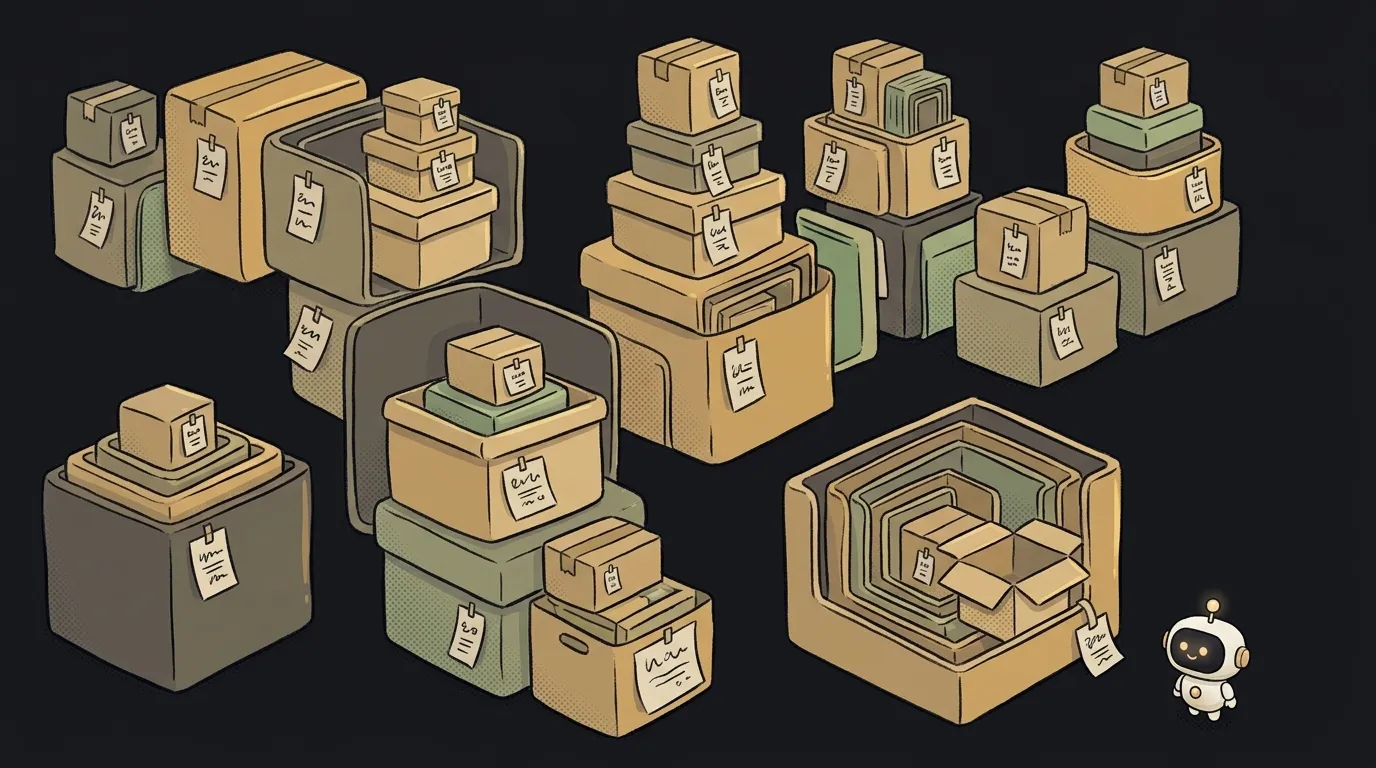
Here's a funny thing: the word "JSON" scares beginners, but it's literally text with two kinds of brackets and a colon. Not a programming language, not code. Just a way to write data so that both a human and any program on earth can read it. Learn it in five minutes and you'll stop fearing API responses and config files.
What it is, in one line
JSON (say "jay-son") is a text format for storing and passing data around. It stands for JavaScript Object Notation, but you're not tied to JavaScript: Python, Swift, bots, servers — everything reads JSON.
Picture a note that both your grandma and a robot can read. That's JSON — a note with very simple rules.
Just two shapes — that's all
All of JSON is built from two bricks.
An object — curly braces { }. Inside are "key: value" pairs, like labels on jars:
{
  "name": "Kodiq",
  "level": 7,
  "online": true
}
Key on the left (always in quotes), value on the right. Reads like a form: name — Kodiq, level — 7, online — yes.
An array — square brackets [ ]. Just a list, in order:
["apple", "banana", "mango"]
And — surprise — these two nest inside each other as deep as you like. An array of objects, an object with an array inside, an object inside an object. Any server response, even a giant one, is the same { } and [ ], just nested deeper.
What values can go in
To the right of a key sits one of six things:
- a string — text in quotes:
"hello" - a number — no quotes:
42,3.14 - yes/no —
true/false - emptiness —
null(no value) - an object — again
{ } - an array — again
[ ]
That's it. There's nothing else in JSON. No functions, no logic — only data. That's exactly why it's so easy to read: there's nothing to break in your head.
Where you've already met it
You use JSON every day, even if you never knew the name.
- Called an API? The reply almost always comes back as JSON.
- Asked an AI to return data "as a list" or "as JSON"? That's structured output, and under the hood it's exactly these brackets.
- Opened a project config file (
package.json)? JSON again. - Saved an access key or settings? Often a JSON file.
So it's not "one more topic to tick off." It's the common language programs use to hand data to each other.
How to read any JSON in 10 seconds
Here's the trick. When you see a wall of JSON, don't read it top to bottom — find the structure:
- Outer bracket
{or[? Then everything inside is one object or one list. - Look at the keys (the words left of
:). They tell you what the data is. - Indentation is your friend. Nesting shows up as a staircase: the further right, the deeper.
Try it right now: ask any chatbot to "return JSON with three cities and their populations." You'll get an array of three objects — and you'll read it with no help.
Common trip-ups
The one thing everyone stumbles on: a trailing comma. No comma after the last item:
{ "a": 1, "b": 2 }    ← good
{ "a": 1, "b": 2, }   ← broken
And keys always go in double quotes — not single ones. If JSON "won't parse," 9 times out of 10 it's a comma or a quote. Paste it into any online validator and it'll point at the line.
Q: Are JSON and JavaScript the same thing?
No. JSON grew out of JavaScript and looks similar, but it's just a text format. Python, Swift, PHP — any language reads it just as easily. The name is historical; there's no lock-in.
Q: How is JSON different from a database?
JSON is a way to write data as text (to send it or save it to a file). A database is a place where data is stored and searched. Often data lives in a database and gets handed out over an API as JSON.
Q: Do I have to learn JSON to vibe-code?
To cram it on purpose — no. But learning to recognize it pays off: the moment you see { } and [ ] and know it's just data, API responses and settings stop being magic. Five minutes pays back a hundred times.
Short story-lessons, an agent simulator and daily practice — in our mobile app. Free.
Read next

What is a string in programming — and why "5" and 5 aren't the same

What is return and a return value — and why console.log returns nothing

What is a boolean — and why the string "false" is actually true
for loop or map — which to use, and why await inside map doesn't wait

What is scope in programming — and why a variable is "not defined" when it's right there