Claude Code or Codex — and why price is the worst way to choose

Tool comparisons usually end with "well, it depends on your budget." That advice fails here — and that's the interesting part.
Look: the paid tiers have converged to the dollar. $20, $100, $200 a month. Identical.
When the prices match, the price tag stops being an argument. Which means you have to choose on the thing people usually mention last: how you actually work.
The short version: where the real difference is
Both are AI agents that read your project, edit files, run commands and keep going until the task is done. But they're built on different philosophies.
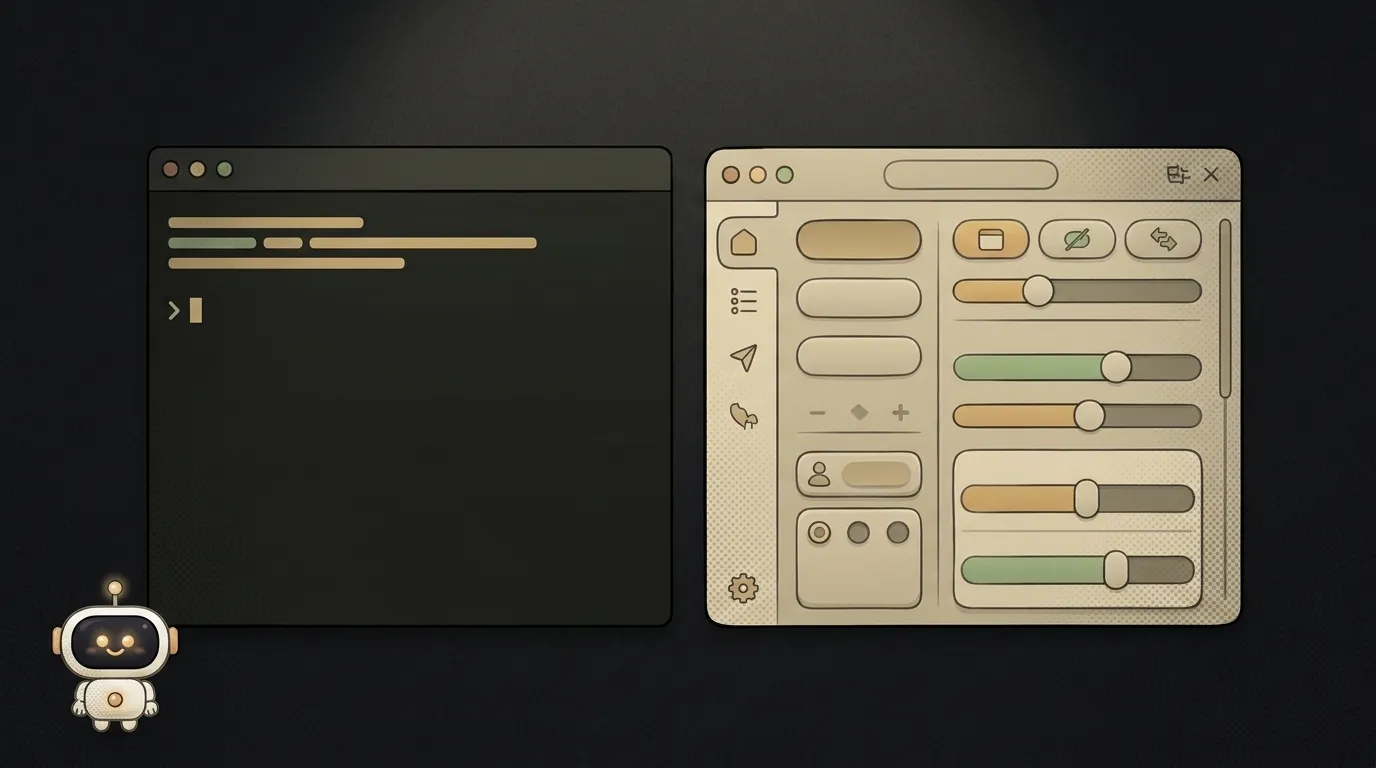
- Claude Code is about one deep session. It runs on your machine, in your folder, showing each action before it applies it. You're right there, reviewing.
- Codex is about a fan of tasks. You queue work up, it goes off to a cloud sandbox, you do something else and come back for the result.
That's not better versus worse. It's two modes: a co-pilot beside you versus a crew of contractors.
Criterion by criterion
Where the work happens. Claude Code runs locally, on your computer, with direct access to your files. Codex runs in a cloud sandbox, with a local CLI as one entry point. Almost everything else follows from this.
Step-by-step control. Claude Code asks permission for commands by default and shows edits before applying them. Codex's control is coarser: you check the finished task, not each step inside it.
Parallelism. Codex is stronger here: several tasks run at once while you're busy elsewhere. Claude Code can do it too, but its natural mode is one task you're engaged in.
Where it's embedded. Claude Code: terminal, VS Code, JetBrains, desktop, web, phone. Codex: web, desktop, CLI, IDE extension, phone. Roughly even on coverage; the difference is emphasis — Claude Code's center of gravity is the terminal, Codex's is the cloud and the IDE.
Models. As of September 2026: Codex runs on the GPT-6 Astra and GPT-5.6 line, Claude Code on Sonnet 5, Opus 5, Fable 5.1 and Haiku 4.5. This is the one irreversible choice — you're picking a model family more than a CLI.
How limits are counted. Both use a five-hour window plus a weekly ceiling. Hitting them is equally realistic if you run an agent all day.
Do I need internet? Yes, for both. Claude Code being "local" is about where your code sits and gets edited, not about working offline: the model itself is still in the cloud.
Money: the one real difference
The tiers match, but there's an asymmetry at the very bottom, and it can decide everything.
Codex has a zero tier. It's included in free ChatGPT — with hard limits, but enough to get your hands on it. Below the main paid steps there's also a cheap intermediate tier around $8.
Claude Code has no free entry. The minimum is the $20 subscription.
So the honest conclusion: if you're not yet sure you need an agent at all, Codex is the cheaper place to start. Not because it's better, but because trying it costs nothing.
Second practical thought: if you already pay for one of these subscriptions, you probably already own the agent you need. Adding the second one "in case it's better" is $20 a month for the feeling of having a choice.
Who should pick what — straight answer
- You're new and just trying this out — Codex. It's the only way to start at $0, and early on, trying beats choosing correctly.
- You're editing a live project and want to see every change — Claude Code. Showing actions before applying them is exactly what saves you when a human isn't writing the code.
- You have a queue of repetitive tasks (bump dependencies across five repos, clone a test pattern) — Codex. Parallel cloud tasks are its home turf.
- You already pay for ChatGPT or Claude — use what's paid for. The gap between them is smaller than the gap between "using an agent" and "not using one."
- You care about a specific model — choose on that, not on the wrapper. It's the one criterion no setting can work around.
If you want it in a single line: want a partner, take Claude Code; want a contractor, take Codex.
Can I use both?
Sure, they don't conflict: separate subscriptions, separate config folders, both live happily on one machine. Just don't do it "to compare" for more than a couple of weeks — a double subscription pays off only if you genuinely have two different working modes.
Is this the same thing as Cursor?
No. Cursor is an editor with AI inside; the code window is the center. Claude Code and Codex are agents that work a task. We covered the "editor or agent" fork in more depth in Claude Code vs Cursor, and the editors themselves in a separate piece.
How fast does this go stale?
Prices and models: fast, within months. The architectural difference: slowly — a local reviewed session versus a cloud task queue has held for a long while and isn't about to collapse. So choose on the second, and re-check the first on their sites before you pay.
Short story-lessons, an agent simulator and daily practice — in our mobile app. Free.
Read next

Word blocklist vs AI moderation — what to filter user content with

ChatGPT subscription or the API — two different products, and here's which one you need

npm vs pnpm vs yarn — which package manager to pick as a beginner

OpenAI API vs OpenRouter — which one to plug into your project
Ollama vs LM Studio — which to pick for running AI locally