What is SQL — in plain words, and why a 50-year-old language is still alive
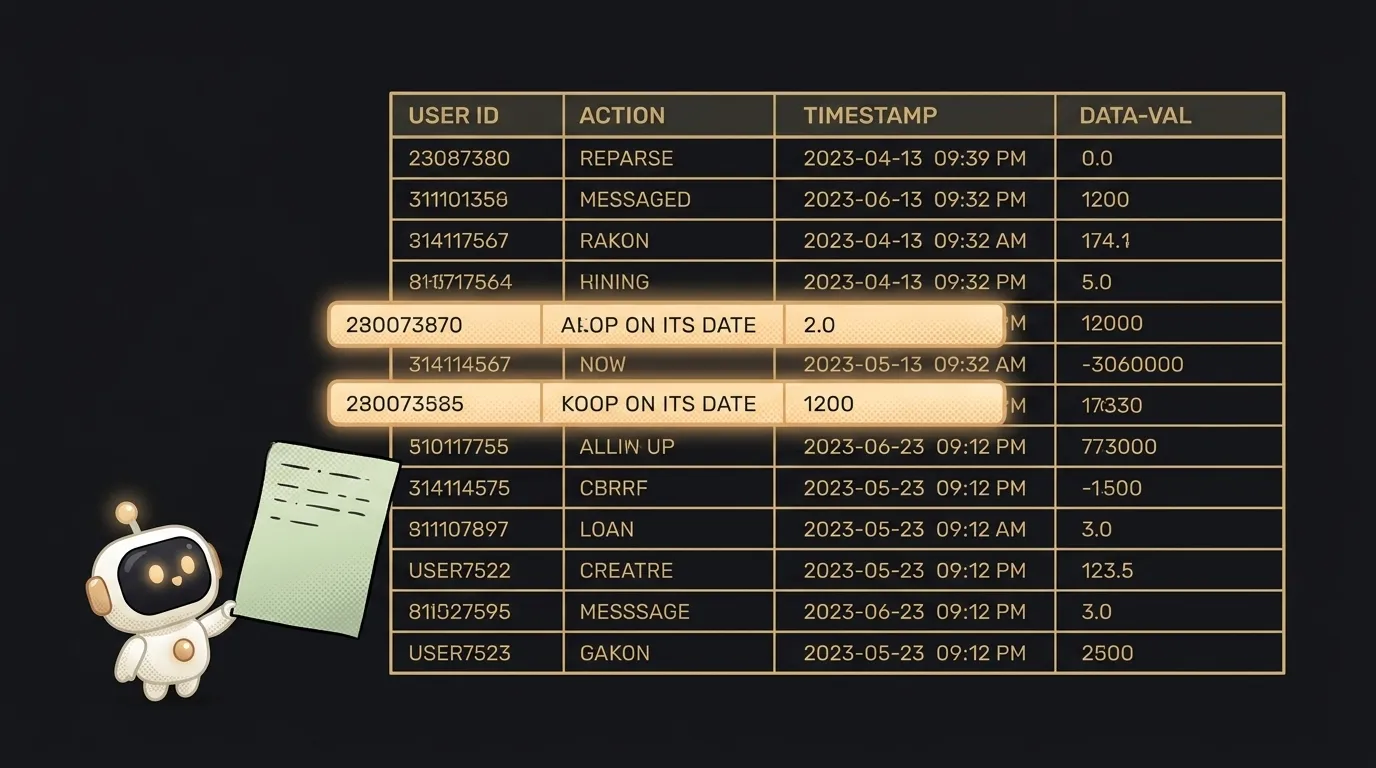
Here's what surprises people: programming languages come and go with fashion, but SQL was invented back in the 1970s — and it's still the main way to talk to data. It outlived every hype wave. Why? Because it's built not like code, but like a request in almost-human English. And that's exactly why you can start reading it today.
What it is
SQL is a query language for databases. You write a short phrase saying what you want to get or change, and the database does it. The acronym is Structured Query Language — which you can forget right away.
The core idea that sets SQL apart from regular code: you describe what you want, not how to fetch it. Not "loop over every row, compare the city, collect the matches into a list" — just "give me users from London." How to search fastest is the database's problem. You state the wish, it carries it out.
How a query reads
The most common command is SELECT, "select." Look — it reads almost like a sentence:
SELECT name FROM users WHERE city = 'London'
Literally: "select the name from the users table where the city is London." That's it. Three keywords and it's clear what happens:
- SELECT — what to show (which columns).
- FROM — where from (which table).
- WHERE — the condition (which rows qualify).
There's only a handful of commands, and they're just as direct: INSERT — add a row, UPDATE — change one, DELETE — remove one. Master those four verbs and you can already read 90% of the queries you'll meet.
Why it's still taught
You might think: if AI writes my code, why bother with old SQL? That's exactly why it won't die. SQL is the common language for data — understood by nearly every database, every analytics tool, and crucially, every language model. Ask an AI agent to "count orders this week" and under the hood it builds a SQL query. Knowing SQL, you can read what it did and catch a mistake before it corrupts your data.
And: SQL is a skill not tied to one tool. Switch editor, framework, cloud — SQL stays the same. Little in this field lives that long.
Why it matters to you
The moment your app has a database, sooner or later you'll want to ask it something specific: "who signed up today?", "which products were never bought?" Those are SQL queries. At first the AI writes them, then you start reading them, then you catch yourself editing them by hand — that's the natural path.
You don't need to sit and memorize the whole syntax. It's more useful to hold the model in your head: data lives in tables, and SELECT ... FROM ... WHERE ... is how you pull exactly the slice you need. With that picture, even a generated query stops being magic.
Where you'll meet SQL first
Most likely in your backend's panel (Supabase, for example, has a window where you can type a query) or in the reply of an AI agent that reached into your database. The first time feels unfamiliar, but you'll recognize SELECT instantly. If you're building a data-driven app, see databases for vibe-coders too — it shows SQL in context.
FAQ: Is SQL a programming language?
Not quite. You can't write a whole app in SQL — no buttons, no screens. It's a specialized language for one thing only: talking to data. That's why it's called a query language, not a programming one. It works in tandem with a "real" language (Python, JavaScript) that hits the database through SQL.
FAQ: Are SQL and NoSQL opposites?
Not opposites exactly — different approaches to storage. SQL databases keep data in strict tables with relationships. NoSQL databases store more loosely — for example, as document-cards with no rigid structure. Each has its uses; for most first projects a table-based SQL database is the clearest, safest start.
Short story-lessons, an agent simulator and daily practice — in our mobile app. Free.
Read next
What is SSH — how to log into someone else's computer without a password in the open
What is hashing — why a website doesn't know your password
What is a race condition — the bug that shows up only sometimes
Docker or a virtual machine — the difference, and what a beginner should pick
What is WebSocket — and why a chat updates itself without a page reload