What is agentic AI — and how it differs from a plain agent
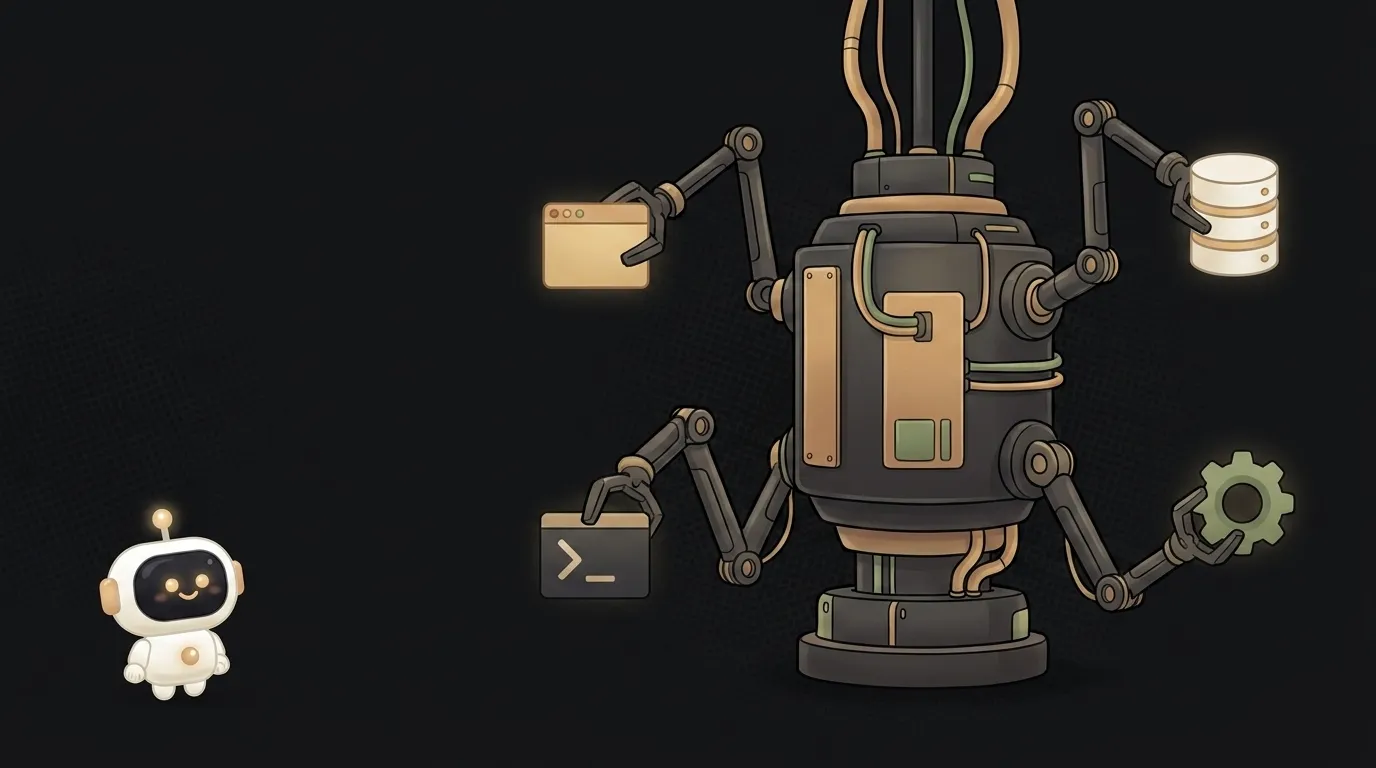
Here's a mix-up almost everyone falls into. There's an "AI agent," and there's "agentic AI." They sound nearly the same — but the gap is real.
And it all comes down to one question: who makes the plan?
In two words: who makes the plan
You ask: "book a table for two on Friday."
An AI agent is a doer of a specific task. You give it a step, it takes the step. Check free tables, hit "book" — on your command.
Agentic AI is about a property, not one program. This kind of AI breaks the goal into steps by itself. It thinks: "okay, I need to find restaurants nearby, check Friday, pick a time, make the booking, send confirmation." And it works down that list on its own.
It's the difference between "hand me the wrench" and "fix the bike." In the first case, the plan is in your head. In the second, the plan is made by whoever you gave the goal to.
How it works: the "think → act → look" loop
Inside agentic AI runs a simple loop. Three actions on repeat:
- think — what to do next to get closer to the goal;
- act — call a tool: open a site, hit a database, run code (this is called tool use);
- look — at the result, and whether the plan needs a fix.
And around again, until the goal is met. A plain chatbot answers with one reply and goes quiet. Agentic AI spins this loop by itself — ten times if needed.
That's exactly why it can do what a simple chat reply can't. Not "here's the text of your email," but "found the address, wrote the email, sent it, checked it went through."
Why it matters to you
Because all of AI is heading this way right now. And when you build something over a weekend, the choice "agent or agentic approach" decides how much code you write by hand.
Simple example. You want a bot that watches a flight price on its own and pings you when it drops.
- As an agent: you spell out every step — "every hour go here, grab the price, compare, if lower — notify." The logic is on you.
- As agentic AI: you give the goal — "watch the price and tell me when it's worth buying." What steps that involves, the model figures out.
The second is more flexible, but also less predictable. That fork gets its own breakdown: chatbot or agent.
When you'll meet this word
"Agentic" is the hottest word in AI right now. You'll see it in tool descriptions: "agentic code editor," "agentic search." The translation is simple: this thing doesn't wait for every step from you — give it a goal, it'll break it into actions and go do them.
Don't be spooked by the halo around the word. Behind it is that same "think → act → look" loop. That's all.
Agentic AI and an AI agent — are they the same thing?
No, even though people mix them up. An AI agent is a concrete program for a task. Agentic AI is the property of "acting on your own toward a goal." One agent can be very "agentic," or it can just execute commands — then it's an agent, but not agentic.
Can agentic AI make mistakes?
Very much so. The more steps it plans itself, the more places it can veer off. That's why important actions (spend money, delete files) keep an "ask a human" button. Freedom is both the strength and the risk at once.
Short story-lessons, an agent simulator and daily practice — in our mobile app. Free.
Read next

What is an Agent Skill — and why it costs almost nothing

What is a subagent — and why it saves context, not time
Agent Skills or MCP — which to choose and how they really differ

Why my MCP server won't connect — 4 causes, most common first
What is AGENTS.md — the file your AI agent reads before you ask