AI search vs Google — which one to open when
Comparing them on convenience is pointless — AI search wins in a landslide. One answer instead of ten tabs, in plain language.
So let's compare them on something else: how they fail. When Google finds nothing, it shows you junk or an empty page. You can see immediately that there's no answer. AI search never finds nothing: it always returns coherent, confident, nicely formatted text. Including when it has no data.
An empty result page is more honest than a confident answer. Everything practical grows from that.
They're doing different jobs
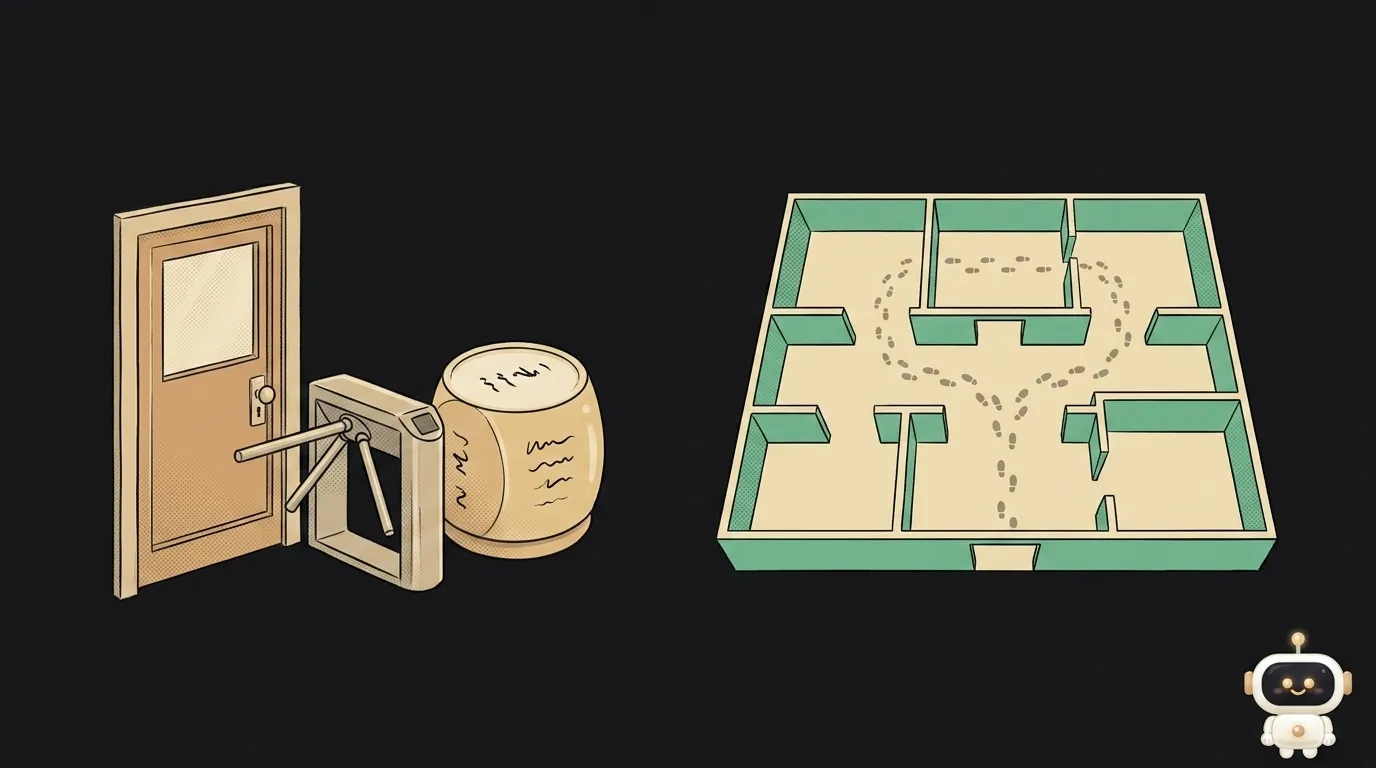
Google is an index. It crawled sites in advance, filed them away, and ranks pages against your query. The output is a list of places where your answer might live. The reading and the conclusion are yours.
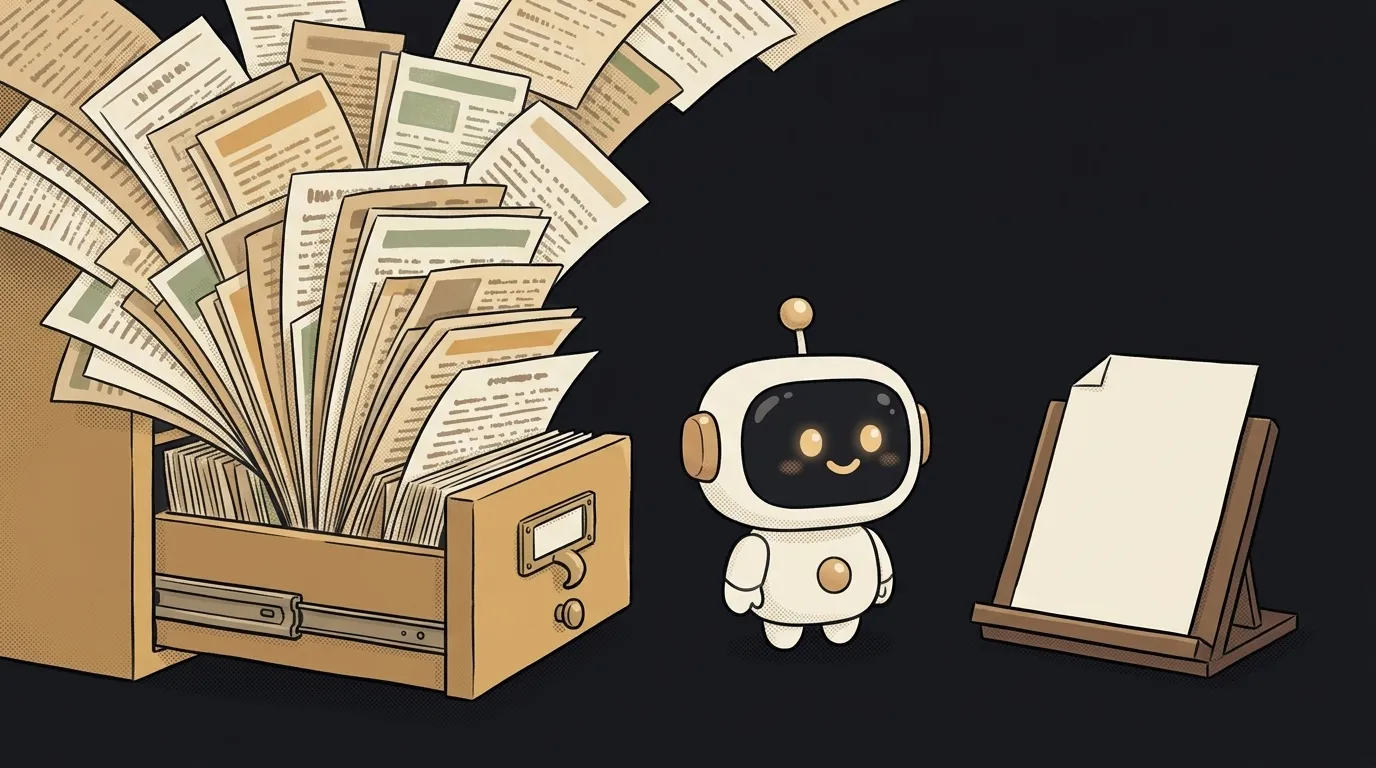
AI search is a retelling. It finds a few sources, reads them for you, and assembles one answer. The mechanism is called RAG: the model doesn't "remember" the answer, it pulls documents in right before replying.
Three consequences follow. The answer arrives ready-made — that's the upside. You can't see what got dropped along the way — that's the downside. And quality depends less on how smart the model is than on what it found: given a good set of sources it answers brilliantly, given junk it retells junk confidently.
The line is blurring, mind you: Google has had its own AI answer at the top of results for a while, and AI search engines show links. So today's choice isn't "websites versus a bot" — it's which mode you're reading in: the sources yourself, or a summary of them.
An honest comparison
| Criterion | AI search | Google | |---|---|---| | What you get | a finished answer | a list of pages | | What failure looks like | confident wrong text | empty or junk — visible instantly | | Unfamiliar topic | excellent: explains and gives you the words | hard: you don't know what to type | | Exact fact, number, date | risky: verify via the link | reliable: the primary source is right there | | Breaking news | depends on whether it went to the web | strong suit | | Official document | paraphrases, sometimes loosely | takes you to the original | | Verifiability | needs links, and you must open them | by construction: you're at the source | | Range of views | shows you one take | shows you that opinions differ |
Two rows matter most. "What failure looks like" — because it decides whether you catch the error or carry it onward. And "range of views": where opinions genuinely diverge, a summary collapses the argument into one smooth sentence, and you never learn there was an argument.
Which one to use — straight answer
Reach for AI search when:
- The topic is unfamiliar and you don't know the right words. This is its best case: it hands you the terminology you need to go searching properly.
- You need a dozen sources folded into one picture.
- You're picking apart an error or someone else's code: you can paste a whole chunk of text here, and you can't into a search box.
- You want to compare approaches and see what the options even are.
Open Google when:
- You need something specific: a number, a date, a price, a version, an exact wording.
- You need the primary source — documentation, a law, an official announcement.
- The event is recent. Here the knowledge cutoff matters: without going to the web, a model answers from stale memory, in the same confident tone.
- You're deciding what to buy and want real reviews, not their average.
The working combination is both, back to back: AI to understand and get the vocabulary, Google to verify and find the original. It costs a minute and saves you regularly.
The rule that saves you: a link or it didn't happen
One rule closes most of the risk.
If AI gives you a fact with no link, treat the fact as nonexistent. Not "probably true" — nonexistent. Especially for numbers, dates, prices, names of laws and people.
And the half everyone skips: you have to open the link. A model can hand you a real, live link to a real article — and attribute to it something that isn't written there. From the outside that's indistinguishable from an accurate citation, because a hallucination looks exactly as confident as the truth.
Thirty seconds on the link and you know what's actually going on.
Will AI search replace Google?
Some habits are already gone: nobody googles "explain how this works" anymore. But an index does a job a summary doesn't: it takes you to the primary source and shows you that sources disagree. As long as you're accountable for the facts, the link to the original isn't going anywhere.
Why does AI confidently give a wrong link?
Because a link is just text to a model, and assembling plausible-looking strings is precisely what it does. Hence both dead addresses and real links with invented contents. The only cure is opening them: the address existing is not the same as it saying what you were told.
The AI Architect 2027 course: step by step from computer basics to your own app and first customers. 543 short lessons on your phone.
Read next
Claude Code or Codex — and why price is the worst way to choose

Minification or compression — the difference, and why you need both

Word blocklist vs AI moderation — what to filter user content with

WebAssembly vs JavaScript — what's actually faster, and when

Accessibility overlay or real fixes — what to choose for your site