What is a URL slug — and why a non-English link arrives as percent soup
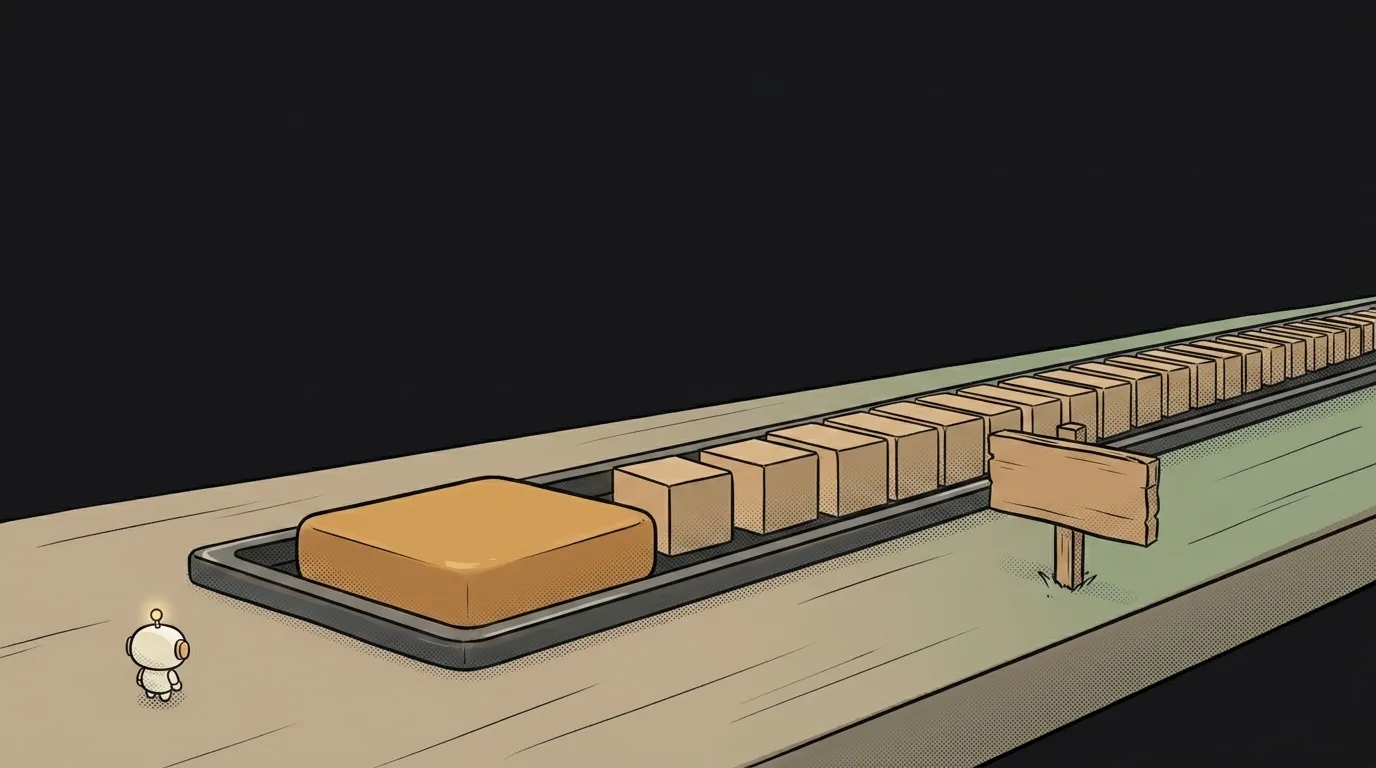
Try this. Name a page in your own alphabet, copy the link, send it to a friend. What lands is this:
site.com/article/%D0%BF%D1%80%D0%B8%D0%B2%D0%B5%D1%82
Six letters became thirty-six characters. The link works — but it looks broken, and people click links like that far less often.
One small part of the address is responsible. It's called the slug.
What a slug actually is
The slug is the tail of the address that names one specific page.
In kodiq.ai/article/what-is-a-slug/, the slug is what-is-a-slug.
Everything else is plumbing: the domain says whose site it is, the /article/ folder says there's an article inside. Only the slug says what is on the page. It's the one piece of the URL you invent yourself, and the one piece a human actually reads.
The word comes from newspapers: in typesetting, a slug was the short working name of a story so it wouldn't get mixed up with its neighbours. The meaning hasn't changed.
Why non-Latin letters break the link
Here's the trick. By spec, a URL only handles Latin letters, digits and a handful of symbols. Cyrillic, Greek, Chinese — none of them are in that set.
So the browser encodes them. Each letter becomes its bytes, and each byte becomes a percent sign plus two characters:
привет → %D0%BF%D1%80%D0%B8%D0%B2%D0%B5%D1%82
Why so long? A Cyrillic letter takes two bytes; a Latin one takes a single byte. Two bytes turn into six characters per letter. It's the same story as with tokens: non-English text costs more almost everywhere — in the address bar too.
The nasty part: you don't see it. The browser shows you the pretty version and copies the encoded one. From there it travels into messengers, emails, other people's articles and your own analytics, where you can no longer tell which row is which page.
That's why slugs are written in Latin script. Not because other alphabets are worse — because the address is a technical field, not a headline.
Hyphen or underscore — not a detail
Google reads a hyphen as a space and an underscore as glue.
my-first-app→ three words: "my", "first", "app"my_first_app→ one word: "my_first_app"
In the second case the page won't turn up for the query "first app" — as far as search is concerned, that word isn't on it. Simple rule: hyphens, always.
What a good slug looks like
Short rules, and they don't go stale:
- Latin script, lowercase. To a server,
What-Is-A-Slugandwhat-is-a-slugcan be two different pages. - Hyphens between words, never two in a row.
- Three to five words. A slug isn't a headline.
what-is-a-slugbeatswhat-is-a-url-slug-and-how-to-make-it-seo-friendly. - The key phrase inside — both the robot and the human in the results see it.
- No dates or numbers. An address like
/2026/08/post-4471/ages on publication day. - Transliterate, don't machine-translate, if your project isn't English:
kak-sdelat-botais more honest than a robotic translation.
If a slug generator writes them for you, test it on one page with a long headline. It often drags every filler word into the address and produces a twelve-word monster.
What happens when slugs are generated automatically
In almost every CMS the slug is born from the headline by itself, and there are two traps in there.
First — transliteration. "Как сделать бота" becomes kak-sdelat-bota. But transliteration has no single standard: the same letter turns into sch, shh or shch depending on the library. Harmless on its own — dangerous if you swap the library on a live site and half your addresses quietly shift.
Second — collisions. Two different headlines easily produce the same slug: "What is an API?" and "What is an API" collapse to one string once punctuation is stripped. The engine usually doesn't complain, it quietly appends a suffix: what-is-an-api-2. That address then lives for years and reads like a mistake.
The practice is simple: let the slug be generated, but look at it with your own eyes before publishing and fix it if it came out long or with a digit stuck on the end. Thirty seconds once — and the address stays with you forever.
Can I change the slug of a published page?
You can, but the old address must not simply die. Set up a 301 redirect from the old slug to the new one — that's the "moved permanently" code. People with old links land in the right place, and search moves whatever the page had earned to the new address. Without it you get a 404 where the page used to be and start ranking from zero.
Does the slug really affect rankings?
Weakly — but it does. Content and meta tags matter far more. What the slug clearly affects is clicks: the address shows under the title in the results, and /how-to-make-a-telegram-bot/ reads like an answer, while /p?id=4471 reads like nothing at all.
My site isn't in English — wouldn't a native-script address be better?
Readers won't notice either way: they see a clickable title, or the pretty version in the address bar. But everything that copies links mechanically — messengers, emails, analytics, other sites — will show that percent soup. Transliteration gives you both readability and clean links. For how search sees your page at all, see what SEO is.
The AI Architect 2027 course: step by step from computer basics to your own app and first customers. 543 short lessons on your phone.
Read next
Ed25519 vs RSA — which SSH key to choose in 2026

What is sudo — and why it asks for your password, not the admin's

What is a tar.gz file — and why a tar archive can be bigger than the files

What is a command-line flag — and why git commit -ma breaks but -am works

scp or rsync — and why rsync sent 141 bytes instead of two megabytes the second time