What a postmortem is — the outage review where blame is banned
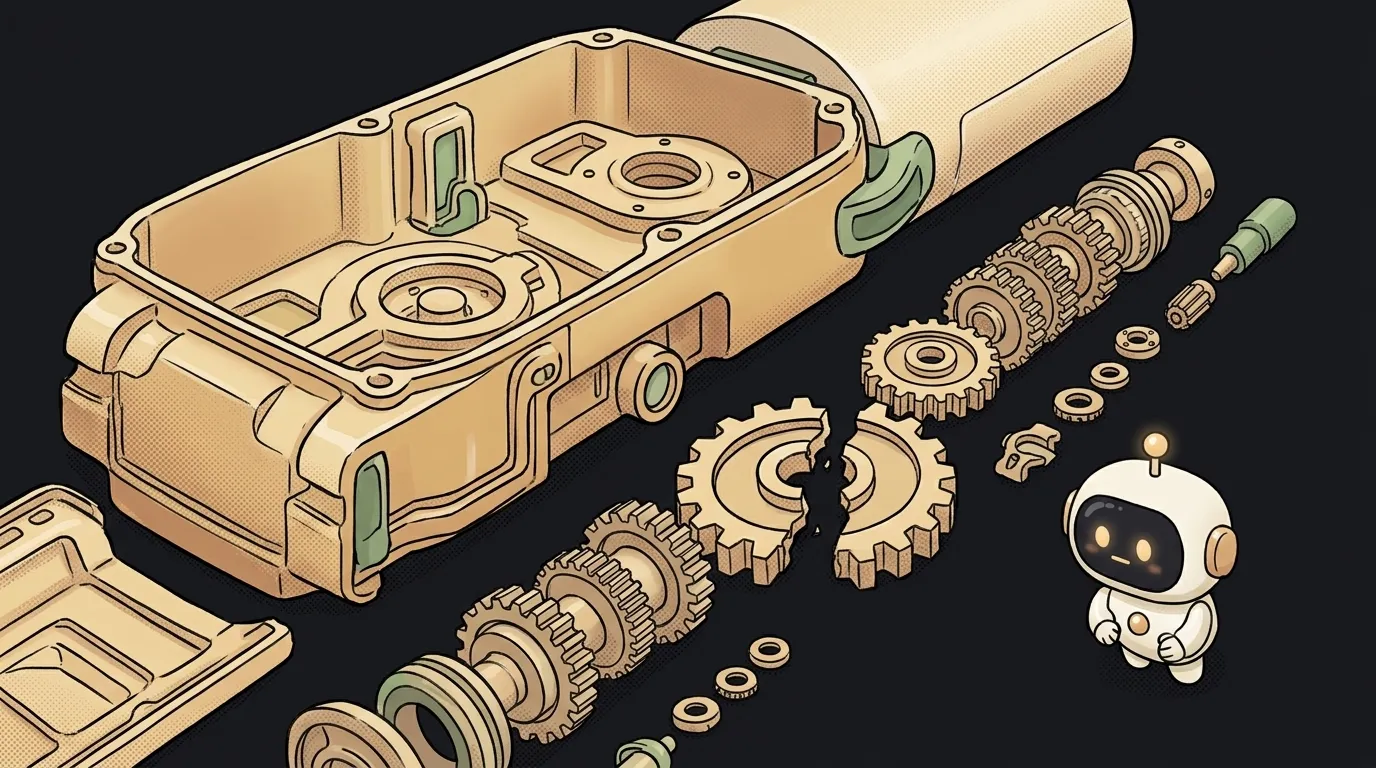
The Google SRE book explains the whole practice in one sentence: you can't "fix" people, but you can fix systems and processes.
Hence the odd rule: a postmortem never says who's at fault. Not out of politeness. "Pete deployed the wrong branch" fixes nothing — Pete knows that already. But "the deploy didn't ask for confirmation and didn't show which branch was going out" is a defect you can remove for good.
A postmortem is the written record of an outage
The definition from that book is short: a postmortem is a written record of an incident, its impact, the actions taken to mitigate or resolve it, the root causes, and the follow-up actions to prevent it recurring.
The key word is written. A conversation — "yeah, we figured out what happened" — evaporates in a week. Six months later a similar failure arrives and it all starts over: same panic, same ninety minutes of searching.
A postmortem is how an outage happens to you once instead of becoming a seasonal ritual.
"Blameless" is an engineering decision
Google's wording is firm: for a postmortem to be truly blameless it must identify the contributing causes without indicting any individual or team for bad or inappropriate behaviour. The premise is that everyone involved had good intentions and did the right thing with the information they had.
It's easy to read that as corporate softness. It isn't. Look at what the opposite approach does:
- If breakage gets punished, people stop reporting it. You find out in a day, from users, instead of in a minute.
- If you hunt for a culprit, the analysis stops at the first human in the chain. The real cause is usually two steps further along.
The book says it directly: removing blame gives people the confidence to escalate issues without fear. That holds even when "people" is just you: shame yourself for every failure and you'll start looking away without noticing.
The criteria are set before the outage, not after
Second non-obvious rule: the list of things that require a postmortem is drawn up in advance. The book flags it separately — it is important to define postmortem criteria before an incident occurs.
The reason is simple. After an outage there's always a pull towards "eh, it was minor, let's skip it." Especially when the thing you'd be reviewing is your own mistake.
The typical triggers, near-verbatim from the same source:
- users saw downtime or degradation;
- data loss of any kind;
- someone had to intervene by hand — a rollback, rerouting traffic;
- resolution took longer than an agreed threshold;
- monitoring failed — you heard about it from people, not from your system.
That last one is my favourite. An outage a user told you about always deserves a review, even if one button fixed it.
What goes inside — and the mistake that voids it
A working postmortem fits on one or two pages:
- What happened — one paragraph, in human language.
- A timeline with times: when it started, when you noticed, when it was fixed. It's easiest to assemble from notes you took during the incident itself. The gap between "started" and "noticed" is usually the most informative number in the document.
- Impact — how many people it hit and how.
- Causes — plural, a chain. There are usually three or four, and "the code crashed" is only the last one.
- What we're doing so it doesn't recur.
Now the big mistake. Point 5 almost always reads: "improve monitoring," "be more careful," "add tests."
Those aren't actions, they're intentions. An action needs an owner and a date: not "add tests," but "write a test for an empty payment response by Friday — me." Everything else is self-soothing.
And a second rule, again verbatim: an unreviewed postmortem might as well never have existed. Once written, show it to at least one person. Alone on the project? Reread it yourself a week later — with fresh eyes it's obvious which items were fantasy.
Is a postmortem the same as a retrospective?
No. A retrospective is a regular meeting about how the work is going overall: process, communication, pace. A postmortem is tied to one specific failure and is written because it happened, not because it's Thursday. Different triggers, different documents.
Do I have to wait for a real outage?
No, and this is a good trick: review the near-misses too. Say you notice backups haven't run for a month but no data was lost. Formally nothing broke — yet the cause is exactly the one that would have caused the real catastrophe. That review is free.
Who reads a postmortem on a solo project?
You do, a few months later. Keep them in a postmortems/ folder next to the code and reread them when you add a new part to the system — it's your personal list of rakes. And the items that keep repeating turn into a runbook: whatever happened twice will happen a third time.
The AI Architect 2027 course: step by step from computer basics to your own app and first customers. 543 short lessons on your phone.
Read next

Ed25519 vs RSA — which SSH key to choose in 2026

What is sudo — and why it asks for your password, not the admin's

What is a tar.gz file — and why a tar archive can be bigger than the files

What is a command-line flag — and why git commit -ma breaks but -am works

scp or rsync — and why rsync sent 141 bytes instead of two megabytes the second time
