What is a seed in image generation — and how to get that one picture back
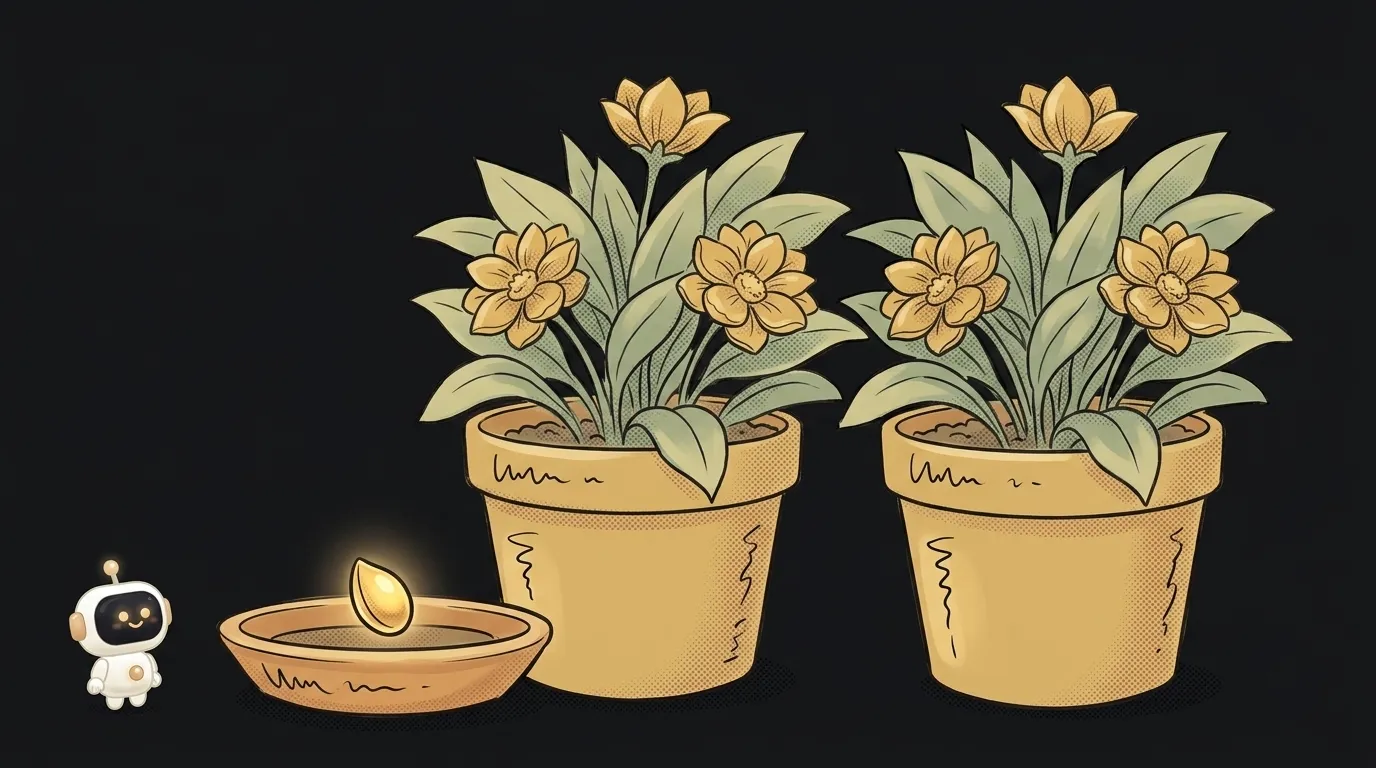
You generated an image — a perfect one. You change one word in the prompt, hit generate again… and get a completely different scene. Not “the same, with your edit”, but different: different angle, different light, different character.
It feels like the model is being moody. What actually threw it off is one number you never set. It's called the seed — and it decides where the picture starts from in the first place.
An image starts as random noise
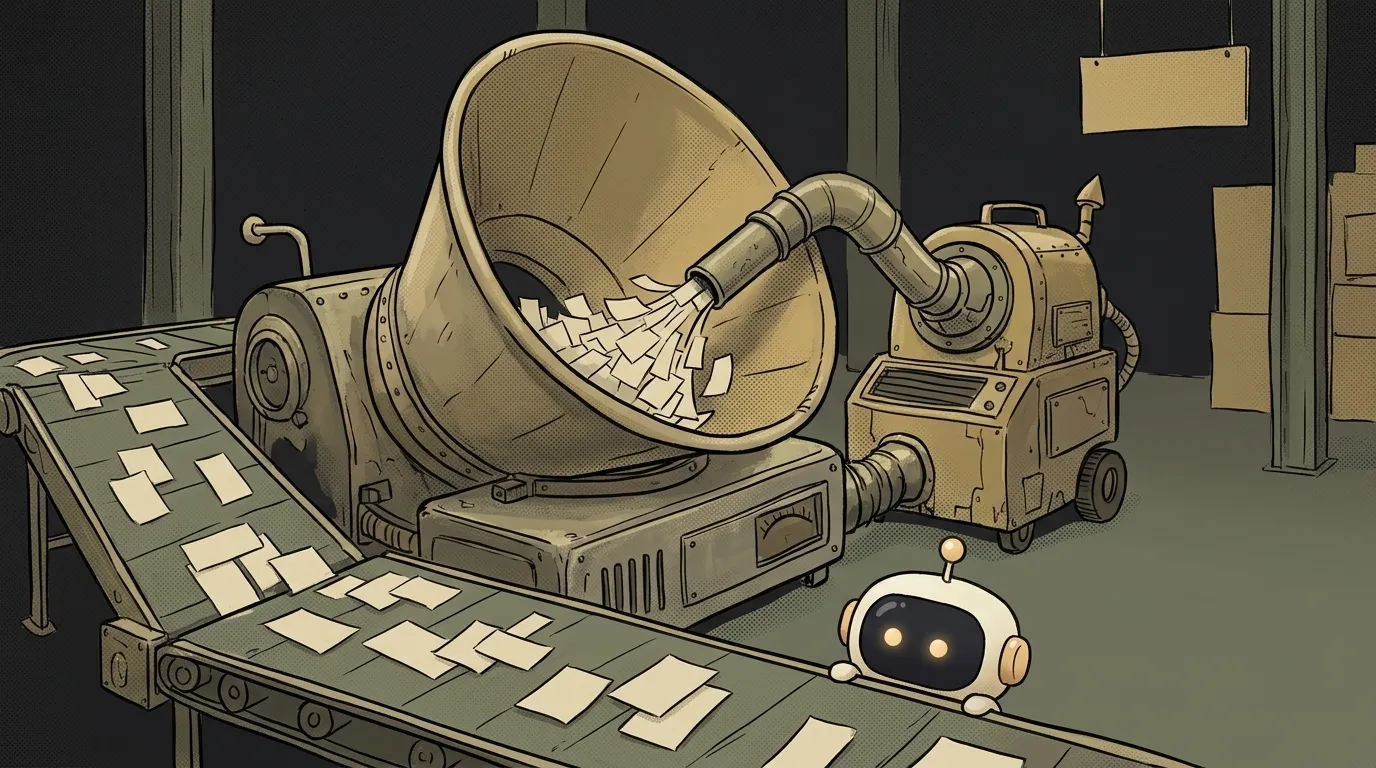
Image models don't work like a human. They don't paint on a blank canvas — they clear away static.
It starts with a field of random noise, like snow on an old TV. Then, step after step, the model removes what doesn't belong and shapes what's left to match your text. After 20–40 steps, a picture emerges from the garbage. The mechanism is unpacked in the piece on diffusion models.
The key part: that starting noise is new every time. A computer can't be truly random — it takes a number (the seed) and unrolls it into a long sequence of pseudo-random values. One seed, one identical field of noise, always.
That's where the magic comes from. Same prompt + same seed = the same image, pixel for pixel. Different seeds with the same prompt = different images, because the model started from different snowfields.
Why pin the seed down
While the seed stays random, you're comparing things that can't be compared. You changed a word, you got a different image — but was that your edit, or just a different starting noise? Two variables moved at once.
Pin the seed and only one variable is left: your text.
- Edit the prompt one word at a time and see exactly what that word did. “Warm light” instead of “cold” — same composition, different light.
- Build a consistent series: article covers, product cards, avatars — a shared seed keeps them family-resembling.
- Come back to a good shot. Save the seed next to the prompt, and a week later you reproduce it instead of hunting for it again.
Same logic as temperature: until you pin the randomness down, you're not debugging a prompt, you're playing a lottery. The text-side version of this is why AI gives different answers.
What a seed does not do
This is where beginners get burned most often.
A seed is not an image ID. It isn't stored “on the server” and it remembers nothing. It's just a number going in.
It only works together with every other setting. Change the model, its version, the step count, the aspect ratio or the guidance strength, and the image changes — same seed or not. A seed repeats the start, not the whole route.
It doesn't travel between services. Seed 42 in one generator and seed 42 in another are two unrelated images. More than that: even the same model can drift slightly on different hardware or after a library update — the people who build diffusion tooling say plainly that bit-for-bit reproducibility holds within one setup, not across every machine on earth.
Practical takeaway: save the seed together with the prompt and the model name. Apart, those facts are nearly useless.
The working loop
- Generate without a seed while you're hunting for the idea. Four to eight variations, free exploration — here randomness is your friend.
- Pick the best frame and find its seed. In Midjourney you ask the bot for it or set it with the
--seedflag; in Stable Diffusion and Flux interfaces it's a field next to the prompt; in an API it's aseedparameter, both in the input and in the response. Some services don't expose it at all — there you get no reproducibility no matter what you do, which is a fair reason to pick a different tool if repeatability matters to you. - Paste that seed into the settings and from now on change exactly one thing at a time: a word, a style, the light.
- Want neighbouring variations? Shift the seed by one or two. You get adjacent frames: different noise, same prompt.
- Write the final one down: prompt + model + seed. That's your recipe.
What you get: instead of “lucky or unlucky”, you have a controllable tool. One evening of working this way teaches you more about prompting than a hundred random generations.
Which seed should I pick — are some numbers better?
No. 42, 1234 or 918273 are equally random as far as the model is concerned. A seed becomes “good” only after the fact: you liked the picture, so you wrote it down.
Why did the same seed give me a different image?
Then something else changed. Check in order: model version, step count, size and aspect ratio, prompt-adherence strength — and the prompt itself, down to a stray space. The seed is one input, not the only one.
The AI Architect 2027 course: step by step from computer basics to your own app and first customers. 543 short lessons on your phone.
Read next
Ed25519 vs RSA — which SSH key to choose in 2026
What is sudo — and why it asks for your password, not the admin's
What is a tar.gz file — and why a tar archive can be bigger than the files
What is a command-line flag — and why git commit -ma breaks but -am works
scp or rsync — and why rsync sent 141 bytes instead of two megabytes the second time