What is personal data — and why swapping the name for an ID changes nothing
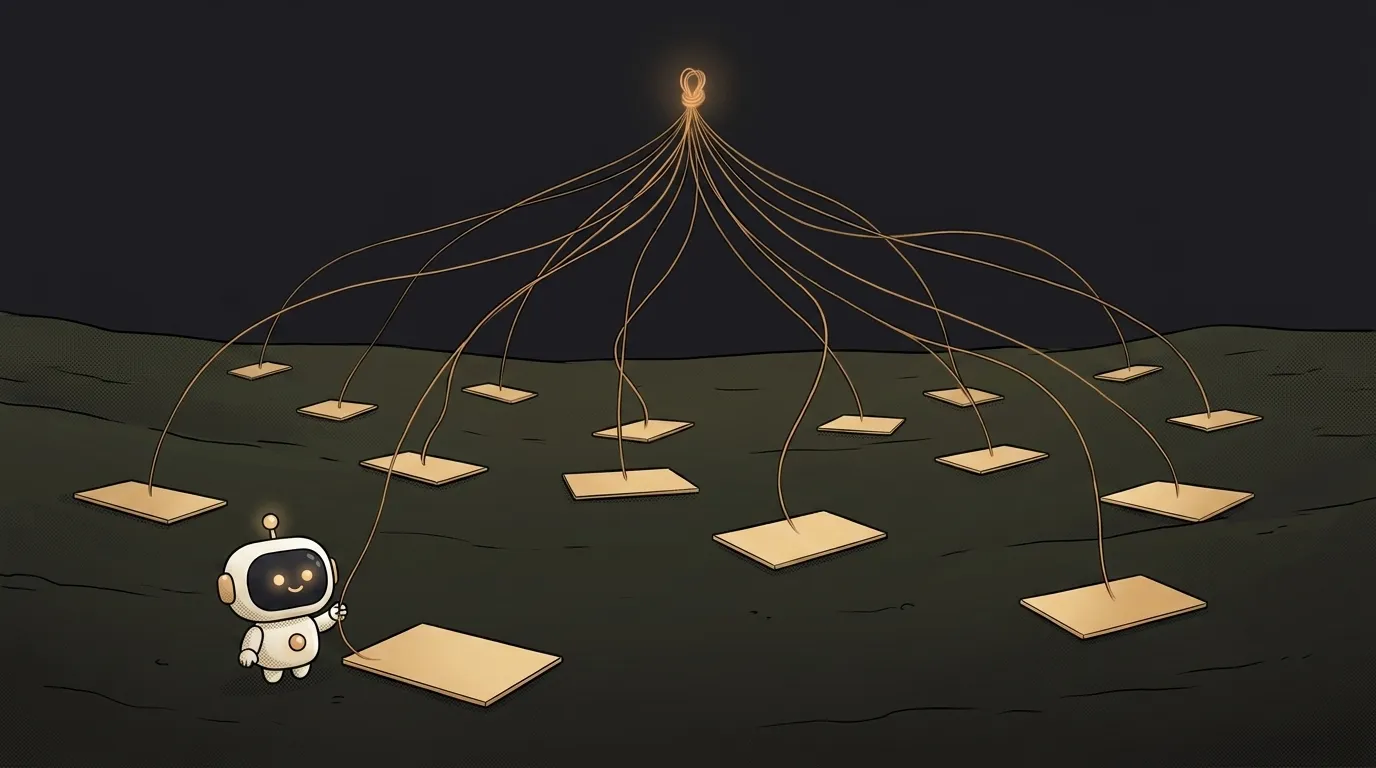
Here's the trap almost everyone falls into. You build an analytics table, strip out the names and emails, leave user_8123 — and relax. Anonymised now. Law doesn't apply.
It doesn't apply only if you threw away the key. If a lookup table saying "user_8123 = Marina" still exists somewhere, this is personal data. With every obligation attached.
What personal data means in plain words
Personal data is any information relating to a person who can be identified. Not "passport and full name" — specifically "can be identified".
GDPR puts it in Article 4 as "any information relating to an identified or identifiable natural person". Then it lists what counts as an identifier:
- a name;
- an identification number;
- location data;
- an online identifier;
- factors specific to physical, genetic, economic, cultural or social identity.
"Online identifier" is the line that quietly makes the list enormous.
Why it's almost everything you collect
Apply that to an ordinary app. Personal data turns out to be:
- an email — even with no name attached. It's a direct line to one specific human;
- an IP address — the provider knows who sat behind it;
- a device ID or advertising identifier — it sticks to the phone, and the phone sticks to a person;
- a cookie with a unique session number — the online identifier itself;
- location — "where they sleep" plus "where they work" identifies someone almost uniquely;
- a photo, a voice recording, an order history tied to an account.
The mental shift: the law doesn't ask "is there a name here". It asks "can this set of data lead to a living person". Usually it can, name or not.
A pseudonym is not anonymity
This is the part worth opening the article for.
GDPR deals directly with the case where you replaced names with codes. That's called pseudonymisation, and Recital 26 says it flatly: personal data which has undergone pseudonymisation and could be attributed to a person by the use of additional information should be considered information on an identifiable person. So: still personal data. Fully.
Anonymous information is different. Same recital: the principles of data protection don't apply to information that doesn't relate to an identifiable person, or to data rendered anonymous in such a way that the person is no longer identifiable.
The whole difference is reversibility:
- you replaced the name with
user_8123and kept the mapping nearby → pseudonymisation → personal data; - you replaced it and destroyed the mapping, leaving "woman, 30–35, Kazan, 4 orders" → anonymisation → out of scope.
And the test is honest: if you can answer "who is user_8123", so can somebody else. Which means it's personal data.
The stricter shelf
Not all personal data is equal. Some categories get harsher treatment because a leak hurts more: health, biometrics, ethnic origin, religious and political views, sex life.
For a small project the practical point is one idea: an ordinary feature can accidentally become processing of a special category.
- A workout app storing heart rate and weight → health data.
- Face or voice login → biometrics, with extra rules in many countries.
- A "tell us about yourself" form with a religion field → special category, even though you just copied someone's form.
Simple rule: if a field belongs on that shelf, ask what it's for. Usually the feature works fine without it. If you genuinely need it, that's the moment to spend an hour on a lawyer instead of guessing.
What to do while the project is small
Four moves that cost nothing early and a fortune later.
Collect less. Every field in a form is an obligation. Is the birth date for a greeting, or did you just copy the form? A field that doesn't exist can't leak.
Split your storage. Keep analytics apart from the users table, and keep the key between them somewhere third. Then an analytics leak is a leak of numbers, not of people.
Don't feed other people's data to a model casually. A support ticket with an email and a phone number pasted into a chat is a transfer of personal data to a third party. What's fine and what isn't: what not to paste into an AI chat.
Set a retention period. "We keep it forever" isn't a strategy. Logs with IPs from two years ago are useful to nobody except whoever steals them.
Is an email without a name personal data?
Yes. You can write to one specific person with it, so they're identifiable. The missing name changes nothing.
The data lives in the cloud — am I still the one responsible?
Yes. Hosting, database, mailing service — those are processors you chose. The person's relationship is with you, not with them. That's exactly why they get listed in your privacy policy.
What if I collect nothing at all?
Check again. A contact form, an analytics snippet, sign-in with Google, web server logs with IPs — each of those already collects. "I collect nothing" almost always means "I don't know what I collect".
The AI Architect 2027 course: step by step from computer basics to your own app and first customers. 543 short lessons on your phone.
Read next

Ed25519 vs RSA — which SSH key to choose in 2026

What is sudo — and why it asks for your password, not the admin's

What is a tar.gz file — and why a tar archive can be bigger than the files

What is a command-line flag — and why git commit -ma breaks but -am works

scp or rsync — and why rsync sent 141 bytes instead of two megabytes the second time
