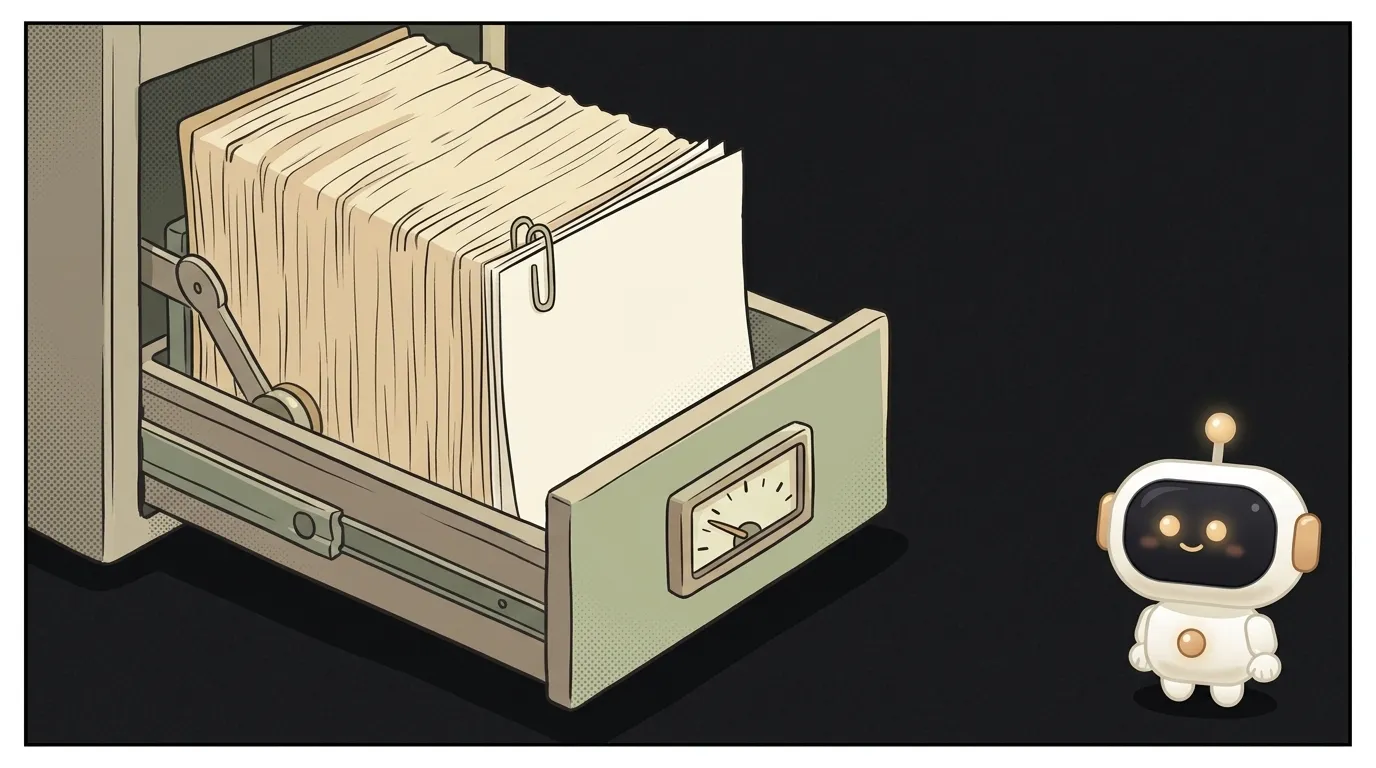
What not to paste into an AI chat — 7 things that leave your computer
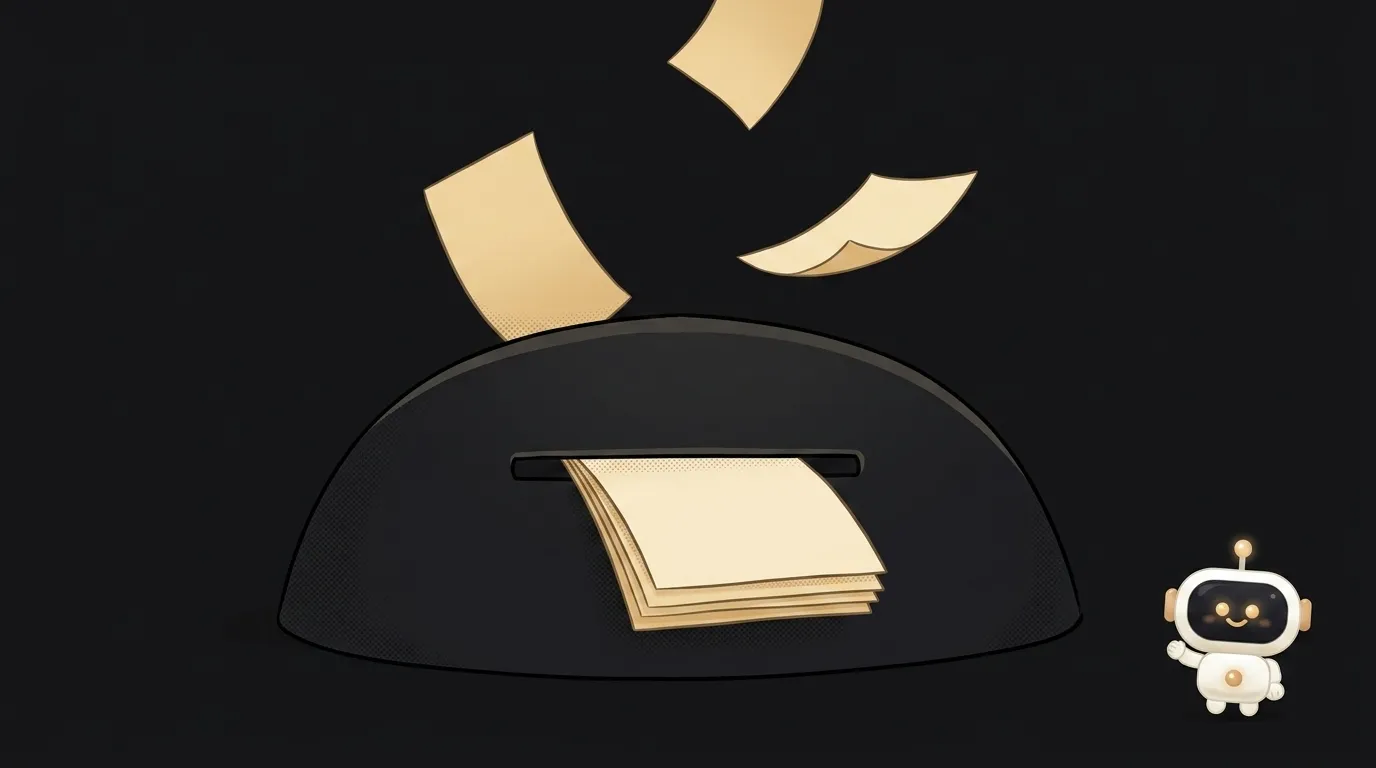
You paste a chunk of code with a key in it so the model can find the bug. A minute later you have your answer, close the tab, forget about it. The key, meanwhile, is no longer only yours.
Seven categories not to send a model, below. But first, the misconception that makes the whole list look like paranoia.
"Not trained on" is not the same as "nobody reads it"
Three different questions that everyone glues into one.
Is my data used for training? Depends on the product. OpenAI states for business tiers and the API: "We do not train our models on your data by default". Consumer ChatGPT terms work the other way round — there's an "Opt out" clause: if you don't want your content used for training, you have to go and say so. Anthropic's consumer tiers use your chats for training if you allowed it in settings.
Is it stored? Yes, for a while — even after deletion. Deleted conversations are removed from systems within roughly 30 days, unless the law requires keeping them longer.
Can a human read it? Yes, and this is the surprise. Anthropic says it plainly: a conversation may be used or analysed if it's flagged for safety review. At OpenAI, stored conversations are accessible to a limited set of employees and specific contractors, "solely to review for abuse and misuse".
So: switching off training keeps your text out of the model, but it doesn't turn the chat into a private diary. Here's what not to put in it.
1. Keys, tokens and passwords
The most common and most expensive one. sk-..., a database password, a bot token, a full connection string.
A key that landed in a chat should be considered compromised — not because someone will steal it tomorrow, but because you no longer know where it's been. The correct move: revoke it and issue a new one, five minutes' work. How to store them so you're not tempted to paste: how to store API keys safely.
2. Other people's personal data
A support ticket with an email and phone number. A user export "to spot a pattern". A candidate's CV.
Here you're not risking yourself — you're transferring someone else's data to a third party, usually without their consent. That's exactly the transfer your privacy policy was supposed to name. What counts as personal data, and why swapping the name for an ID doesn't help: what is personal data.
Mask before pasting: name → "Customer", email → [email protected], order number → 12345. None of that hurts the model's ability to reason about the problem.
3. A whole .env or config file
The temptation is obvious: "here's the entire config, tell me what's wrong". The problem is that alongside the line you need sit all the others — payment keys, database access, the session signing secret.
Paste one line and the error text. If the whole file is genuinely needed, replace values with REDACTED: the structure survives, the secrets don't travel.
4. NDA documents and someone else's proprietary code
Code from work, a client contract, a deck under a non-disclosure agreement. What breaks here isn't abstract privacy — it's a specific signed document, and the consequences land on you, not the provider.
Also: many companies run their own internal AI environment for exactly this. If yours does, work there instead of a personal browser tab.
5. Medical and financial data
Test results, diagnoses, bank statements, scans of documents. Laws almost everywhere treat these categories more strictly, and a consumer chat isn't built for them.
Your own is your call and your risk. Somebody else's — never.
6. A real database dump "just to test it"
The classic: you need to check how the model parses your data, and a real table happens to be right there.
Make synthetic data instead. Ask the model to generate twenty rows in the same format and work with those. You'll validate the format just as well, with no live humans in the transcript.
7. Anything you wouldn't want to see in someone else's answer
The last item isn't about leaks — it's about uniqueness. OpenAI's terms say it directly: output may not be unique, and other users may receive similar output.
So the "secret" idea you described in a prompt to get a nicer answer doesn't get any more secret. If you genuinely have a unique algorithm, describe the task abstractly, without your key insight. Incidentally, the rights to the code you get back also work differently than you'd assume: who owns AI-generated code.
What to do instead
- Mask before pasting. Thirty seconds of find-and-replace covers items 2, 3 and 5.
- Use the API rather than the chat. Business tiers and APIs default to stricter training rules than consumer chat.
- Set your settings once. Find the "use my data to improve the model" toggle in your account and set it how you want. One time, applies forever.
- For genuinely sensitive work, run a model locally. Then the data physically never leaves your machine and the question is closed.
If I delete the chat, is the data gone?
Not instantly. The reference point is around 30 days until it's removed from systems, longer where the law demands. And deleting a conversation doesn't undo anything that already went into training earlier.
Is a paid plan safer?
Not by itself. The line isn't drawn between free and paid but between product types: business tiers and APIs default to stricter training rules than consumer chat. Read your plan's documents, not its price.
What if I'm only asking questions, with no data?
Then there's no issue. The whole list is about the content you bring with you. Asking "how does OAuth work" is free of all of this.
The AI Architect 2027 course: step by step from computer basics to your own app and first customers. 543 short lessons on your phone.
Read next
Why AI answers in English when you write in another language — 3 causes
What is inpainting — and why a mask is a hint, not an eraser
Why AI can't count the letters in a word — it can't see them
How to write image prompts — 5 steps from “draw a cat” to the shot you wanted
What is a negative prompt — and why "no text" usually doesn't work