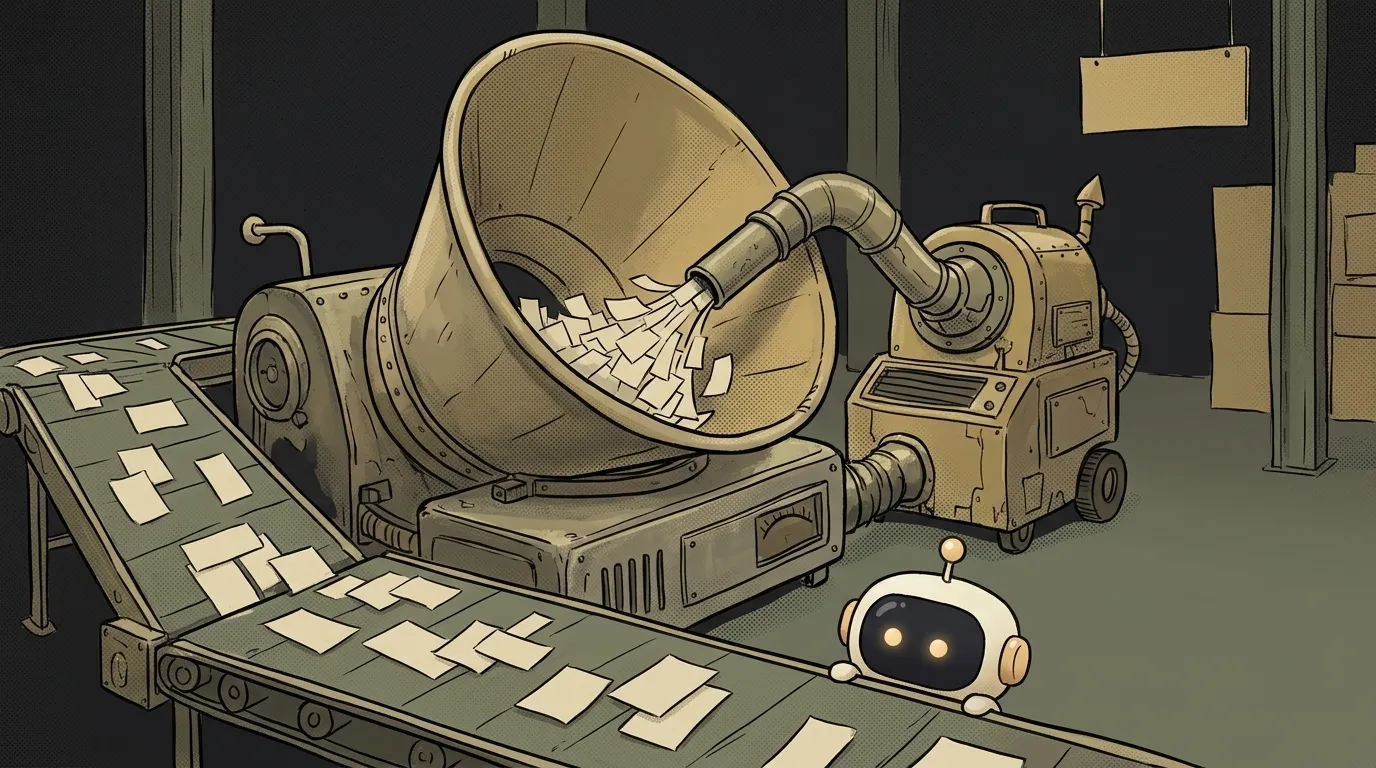
What is voice cloning — and why 30 seconds beats ten minutes
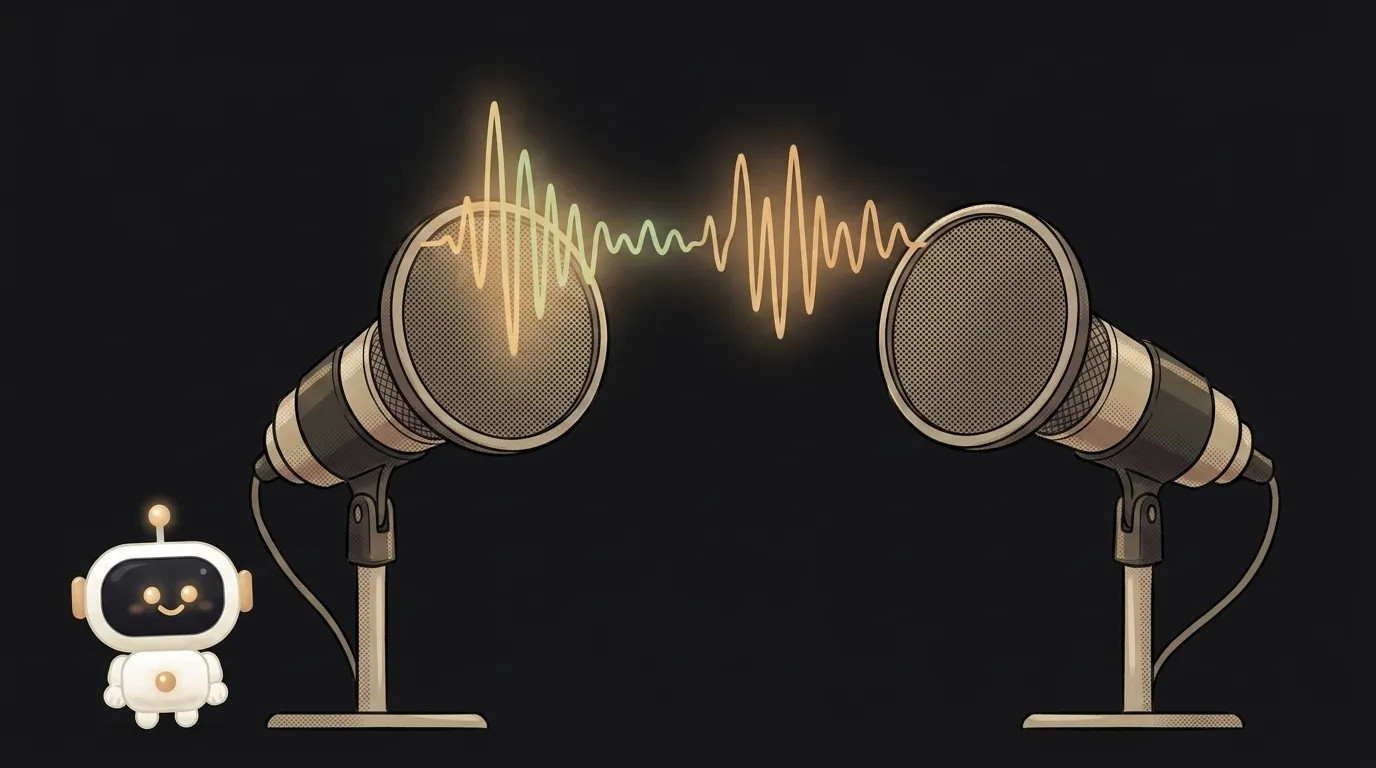
Here's the counterintuitive part. You'd assume the longer the voice sample, the better the clone. In practice, ten minutes of rambling often produces a worse result than thirty seconds of clean audio.
The reason is simple and slightly creepy: the model doesn't just copy your voice. It copies everything it hears.
What voice cloning actually is
Voice cloning is when a model listens to a short speech sample and learns to sound like that person while saying any new text.
The key word is "any". Old speech engines — the ones in car navigators — stitched together pre-recorded chunks, which is why they tripped over unfamiliar words. A modern clone stitches nothing: it synthesises audio from scratch, guided by how you sound.
How the model captures your voice "fingerprint"
Three steps, and none of them are about your specific words.
- The model was pre-trained on thousands of different voices. It already knows what human speech is made of: timbre, pitch, pace, breathiness.
- Your sample gets compressed into a set of numbers — an embedding. That's the fingerprint: a compact description of how your voice differs from everyone else's.
- Then synthesis: text plus fingerprint go in, a sound wave comes out.
The analogy is handwriting. To forge someone's handwriting you don't need to watch them write every letter of the alphabet. A couple of lines is enough to catch the slant, the pressure, the habits. After that you can write anything.
Note this is not fine-tuning in the classic sense. The model's weights don't change — only the input fingerprint does. That's why an instant clone takes seconds, not hours.
Why clean audio beats long audio
Here's where the surprise lives. The model can't separate "the voice" from "everything else in the recording". Room echo, the hum of an air conditioner, the mic rubbing against your collar — it takes all of that as part of you, and faithfully reproduces it.
So along with your voice, you get your room.
Hence the guidance in the ElevenLabs docs, one of the most popular services: an instant clone wants roughly 1–2 minutes of clean audio, and anything past three minutes improves almost nothing — sometimes it makes the clone less stable. Their help centre says it plainly: some users got excellent results from 30 seconds and worse results from ten minutes. The difference was recording quality, not length.
A second effect of the same kind: the clone copies your delivery. Record the sample in a flat, half-asleep voice and the synthesis will be just as sleepy, no matter how upbeat your script is. Want lively narration? Read the sample lively.
There's also a second mode — the "professional" clone. That one wants a lot of material (ElevenLabs asks for 30 minutes to 3 hours), trains for hours, and is noticeably more accurate. That's no longer a try-it-tonight thing.
Where you'll run into this
- Your own narration, without a mic every time. Record once, then narrate texts and videos straight from the browser instead of doing ten takes.
- Translation in your own voice. A Russian video becomes an English one where the speaker is still you, not some stranger.
- Scammers. The flip side. The "mum, I'm in trouble, send money now" call can now arrive in your child's voice — and any story post has enough material to clone from.
So here's the concrete thing to take away: a voice is no longer proof of identity. Agree on a code word with your family, to be asked during any urgent money request. That's thirty seconds of conversation today and a lot of saved nerves later.
How to record a good sample
If you want to try it on your own voice:
- A quiet room with soft surfaces. Clap once: if it rings, that echo will end up in your clone. A wardrobe full of clothes or a sofa damps it beautifully.
- Phone 20–30 cm from your mouth, no music, no background. An expensive mic is optional; silence isn't.
- 60–90 seconds of connected text — not scattered phrases, but a proper passage read in one consistent manner.
- Listen back before uploading. If you hear noise, re-record — that's cheaper than fixing the clone later.
And the courtesy rule that's quickly becoming a legal one: clone someone else's voice only with their consent.
How much audio do you need to clone a voice?
For an instant clone, about a minute of clean speech — sometimes 30 seconds is enough. For a professional, maximum-accuracy clone, tens of minutes. Going past three minutes for an instant clone buys you nothing.
Can you tell a clone from a real voice?
By ear — less and less. Synthetic-speech detectors exist but get it wrong in both directions, so don't rely on them alone. Context is safer: call back on a number you already know and ask for the code word.
Is it legal to clone someone else's voice?
Yours, yes. Someone else's without consent, no: a voice counts as personal data, and services make you confirm you have the rights to the sample you upload. Publishing synthetic speech increasingly requires labelling it as generated, too.
The AI Architect 2027 course: step by step from computer basics to your own app and first customers. 543 short lessons on your phone.
Read next
Ed25519 vs RSA — which SSH key to choose in 2026
What is sudo — and why it asks for your password, not the admin's
What is a tar.gz file — and why a tar archive can be bigger than the files
What is a command-line flag — and why git commit -ma breaks but -am works
scp or rsync — and why rsync sent 141 bytes instead of two megabytes the second time